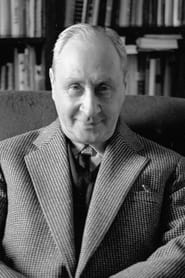
Sergei Yutkevich
Director
Born: December 15, 1904 in St. Petersburg, Russian Empire Died: April 23, 1985 Active: 1926-1985 Birth Name: Sergei Iosifovich Yutkevich
Films
6 films
About Sergei Yutkevich
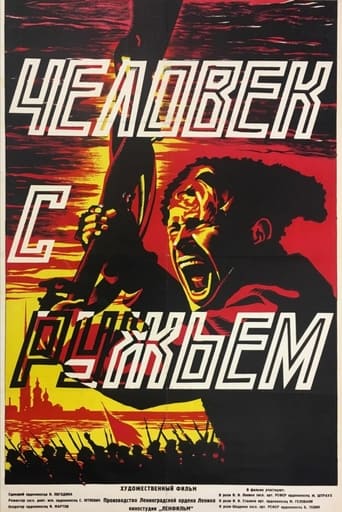
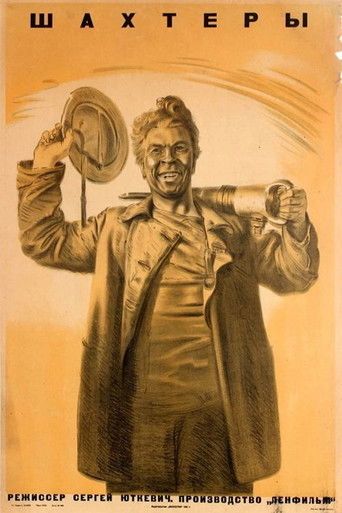
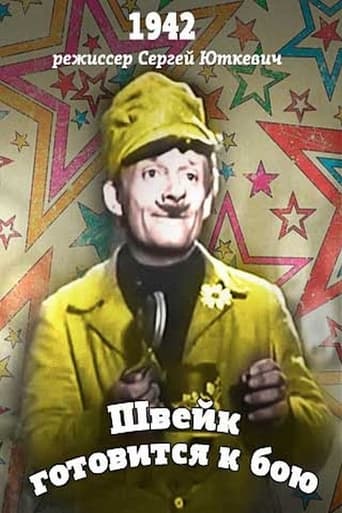
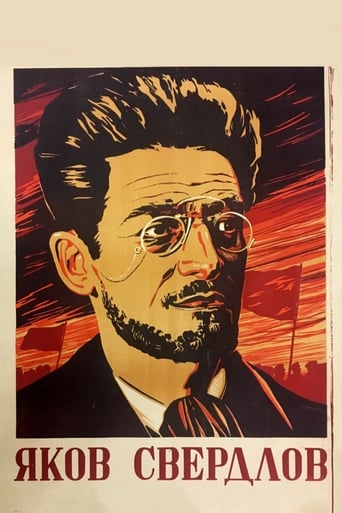
Soviet film director and screenwriter: six decades, from the silent era through the 1980s. Born in St. Petersburg in 1904, he began his career in the 1920s as part of the avant-garde movement, initially working as an actor and set designer before transitioning to directing. He gained prominence in the 1930s with socially conscious films like 'The Miners' and 'The Man with the Gun,' which showcased his ability to blend political themes with artistic innovation. During World War II, he created propaganda films that supported the Soviet war effort, including 'Schweik is Preparing For Battle.' His post-war work demonstrated remarkable versatility, ranging from historical biopics to literary adaptations, with his 1955 version of 'Othello' earning international acclaim. Yutkevich was also a respected educator, teaching at the Gerasimov Institute of Cinematography (VGIK) and mentoring generations of Soviet filmmakers. His later career saw him continue to experiment with form and content, cementing his reputation as one of Soviet cinema's most enduring and innovative directors.
The Craft
Behind the Camera
Yutkevich was known for his innovative visual style that combined formal experimentation with strong narrative clarity. His directing approach often featured dynamic camera movements, expressive mise-en-scène, and a keen eye for period detail. He was particularly adept at adapting literary works, bringing a theatrical sensibility to his films while maintaining cinematic innovation. His style evolved from avant-garde experimentation in his early years to more classical storytelling in his later period, though he never lost his artistic edge.
Milestones
- Directed the acclaimed 'Othello' (1955) which won Best Director at Cannes
- Pioneered Soviet avant-garde cinema in the 1920s
- Created influential wartime propaganda films during WWII
- Mentored numerous Soviet filmmakers as a VGIK professor
- Received the title of People's Artist of the USSR
- Won multiple international festival awards throughout his career
Best Known For
Must-See Films
Accolades
Won
- Cannes Film Festival Best Director Award for 'Othello' (1955)
- Cannes Film Festival Special Jury Prize for 'Othello' (1955)
- People's Artist of the USSR (1962)
- Stalin Prize (1941, 1946, 1947)
- Lenin Prize (1967)
- State Prize of the USSR (1982)
Nominated
- Cannes Film Festival Golden Palm nomination for 'Othello' (1955)
- Cannes Film Festival Golden Palm nomination for 'Lenin in Poland' (1966)
Special Recognition
- Order of Lenin (multiple times)
- Order of the October Revolution
- Order of the Red Banner of Labour
- Honored Artist of the RSFSR
Working Relationships
Worked Often With
Studios
Why They Matter
Impact on Culture
Sergei Yutkevich played a crucial role in shaping Soviet cinema's artistic development during the 20th century. His work bridged the gap between the experimental avant-garde of the 1920s and the more ideologically controlled cinema of the Stalin era, demonstrating that artistic innovation could coexist with political requirements. His adaptations of literary classics, particularly 'Othello,' brought international attention to Soviet cinema and proved that Soviet directors could compete on the world stage. Yutkevich's films often reflected the social and political concerns of their time while maintaining a high level of artistic achievement, influencing how Soviet cinema was perceived both domestically and internationally.
Lasting Legacy
Yutkevich's legacy endures through his extensive filmography, which includes over 40 films, and through the generations of filmmakers he taught at VGIK. His ability to adapt to changing political climates while maintaining artistic integrity serves as a model for filmmakers working under restrictive conditions. His international festival successes helped open doors for other Soviet directors to gain recognition abroad. The restoration and re-evaluation of his films in the post-Soviet era have led to a renewed appreciation for his contribution to world cinema, with scholars recognizing him as a key figure in the development of Soviet film art.
Who They Inspired
Yutkevich influenced multiple generations of Soviet and Russian filmmakers through both his work and his teaching. His innovative visual techniques and approach to literary adaptation influenced directors like Andrei Tarkovsky and Sergei Bondarchuk. His ability to balance artistic expression with political requirements provided a template for filmmakers working within state-controlled systems. International filmmakers, particularly those in Eastern Europe and Asia, looked to his work as an example of how to create meaningful cinema within socialist frameworks. His writings on film theory and his lectures at VGIK continue to be studied by film students around the world.
Off Screen
Sergei Yutkevich was married three times throughout his life. His first marriage was to actress Yanina Zhejmo, a prominent Soviet film star. He later married actress Zoya Fyodorova, though their marriage ended tragically when she was arrested during Stalin's purges. His third marriage was to actress and director Galina Yutkevich, with whom he collaborated on several projects. Despite the political turmoil of the Stalin era, Yutkevich managed to navigate the complex Soviet cultural landscape while maintaining his artistic integrity.
Education
Studied at the Leningrad Institute of Art History (1923-1925), Graduated from the State Technical School of Cinematography in 1926
Family
- Yanina Zhejmo (1928-1930)
- Zoya Fyodorova (1931-1936)
- Galina Yutkevich (1940-1985)
Did You Know?
- Was one of the few Soviet directors to successfully adapt Shakespeare for the screen
- Survived the Stalin purges despite his second wife's arrest and imprisonment
- His film 'Othello' was the first Soviet Shakespeare adaptation to win major international awards
- Began his career as a set designer before becoming a director
- Was a close friend of director Mikhail Romm and collaborated on several projects
- His early films were influenced by German Expressionism and Soviet montage theory
- Served as a war correspondent during World War II
- Was a member of the Soviet delegation to the first Cannes Film Festival in 1946
- His films were often censored or re-edited to meet changing political requirements
- Maintained a lifelong interest in theater and occasionally directed stage productions
In Their Own Words
Cinema is the art of the 20th century, and we must master it completely
The director must be both a poet and a politician, an artist and a craftsman
To adapt a classic is not to betray it, but to discover its eternal truths for a new generation
In every frame, there must be both meaning and beauty
The camera is not just a recording device, it's an instrument of truth
Frequently Asked Questions
Who was Sergei Yutkevich?
Prominent Soviet on YTB.my. He was known for his innovative visual style, literary adaptations, and ability to navigate the complex Soviet cultural landscape while maintaining artistic integrity.
What films is Sergei Yutkevich best known for?
Titles linked here include Othello (1955), The Miners (1937).
When was Sergei Yutkevich born and when did he die?
Born December 15, 1904; died April 23, 1985.
What awards did Sergei Yutkevich win?
Yutkevich won numerous prestigious awards including the Cannes Film Festival Best Director Award for 'Othello' (1955), multiple Stalin Prizes, the Lenin Prize (1967), and was named People's Artist of the USSR in 1962.
What was Sergei Yutkevich's directing style?
Yutkevich's directing style combined innovative visual techniques with strong narrative clarity, featuring dynamic camera movements and expressive mise-en-scène. He was particularly skilled at literary adaptations, bringing theatrical sensibility to cinema while maintaining artistic innovation throughout his evolving career.