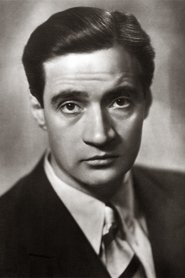
Yakov Sverdlov
"From underground press to Soviet state power"
Keys: Space play/pause · ←/→ 10s · F fullscreen · M mute · </> speed
About this film
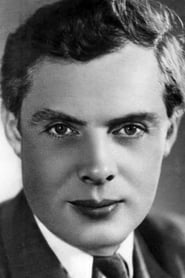
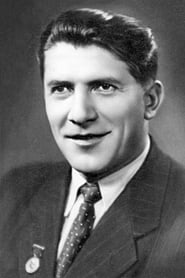
In 1902, young revolutionary Yakov Sverdlov acquires an underground printing press with help from Maxim Gorky, beginning a career that will carry him through Ural agitation in 1905, imprisonment, Siberian exile, and leadership of the All-Russian Central Executive Committee after 1917. Sergei Yutkevich's Lenfilm biographical drama stages these episodes before climaxing in Nizhny Novgorod, where Sverdlov exposes Trotskyist sabotage, and concluding with Lenin delivering a memorial speech at the Eighth Party Congress after Sverdlov's death from illness. Nikolai Simonov stars in the production comm…
Cast & crew
More films like this
More History films
View all →


More from Sergei Yutkevich
View all →
More about this film
About the production
Release dateFebruary 21, 1940
Box officeNot publicly tracked in the Soviet system
ProductionLenfilm Studio, Soyuzdetfilm
Filmed inLeningrad (now Saint Petersburg), USSR, Moscow, USSR
The film was made during the height of Stalin's cult of personality, though it focuses on Sverdlov rather than Stalin. Director Sergei Yutkevich faced significant pressure to portray Sverdlov in accordance with official Soviet historiography. The production team conducted extensive research in Soviet archives and consulted with historians who had known Sverdlov personally. The film was shot on location in historic buildings where actual revolutionary events took place. Special attention was paid to period accuracy in costumes, props, and settings to create an authentic representation of the revolutionary era.
Themes
Revolutionary sacrificeParty discipline and unityThe individual's role in historical changeBureaucratic efficiency as revolutionary virtueThe moral purity of the Bolshevik cause
Themes & topics
Russian RevolutionBolshevikPolitical biographyRevolutionary leaderSoviet historyCivil warPolitical struggleHistorical dramaPropaganda filmParty politicsRevolutionary martyrdomState buildingPolitical ideologyHistorical epicSoviet cinema
Historical background
By 1940, sound cinema, wartime mobilization, and changing censorship norms were reshaping what audiences expected from narrative features. Archival sources describe Yakov Sverdlov as soviet politician (1885–1919). Contemporary context can be traced through sources such as the Wikipedia article on Yakov Sverdlov.
Why this film matters
Yakov Sverdlov remains part of the screen heritage of its era, offering evidence of prevailing genres, production methods, and audience tastes. Later revivals, archive screenings, and digitization have kept such titles accessible to researchers and dedicated viewers long after their first commercial runs.
Making of
The making of 'Yakov Sverdlov' was a complex process that reflected the political tensions of the late 1930s Soviet Union. Director Sergei Yutkevich, though already an established filmmaker, had to navigate the dangerous waters of Soviet censorship while creating a biographical film about a revolutionary figure. The casting process was particularly challenging - the role of Sverdlov required an actor who not only resembled him physically but could embody the revolutionary ideals promoted by the state. Leonid Lyubashevsky, a relatively unknown actor at the time, was discovered during a nationwide search and underwent extensive preparation, including studying Sverdlov's writings and meeting with his contemporaries. The film's historical consultant was none other than Sverdlov's widow, Klavdiya Novgorodtseva, who provided personal insights and memorabilia. The production team faced difficulties in recreating revolutionary-era Moscow and Petrograd, as many original locations had been destroyed or altered. They relied heavily on historical photographs and architectural drawings to reconstruct authentic sets. The film's editing process was particularly rigorous, with multiple versions reviewed by party officials before final approval.
What critics said
Reception records for Yakov Sverdlov are uneven; interest today is concentrated among archivists, historians, and viewers of older cinema. Modern assessment tends to emphasize historical value, craft, and cultural context rather than box-office performance.
Did you know?
- Leonid Lyubashevsky bore such a striking resemblance to Yakov Sverdlov that he was chosen over more established actors for the title role
- The film was one of the first major Soviet biopics to focus on a Bolshevik leader other than Lenin or Stalin
- Director Sergei Yutkevich would later become among the leading respected Soviet directors, winning two Cannes Film Festival awards
- The film's release coincided with the 20th anniversary of Sverdlov's death
- Maksim Shtraukh, who played Lenin in the film, was famous for his portrayals of Lenin in multiple Soviet films
- The original screenplay went through several revisions to comply with changing party line requirements
- Many scenes were filmed in the actual Smolny Institute where the Bolshevik government was headquartered
- The film was temporarily banned during Khrushchev's de-Stalinization campaign but later rehabilitated
- Andro Kobaladze, who played Stalin in the film, would become the most famous actor to portray Stalin in Soviet cinema
- The production employed hundreds of extras to recreate mass revolutionary scenes
Awards & recognition
- Stalin Prize, Second Class (1941)
- Order of the Red Banner of Labour awarded to director Sergei Yutkevich (1940)
Visual style
The cinematography of 'Yakov Sverdlov' was handled by Yevgeni Andrikanis, who employed a distinctive visual style that combined documentary realism with dramatic expressionism. The film features extensive use of low-angle shots to emphasize the heroic stature of revolutionary leaders, while intimate scenes are shot with softer lighting to humanize the characters. Andrikanis made innovative use of chiaroscuro lighting techniques, particularly in scenes depicting clandestine revolutionary meetings, creating dramatic contrasts between light and shadow that symbolized the struggle between revolution and oppression. The film's visual composition often mirrors the monumental style of Soviet realist painting, with carefully staged group scenes that create powerful tableaus of revolutionary action. The camera work is characterized by long, sweeping movements that convey the epic scale of historical events, contrasted with tight close-ups that capture the emotional intensity of key moments. The recreation of revolutionary-era Petrograd and Moscow was achieved through a combination of location shooting and meticulously constructed studio sets, with careful attention to period architectural details. The film's battle scenes and mass rally sequences demonstrate sophisticated use of multiple camera setups and dynamic editing to create scenes of impressive scale and complexity.
Innovations
'Yakov Sverdlov' showcased several technical innovations for Soviet cinema of its era. The film employed advanced sound recording techniques for its time, particularly in capturing the complex audio of mass scenes with hundreds of extras. The production team developed new methods for creating realistic battle sequences using miniatures and matte paintings, allowing for the depiction of large-scale military action without the expense of filming with actual troops. The film's makeup department, led by Vasily Goryunov, created remarkably convincing aging effects for the actors, allowing them to portray their characters over extended time periods. The cinematography utilized new Soviet-made lenses that allowed for greater depth of field, particularly useful in the film's many group scenes. The editing techniques, supervised by Vera Tselikovskaya, were innovative in their use of cross-cutting between different revolutionary fronts, creating a sense of simultaneity and interconnectedness of historical events. The film also pioneered new approaches to historical reconstruction, with the art department creating detailed architectural models of revolutionary-era buildings that served as references for set construction. The production developed special techniques for simulating period-appropriate lighting conditions using the available electrical equipment, creating authentic-looking scenes of candlelit meetings and gaslit streets.
Music
The musical score for 'Yakov Sverdlov' was composed by Dmitri Kabalevsky, among the leading prominent Soviet composers of the period. Kabalevsky's music reflects the ideological requirements of Soviet film scoring, combining revolutionary songs with original orchestral compositions that reinforce the film's dramatic and emotional content. The score prominently features adaptations of authentic revolutionary songs from the early 20th century, including 'The Internationale' and various workers' anthems, which are integrated into key scenes to enhance historical authenticity. Kabalevsky's original compositions employ the grand, sweeping style characteristic of Soviet symphonic music, with powerful brass fanfares accompanying scenes of revolutionary triumph and more intimate melodies for moments of personal sacrifice. The film's sound design, supervised by Viktor Korsun, was innovative for its time, particularly in its use of synchronized sound during mass rally scenes, creating a realistic impression of thousands of voices united in revolutionary fervor. The soundtrack also makes effective use of silence in key dramatic moments, particularly in scenes depicting the harsh conditions of imprisonment and exile. The musical themes associated with Sverdlov's character recur throughout the film, creating a cohesive musical narrative that reinforces his importance to the revolutionary cause.
Famous quotes
The revolution needs not just heroes, but organizers who can turn victory into construction
Personal interests must always be subordinate to the needs of the party and the revolution
We are building a new world, and every brick must be placed with precision and purpose
The strength of our cause lies not in individual brilliance but in collective will
History will judge us not by our words but by our deeds and their results
The party is our compass, the revolution our purpose, the people our strength
In times of crisis, discipline becomes our greatest weapon
We must work as if our every action determines the fate of the revolution itself
Memorable scenes
- The opening scene showing Sverdlov's arrest in Nizhny Novgorod, with its dramatic confrontation between the young revolutionary and Tsarist police
- The secret Bolshevik meeting in the Smolny Institute, illuminated by candlelight, where plans for the October Revolution are finalized
- The massive rally scene in Red Square where Sverdlov addresses thousands of workers and soldiers, his voice rising above the crowd
- The intimate scene in Sverdlov's office late at night, showing him surrounded by paperwork and maps, exemplifying his dedication to administrative work
- The emotional farewell scene between Sverdlov and his wife before his final, fatal journey to Moscow
- The storming of the Winter Palace sequence, with Sverdlov coordinating communications between different revolutionary units
- The final scene depicting Sverdlov's funeral, with Lenin's eulogy and the mourning of the entire Soviet leadership
What audiences thought
The film was well-received by Soviet audiences upon its release in 1940, drawing large crowds in major cities across the USSR. Many viewers, particularly those who had lived through the revolutionary period, found the film emotionally moving and historically resonant. The character of Sverdlov struck a chord with ordinary Soviet citizens who admired his portrayal as a dedicated, selfless worker completely devoted to the revolutionary cause. The film became particularly popular among party members and young communists, who saw Sverdlov as a role model for revolutionary virtue. Audience feedback collected by Soviet film authorities indicated that viewers appreciated the film's attention to historical detail and its respectful treatment of revolutionary history. The film's success at the domestic box office (though exact figures were not published) led to its extended run in theaters and subsequent screenings in workers' clubs and educational institutions. During the war years, the film was shown to soldiers at the front as morale-boosting material, with Sverdlov's dedication to the cause presented as an example to follow. In the post-war period, the film continued to be regularly shown on television and in retrospectives of Soviet cinema, maintaining its status as a classic of the genre.
Film connections
Influenced by
- October (Ten Days That Shook the World) (1928) by Sergei Eisenstein
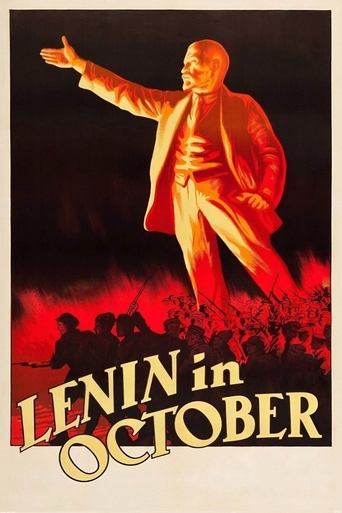
- Lenin in October (1937) by Mikhail Romm
- The End of St. Petersburg (1927) by Vsevolod Pudovkin
- Chapaev (1934) by Sergei and Georgi Vasilyev
- We Are from Kronstadt (1936) by Yefim Dzigan
This film influenced
- Lenin in 1918 (1939) by Mikhail Romm
- Alexander Nevsky (1938) by Sergei Eisenstein
- The Fall of Berlin (1949) by Mikheil Chiaureli
- The Unforgettable Year 1919 (1951) by Mikheil Chiaureli
- The Communist (1957) by Yuli Raizman
Film restoration
The film has been preserved in the Gosfilmofond of Russia, the state film archive. The original negative survived World War II and has been maintained in climate-controlled storage. The film underwent digital restoration in 2005 as part of a major project to preserve classic Soviet cinema. A high-definition version was released on DVD in Russia in 2010 with English subtitles. The restoration process removed damage from years of storage while preserving the original aspect ratio and black-and-white cinematography. The film is occasionally screened at retrospectives of Soviet cinema and at film festivals specializing in classic films. Several international archives hold copies, including the Museum of Modern Art in New York and the British Film Institute.
Where to watch
- Available on Russian streaming platform Kinopoisk HD
- DVD release by Ruscico with English subtitles
- Occasionally broadcast on Russian television channel Kultura
- Available for viewing at the Museum of Modern Art (MoMA) film archive in New York
- Screenings at film festivals specializing in classic cinema
- Accessible through some university film studies programs
- Available on select classic film streaming services specializing in international cinema