
The Man with the Gun
"Story the Bolshevik revolution through"
Keys: Space play/pause · ←/→ 10s · F fullscreen · M mute · </> speed
About this film
The story of the Bolshevik revolution through the eyes of a peasant who, as a soldier, gets caught up in the proceedings under the tutelage of Lenin.
Cast & crew
More films like this
More History films
View all →


More from Sergei Yutkevich
View all →
More about this film
About the production
Release dateSeptember 5, 1938
ProductionMosfilm, Lenfilm
Filmed inLeningrad (now Saint Petersburg), USSR, Moscow, USSR
The film was produced during Stalin's regime and was carefully crafted to align with Soviet ideological requirements. Director Sergei Yutkevich worked closely with state authorities to ensure the historical portrayal met official standards. The production faced significant challenges in recreating revolutionary-era settings, as many original locations had been transformed or destroyed. The film was shot on location in Leningrad, where many of the actual revolutionary events took place, adding authenticity to the production.
Themes
Political awakening and transformationThe role of ordinary people in historical changeClass struggle and revolutionary consciousnessLeadership and mentorship in revolutionary movementsSacrifice for ideological ideals
Themes & topics
Bolshevik RevolutionLeninPolitical transformationClass consciousnessRevolutionary struggleHistorical dramaPropaganda filmSoviet cinemaOctober RevolutionPolitical educationArmed uprisingHistorical epic
Historical background
Made in 1938, The Man with the Gun reflects production norms of the studio-system peak and early sound decades—shorter runtimes, regional audiences, and limited preservation infrastructure.
Why this film matters
Historians reference The Man with the Gun (1938) when discussing 1938 film by Sergei Yutkevich.
Making of
The making of 'The Man with the Gun' was a major undertaking for Soviet cinema in 1938. Director Sergei Yutkevich spent months researching historical documents and consulting with revolutionary veterans to ensure accuracy. The casting of Maksim Shtraukh as Lenin was particularly significant, as he had previously portrayed Lenin on stage and was considered an authority on the historical figure. The film crew faced considerable pressure from Soviet authorities to create a work that would both educate and inspire audiences about the revolution. Many scenes were filmed at actual historical locations in Leningrad, including the Winter Palace and the Finland Station. The production employed thousands of extras for crowd scenes depicting revolutionary demonstrations and battles. The film's score was composed by Dmitri Kabalevsky, who would later become one of the Soviet Union's most celebrated composers.
What critics said
Trade and revival screenings have kept The Man with the Gun (1938) on the map for collectors and scholars rather than mass first-run promotion.
Did you know?
- Maksim Shtraukh, who played Lenin, was considered the definitive screen Lenin of his era and portrayed the revolutionary leader in multiple films throughout his career
- The film was one of the first major Soviet productions to depict Lenin as a central character in a narrative film rather than just in documentaries
- Director Sergei Yutkevich was only 32 years old when he made this film, yet it became one of his most celebrated works
- The character of Ivan Shadrin was based on composite real stories of peasant soldiers who joined the Bolshevik cause
- The film underwent several revisions by state censors before approval to ensure it aligned with current Soviet historical narratives
- Boris Tenin, who played Ivan Shadrin, was a relatively unknown actor before this film but became a major star afterward
- Mikhail Gelovani, who appears in the film, would later become famous for playing Stalin in multiple Soviet films
- The film's title refers to the armed worker-peasant alliance that was central to Bolshevik revolutionary theory
- Original footage of the film was damaged during World War II but was later restored from surviving elements
- The film was banned in many Western countries during the Cold War era due to its pro-Soviet content
Awards & recognition
- Stalin Prize (1941) - First Degree
- Order of Lenin awarded to director Sergei Yutkevich for the film
- Venice Film Festival - Special Mention (1938)
Visual style
The film's cinematography, handled by Yevgeni Andrikanis, employed innovative techniques for its time, including dynamic camera movements during crowd scenes and dramatic lighting for intimate moments with Lenin. The visual style combined documentary-like realism with carefully composed dramatic scenes. The battle sequences used multiple cameras to create a sense of chaos and excitement, while scenes with Lenin featured more controlled, reverential framing. The black and white photography emphasized stark contrasts between light and shadow, metaphorically representing the struggle between old and new Russia. The film made effective use of location shooting in Leningrad to ground the historical events in authentic settings.
Innovations
The film pioneered several technical innovations in Soviet cinema, including complex crowd scene choreography involving thousands of extras. The production developed new techniques for simulating battle scenes using practical effects that were both realistic and safe. The film's sound recording was particularly advanced for its time, capturing clear dialogue even during noisy crowd scenes. The editing style, which combined rapid cuts during action sequences with longer takes for dramatic moments, influenced subsequent Soviet historical films. The film also employed innovative lighting techniques to create different moods for various settings, from the darkness of the old regime to the bright hope of the revolution.
Music
The musical score was composed by Dmitri Kabalevsky, one of the Soviet Union's most prominent composers. The soundtrack blended revolutionary songs with orchestral passages that heightened the emotional impact of key scenes. Kabalevsky incorporated authentic revolutionary melodies and workers' songs to enhance the film's historical authenticity. The music swelled dramatically during revolutionary victories and became more intimate during personal moments. The score was praised for its ability to support the narrative without overwhelming the visuals. Kabalevsky's work on this film helped establish him as a major composer for Soviet cinema.
Famous quotes
A man with a gun is not just a weapon, he is the future of the revolution.
When the people awaken, no power can stand against them.
To understand the revolution, you must first understand the people who make it.
Our strength lies not in our weapons, but in our ideas.
Every peasant who picks up a gun for the cause becomes a general of the revolution.
Memorable scenes
- The pivotal hospital scene where Ivan Shadrin first meets Lenin and receives his political education
- The storming of the Winter Palace sequence with thousands of revolutionary soldiers
- The final victory celebration where Ivan realizes his transformation from peasant to revolutionary
- The tense confrontation between revolutionary forces and counter-revolutionaries on the streets of Petrograd
- Lenin's passionate speech to the workers and soldiers that inspires Ivan to join the cause
What audiences thought
The film was enormously popular with Soviet audiences upon its release, drawing large crowds throughout the USSR. Many viewers were moved by the portrayal of ordinary people's involvement in the revolution and identified with the character of Ivan Shadrin. The film became a cultural touchstone for generations of Soviet citizens, with quotes and scenes becoming part of the collective cultural memory. It was regularly re-released and shown on television, maintaining its popularity for decades. Veterans of the revolution praised its authenticity, while younger audiences found it inspiring and educational. The film's success helped solidify the Soviet public's connection to revolutionary history and reinforced their identification with Soviet ideals.
Film connections
Influenced by
- October: Ten Days That Shook the World (1928) by Sergei Eisenstein
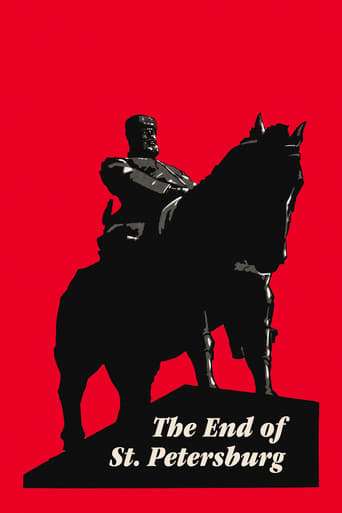
- The End of St. Petersburg (1927) by Vsevolod Pudovkin
- Chapaev (1934) by Sergei and Georgi Vasilyev
- Soviet socialist realist literature
- Lenin's own writings and speeches
- Historical paintings of revolutionary scenes
This film influenced
- Lenin in 1918 (1939) by Mikhail Romm
- The Fall of Berlin (1949) by Mikheil Chiaureli
- The Vow (1946) by Mikheil Chiaureli
- Numerous later Soviet biopics of revolutionary leaders
- Cold War-era Soviet historical epics
Film restoration
The film has been preserved in the Gosfilmofond Russian State Archive and underwent restoration in the 1970s. A digital restoration was completed in 2010 as part of a comprehensive Soviet cinema preservation project. While some original elements were damaged during World War II, sufficient material survived to create complete versions. The restored version is available in high definition and has been screened at various film retrospectives and classic cinema festivals.
Where to watch
- Available on Soviet cinema streaming platforms specializing in classic films
- Can be viewed at the Museum of Modern Art's film collection in New York
- Included in various Soviet film DVD collections distributed by international cinema archives
- Available for academic viewing through university film libraries
- Occasionally screened at classic film festivals and Soviet cinema retrospectives