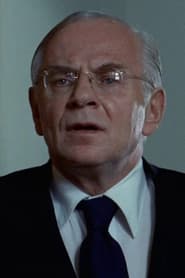
Rudolf Schündler
Actor
- Born
- April 17, 1906, Leipzig, Saxony, Germany
- Died
- December 12, 1988
- Active
- 1924-1988
- Birth name
- Rudolf Ernst Paul Schündler
Films 1
About Rudolf Schündler
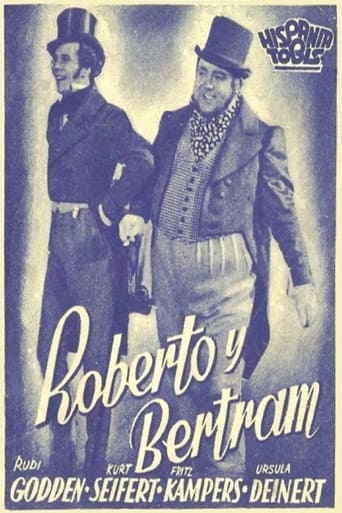
Rudolf Schündler was a prolific German actor and director whose career spanned over six decades, beginning in the silent era and lasting until his death in 1988. Born in Leipzig, he received his formal training at the Leipzig Drama School before making his stage debut in 1926. Throughout the 1930s, he became a staple of German cinema, appearing in significant works such as Fritz Lang's 'The Testament of Dr. Mabuse' (1933) and the controversial 'Robert and Bertram' (1939). Following World War II, Schündler demonstrated his versatility by founding the legendary Munich cabaret 'Die Schaubude' and transitioning into film direction, where he helmed over two dozen popular comedies and 'Heimatfilms' during the 1950s and 60s. In his later years, he achieved international recognition for his roles in horror classics like 'The Exorcist' (1973) and 'Suspiria' (1977), as well as collaborations with New German Cinema directors like Wim Wenders. Despite battling severe vision loss in his final years, he continued to act until his passing, leaving behind a filmography of more than 250 productions.
More about Rudolf Schündler
On screen
Schündler was a quintessential character actor known for his ability to portray a wide range of types, from befuddled authority figures and comic teachers to sinister or tragic elderly men. In his early career, he utilized a sharp, theatrical precision typical of the German stage, which later evolved into a more naturalistic and often weary gravitas in his international horror and New German Cinema roles.
Impact on culture
Schündler served as a vital bridge between the classical era of German cinema (UFA) and the modern era (New German Cinema). His founding of 'Die Schaubude' was a landmark event in post-war German culture, providing a platform for political satire and intellectual discourse during the Allied occupation. Internationally, he became one of the few German actors of his generation to successfully integrate into iconic American and Italian genre cinema of the 1970s.
Lasting legacy
He is remembered as one of Germany's most enduring character actors, whose face became synonymous with the 'befuddled professor' archetype in the 1960s before being reinvented as a figure of quiet intensity in world cinema. His extensive filmography serves as a historical record of the evolution of German film from the 1920s through the 1980s.
Who they inspired
His transition from a mainstream comedy star to a respected elder statesman of the New German Cinema influenced other veteran actors to seek work with avant-garde directors like Wenders and Herzog.
Off screen
Schündler was married four times throughout his life. His most notable marriage was to the actress Christine Laszar. He had two children: a son, Oliver Schündler, who became a successful film and television producer, and a daughter who works as a documentary filmmaker and media lecturer in Berlin. In his final years, he lived in Munich and suffered from a severe eye ailment that left him nearly blind.
Education
Leipziger Schauspielschule (Leipzig Drama School)
Career milestones
- Film debut in the silent movie 'Roulette' (1924)
- Appeared in Fritz Lang's 'The Testament of Dr. Mabuse' (1933)
- Founded the influential political cabaret 'Die Schaubude' in Munich (1945)
- Directed over 20 feature films during the 1950s and 1960s
- Gained international fame as Karl the servant in William Friedkin's 'The Exorcist' (1973)
- Collaborated with Wim Wenders on 'Kings of the Road' (1976) and 'The American Friend' (1977)
- Final screen appearance in the Oscar-nominated 'The Nasty Girl' (1990), released posthumously
Iconic roles
- Karl (The Exorcist)
- Professor Milius (Suspiria)
- Dr. Arthur Knörz (Die Lümmel von der ersten Bank series)
- The Archivar (The Nasty Girl)
- The Father (Kings of the Road)
Must-see films
- The Testament of Dr. Mabuse (1933)
- Robert and Bertram (1939)
- The Exorcist (1973)
- Kings of the Road (1976)
- Suspiria (1977)
- The American Friend (1977)
Awards
- German Film Award (Filmband in Gold) for Long-standing and Outstanding Achievements in German Cinema (1982)
Nominations
- Bambi Award nomination for Best Actor (Multiple years for comedy roles)
Special recognition
- Honorary Member of the Academy of Arts, Berlin
- Posthumous recognition at various German film retrospectives
Worked often with
- Wim Wenders (Director)
- Hans H. Zerlett (Director)
- Willy Millowitsch (Actor)
- Uschi Glas (Actress)
Studios
- Tobis Filmkunst
- UFA
- Terra Film
- Warner Bros (International)
- Bavaria Film
Family
- Christine Laszar (dates unknown)
- Three other marriages (names/dates not publicly detailed)
Did you know?
- He appeared in over 250 film and television productions.
- He was nearly blind during the filming of his final roles in the 1980s.
- His role in 'The Exorcist' as Karl was one of the few times he spoke English on screen.
- He directed the first film version of 'The Violin Maker of Mittenwald' in 1950.
- His cabaret 'Die Schaubude' was forced to close in 1948 due to the currency reform in Germany.
- He played the same character, Dr. Knörz, in five different 'Lümmel' comedy films.
- He died of a heart attack shortly after completing his scenes for 'The Nasty Girl'.
In their own words
In 'The Exorcist' (as Karl): 'I'm sorry, I don't know what you're talking about.'
Regarding his career: 'I have played everything from a king to a beggar, but the most difficult role is always the one that is supposed to be normal.'
Questions and answers
Who was Rudolf Schündler?
Rudolf Schündler was a prominent German character actor and director known for a career spanning from 1924 to 1988. He is famous for his roles in German comedies and international classics like 'The Exorcist'.
What films is Rudolf Schündler best known for?
He is best known internationally for 'The Exorcist' (1973) and 'Suspiria' (1977). In Germany, he is beloved for the 'Die Lümmel von der ersten Bank' comedy series and his work with director Wim Wenders.
When was Rudolf Schündler born and when did he die?
He was born on April 17, 1906, in Leipzig, Germany, and died on December 12, 1988, in Munich, Germany.
What awards did Rudolf Schündler win?
His most significant honor was the Filmband in Gold (German Film Award) in 1982 for his lifelong contribution to German cinema.
What was Rudolf Schündler's acting style?
He was a versatile character actor who excelled at both high-energy slapstick comedy and somber, dramatic supporting roles in his later years.
Did Rudolf Schündler direct movies?
Yes, he directed more than 20 films during the 1950s and 1960s, mostly focusing on lighthearted comedies and musical films.