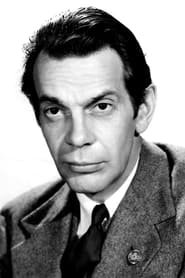
Raymond Massey
Actor
Born: August 30, 1896 in Toronto, Ontario, Canada Died: July 29, 1983 Active: 1929-1976 Birth Name: Raymond Hart Massey
Films
2 films

About Raymond Massey
Raymond Hart Massey — Canadian-American actor whose commanding presence and distinctive baritone voice made him respected character actors of the Golden Age of Hollywood. Born into a prominent Toronto family, he initially pursued education at the University of Toronto and Balliol College, Oxford, before discovering his passion for acting. His breakthrough came with his portrayal of Abraham Lincoln in the Broadway production 'Abe Lincoln in Illinois,' a role he would reprise in the 1940 film adaptation, earning him an Academy Award nomination. During World War II, Massey served as a major in the Canadian Army, temporarily interrupting his acting career while performing in training films and entertaining troops. He became a naturalized American citizen in 1944 while maintaining strong ties to his Canadian heritage, often playing American historical figures despite his nationality. Later in his career, he found considerable success on television, particularly as Dr. Leonard Gillespie in the popular medical drama 'Dr. Kildare' (1961-1966). His authoritative demeanor and intellectual approach to acting made him ideal for playing historical figures, authority figures, and complex characters throughout his five-decade career.
The Craft
On Screen
Massey was known for his commanding presence, precise diction, and authoritative demeanor that made him ideal for playing historical figures and authority roles. He employed a classical acting technique with emphasis on voice control and physical presence, delivering lines with measured, deliberate pacing that emphasized the gravitas of his characters. Standing 6'3" tall with distinctive features, he brought intellectual depth to his roles through careful character study and methodical preparation. His acting style combined theatrical training from his stage experience with the more naturalistic demands of film, creating a unique blend of formal precision and emotional authenticity that became his trademark.
Milestones
- Academy Award nomination for 'Abe Lincoln in Illinois' (1940)
- Breakthrough role as John Cabal in 'Things to Come' (1936)
- Stage triumph in 'Abe Lincoln in Illinois' on Broadway (1938)
- Television success as Dr. Gillespie in 'Dr. Kildare' (1961-1966)
- Service in Canadian Army during World War II
- Portrayal of historical figures including Lincoln and John Brown
Best Known For
Iconic Roles
Must-See Films
Accolades
Won
- Tony Award for Best Actor in a Play for 'The Best Man' (1960)
- New York Film Critics Circle Award for Best Actor for 'Abe Lincoln in Illinois' (1940)
Nominated
- Academy Award for Best Actor for 'Abe Lincoln in Illinois' (1940)
- Emmy Award for Outstanding Continued Performance by an Actor in a Leading Role for 'Dr. Kildare' (1962)
- Emmy Award for Outstanding Single Performance by an Actor in a Leading Role for 'The Invincible Mr. Disraeli' (1963)
Special Recognition
- Hollywood Walk of Fame star (6625 Hollywood Boulevard)
- Canadian Walk of Fame star
- Officer of the Order of Canada (1968)
- Doctor of Laws, University of Toronto (1950)
Working Relationships
Worked Often With
Studios
Why They Matter
Impact on Culture
Raymond Massey had a profound impact on how historical figures were portrayed in American cinema, particularly his definitive portrayal of Abraham Lincoln which set the standard for future interpretations. His performance in 'Things to Come' helped establish the visual and thematic language for science fiction films in the 1930s, influencing the genre for decades. As one of the few Canadian actors to achieve major stardom in Hollywood during the Golden Age, he paved the way for other international performers. His transition from film to television success with 'Dr. Kildare' demonstrated how established film actors could successfully adapt to the new medium, influencing career strategies for many of his contemporaries. Massey's dignified portrayal of authority figures helped shape American cultural perceptions of leadership and historical integrity during a critical period in Hollywood history.
Lasting Legacy
Raymond Massey's legacy endures through his iconic portrayals of historical figures, particularly Abraham Lincoln, which remain reference points for actors studying the role. His contributions to both stage and screen demonstrated the possibility of maintaining artistic integrity while achieving commercial success in Hollywood. The Massey family's continued involvement in the performing arts through his children represents a lasting theatrical dynasty. His role in bridging the gap between classical stage acting and film technique influenced subsequent generations of actors transitioning between mediums. As a cultural ambassador between Canada and the United States, he helped foster greater artistic exchange between the two countries. His performances continue to be studied in acting schools as examples of how to bring historical authenticity to contemporary audiences.
Who They Inspired
Massey influenced countless actors through his methodical approach to character preparation and his ability to bring intellectual depth to historical roles. His technique of combining extensive research with emotional authenticity became a model for actors portraying real historical figures. The success of his television career demonstrated how established film actors could successfully transition to the new medium, influencing career strategies for many of his contemporaries. His dignified portrayal of authority figures set a template for how such characters should be approached in both film and television. Younger actors, including his own children, learned from his example of maintaining artistic integrity while working within the studio system. His ability to play both American and Canadian historical figures with equal authenticity influenced how national identity was portrayed in cinema.
Off Screen
Massey was married three times and had three children. His first marriage to Marjorie Fremont ended in divorce in 1939. He then married actress Adrianne Allen in 1939, with whom he had two children, Anna and Daniel, before divorcing in 1954. His final marriage was to Dorothy Whitney in 1954, which lasted until his death. His son Daniel Massey also became an actor, and his daughter Anna Massey became a noted actress. The family was deeply involved in the arts, with his brother Vincent Massey serving as the first Canadian-born Governor General of Canada. Massey was known for his intellectual pursuits and was an avid reader and collector of books throughout his life.
Education
Attended Upper Canada College in Toronto, graduated from the University of Toronto, studied at Balliol College, Oxford University, and served in the Canadian Army during World War I where he was wounded at the Battle of Passchendaele.
Family
- Marjorie Fremont (1929-1939)
- Adrianne Allen (1939-1954)
- Dorothy Whitney (1954-1983)
Did You Know?
- Despite being Canadian, he became one of Hollywood's most frequent portrayers of American historical figures
- He was wounded at the Battle of Passchendaele during World War I and carried shrapnel in his body for the rest of his life
- His brother Vincent Massey was the first Canadian-born Governor General of Canada
- He was a distant cousin of the famous Massey family that established Massey Ferguson agricultural equipment company
- He was offered the role of the Wizard in 'The Wizard of Oz' but turned it down
- He published his autobiography 'When I Was Young' in 1976
- He was a skilled painter and sculptor in his private life
- He was one of the first major Hollywood stars to successfully transition to television stardom
- He was a founding member of the Actors Studio
- He performed in over 30 stage productions on Broadway
In Their Own Words
I have always felt that the actor's job is not just to entertain, but to illuminate the human condition through the characters he portrays.
Playing Lincoln taught me more about America than any history book could. You don't just play a role like that; you absorb the man's spirit and his times.
The stage is where actors learn their craft, but film is where they learn their limitations.
I never considered myself a movie star. I was an actor who happened to work in movies.
Television is not the enemy of film; it's simply another medium through which we can tell our stories.
Frequently Asked Questions
Who was Raymond Massey?
Canadian-American with credits in this catalog. He had a prolific career spanning nearly five decades across stage, film, and television, becoming.
What films is Raymond Massey best known for?
Titles linked here include Things to Come (1936), Abe Lincoln in Illinois (1940).
When was Raymond Massey born and when did he die?
Born August 30, 1896; died July 29, 1983.
What awards did Raymond Massey win?
Massey won a Tony Award for Best Actor for 'The Best Man' in 1960 and the New York Film Critics Circle Award for Best Actor for 'Abe Lincoln in Illinois' in 1940. He received an Academy Award nomination for Best Actor for 'Abe Lincoln in Illinois' and multiple Emmy nominations for his television work.
What was Raymond Massey's acting style?
Massey was known for his classical acting technique characterized by precise diction, commanding presence, and authoritative demeanor. He brought intellectual depth to his roles through extensive research and delivered lines with measured, deliberate pacing, making him particularly effective in portraying historical figures and authority roles.
Did Raymond Massey have any famous family members?
Yes, his brother Vincent Massey served as the first Canadian-born Governor General of Canada. His children Daniel and Anna Massey both became successful actors, continuing the family's theatrical legacy. The Massey family was also related to the prominent Massey-Ferguson agricultural equipment company founders.
How did Raymond Massey serve during wartime?
Massey served in the Canadian Army during both World Wars. In World War I, he was wounded at the Battle of Passchendaele and carried shrapnel for the rest of his life. During World War II, he served as a major and appeared in training films while entertaining troops.
What was Raymond Massey's connection to Abraham Lincoln?
Massey became most famous for his portrayals of Abraham Lincoln, first in the Broadway production 'Abe Lincoln in Illinois' (1938) and then in the 1940 film adaptation. His performance was so definitive that it set the standard for future portrayals of Lincoln and earned him widespread critical acclaim and an Academy Award nomination.