




Things to Come
"wandering sickness"
Keys: Space play/pause · ←/→ 10s · F fullscreen · M mute · </> speed
About this film
In 1940, businessman John Cabal, living in the city of Everytown in Southern England, cannot enjoy Christmas Day as the news speaks of possible war. His guest, Harding, shares his worries, while another friend, the over-optimistic Pippa Passworthy, believes that it will not Come to pass, and if it does, it will accelerate technological progress. An aerial bombing raid on the city that night results in general mobilisation and then global war with the unnamed enemy.
Cast & crew
More films like this
More Drama films
View all →







More about this film
About the production
Release dateFebruary 20, 1936 (London premiere), June 5, 1936 (US release)
Budget£200,000 (approximately $1 million in 1936, making it among the costliest British films of its time)
Box officeThe film was not a commercial success in Britain initially, but performed better internationally, particularly in the United States where it was distributed by United Artists
ProductionLondon Film Productions, United Artists
Filmed inDenham Film Studios, Buckinghamshire, England, Shepperton Studios, Surrey, England
The production was notably ambitious for its time, featuring elaborate miniature models and special effects that took nearly two years to complete. H.G. Wells himself was heavily involved in the production, writing the screenplay and insisting on specific artistic choices. The film's production was so complex that it required multiple units working simultaneously, with William Cameron Menzies supervising the overall visual design while other directors handled specific sequences.
Themes
The conflict between individual freedom and collective planningThe role of science and technology in human progressThe cyclical nature of war and peaceHumanity's capacity for self-destruction and rebirthThe tension between tradition and progress
Themes & topics
future warutopiadystopiaspace traveltechnological progresspost-apocalypticscientific rationalismair warfareplaguerebuilding civilizationpropagandasocial engineeringgeneration gaprevolutioncollectivism
Historical background
Things to Come (1936) emerged during the studio era and wartime cinema. In 1940, businessman John Cabal, living in the city of Everytown in Southern England, cannot enjoy Christmas Day as the news speaks of possible war. Archival records and catalog entries help place the work within film-history surveys of the period.
Why this film matters
Preserved under Wikidata ID Q241141, Things to Come is valued as a screen drama within catalog and archive collections. Wikipedia's "Things to Come" entry connect it to broader histories of cinema exhibition and restoration.
Making of
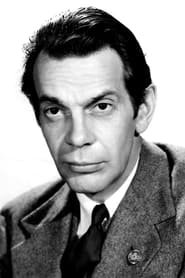
The production of Things to Come was marked by intense collaboration and conflict between H.G. Wells and the filmmakers. Wells, then 70 years old, was determined to see his vision realized exactly as he imagined it, spending long hours on set and often rewriting scenes during filming. Director William Cameron Menzies, though officially credited as production designer, effectively co-directed the film alongside several uncredited directors. The special effects team, led by Lawrence Butler, pioneered numerous techniques including traveling mattes and miniature photography that would become industry standards. The casting was particularly significant - Raymond Massey was Wells' personal choice for the lead, believing his stern, intellectual presence perfectly embodied the rationalist hero. The war sequences were filmed using innovative techniques, including actual explosions and miniature models that were photographed at high speed to create realistic destruction. The production faced numerous delays due to the complexity of the effects work, with the futuristic city models requiring months of construction and testing.
What critics said
Critical writing on Things to Come emphasizes its craft and historical interest. Things to Come became a landmark in production design.
Did you know?
- H.G. Wells was so determined to maintain creative control that he insisted on final cut privileges and personally oversaw every aspect of production, making this one of the few films where a major author had such complete authority over the adaptation of their work.
- The film's massive scale required over 3,000 extras, many of whom were actual British soldiers on leave during the war sequences.
- The futuristic city models were so detailed and expensive that they cost more than the entire budgets of many contemporary British films.
- Raymond Massey played both John Cabal and his grandson Oswald Cabal, becoming one of the first actors to play dual roles in a science fiction film to show generational progression.
- The film predicted many technological advances that eventually came true, including video phones, television screens in public spaces, and international air travel.
- The bombing sequences were so realistic that they were reportedly used as actual training footage by the British military during WWII.
- The original running time was 130 minutes, but Wells himself supervised cuts to bring it down to a more manageable length for theatrical release.
- The film's title was changed from 'The Shape of Things to Come' to simply 'Things to Come' for its American release to avoid confusion with Wells' novel.
- The famous 'space gun' sequence took six months to film using revolutionary special effects techniques.
- Despite being made in 1936, the film's depiction of gas masks and air raid precautions proved eerily prescient when WWII began three years later.
Awards & recognition
- National Board of Review Award for Best Foreign Film (1936)
- Venice Film Festival - Mussolini Cup nomination (1936)
Visual style
The cinematography, primarily by Georges Périnal, was revolutionary for its time, employing innovative techniques to create the film's visionary future worlds. The use of deep focus photography allowed for complex compositions showing both foreground and background elements in sharp detail, particularly effective in the futuristic city sequences. The film pioneered the use of traveling mattes to combine live action with miniature models, creating seamless integration between actors and elaborate sets. The war sequences utilized handheld cameras and rapid editing to create documentary-like realism, while the future scenes employed smooth, gliding camera movements to convey technological advancement. The lighting design evolved dramatically throughout the film, from the harsh, naturalistic light of the war years to the clean, artificial illumination of the future society. The black and white photography was used to maximum effect, with strong contrasts between the darkness of the war years and the brightness of the technological future.
Innovations
Things to Come was groundbreaking in numerous technical aspects, setting new standards for special effects and production design. The film's miniature effects, supervised by Lawrence Butler, were revolutionary, using forced perspective and innovative camera techniques to create convincing cityscapes and destruction sequences. The development of the traveling matte process allowed for seamless integration of actors with miniature sets, a technique that would become standard in the industry. The film featured some of the earliest uses of process projection for background elements, particularly in the flying sequences. The production design by William Cameron Menzies introduced the concept of 'production designer' as a distinct creative role, with his comprehensive visual approach influencing how films would be designed thereafter. The film's sound recording techniques were also advanced for the time, using multiple microphones and innovative mixing to create complex audio environments. The space launch sequence used revolutionary optical printing techniques to create the illusion of rocket propulsion and space travel.
Music
The musical score was composed by Arthur Bliss, one of Britain's leading classical composers, who created what is considered one of the first truly modern film scores. Rather than using traditional romantic themes, Bliss employed dissonant harmonies and rhythmic complexity to reflect the film's modernist themes. The score was notable for its use of leitmotifs to represent different concepts and characters, with the 'Wings Over the World' theme becoming particularly iconic. Bliss incorporated electronic elements, including the theremin, to create otherworldly sounds for the space sequences. The music was recorded by a full orchestra at EMI's Abbey Road Studios, making it especially ambitious film scores of its time. The soundtrack also featured innovative sound design, with the mechanical sounds of the future city created using industrial recordings and manipulated audio. The complete score was later released as a concert suite and remains widely praised film compositions of the 1930s.
Famous quotes
'Which shall it be? Progress or chaos?' - John Cabal
'We have learned. We have learned that the individual is nothing, the species is everything.' - Oswald Cabal
'For Man is nothing... but... what he makes of himself!' - Oswald Cabal
'All the universe or nothingness. Which shall it be, Passworthy? Which shall it be?' - Oswald Cabal
'If we don't end war, war will end us.' - John Cabal
'The old world is dying. A new world is struggling to be born.' - The Boss
'In all the universe, nothing remains constant. Nothing.' - Oswald Cabal
'We're not going to be afraid anymore. We're going to be masters!' - John Cabal
Memorable scenes
- The opening Christmas Eve sequence where the threat of war looms over festive celebrations, creating a powerful juxtaposition of peace and impending doom
- The devastating air raid on Everytown, featuring groundbreaking special effects of bombing and destruction that proved eerily prophetic
- The emergence of John Cabal in his flying machine, representing the dawn of a new technological age
- The reveal of the futuristic city of 2036, with its sweeping architecture and advanced technology
- The climactic space launch sequence, where humanity reaches for the stars despite internal conflict
- The confrontation between The Boss and John Cabal, representing the clash between barbarism and civilization
- The final debate aboard the space gun about humanity's future, encapsulating the film's central philosophical themes
What audiences thought
Initial audience reception was somewhat disappointing, particularly in Britain where the film's intellectual tone and didactic elements failed to connect with mainstream moviegoers accustomed to more conventional entertainment. Many found Wells' philosophical speeches heavy-handed and the pacing too slow. However, the film developed a cult following among intellectuals and science fiction enthusiasts who appreciated its serious approach to speculative themes. American audiences were somewhat more receptive, though the film still performed modestly at the box office. Over the decades, audience appreciation has grown substantially, with the film now regarded as a classic by science fiction fans and cinema enthusiasts. Modern audiences often express surprise at how many of the film's predictions about technology and society proved accurate, as well as its relevance to contemporary debates about progress, technology, and human values.
Film connections
Influenced by
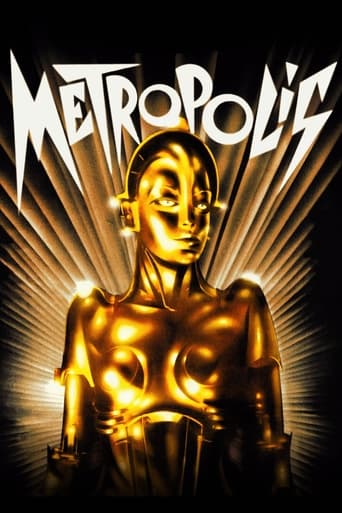
- Metropolis (1927)
- Brave New World by Aldous Huxley
- The Shape of Things to Come by H.G. Wells
- Soviet constructivist art and architecture
- Bauhaus design principles
- Italian Futurism
- German Expressionist cinema
This film influenced
- 2001: A Space Odyssey
- Blade Runner
- Brazil
- Metropolis
- The Day the Earth Stood Still
- Planet of the Apes
- Star Wars
- Children of Men
- Gattaca
- The Matrix
Film restoration
The film has been well-preserved and restored multiple times. The British Film Institute holds original elements and has overseen several restorations, most notably for the 2013 Blu-ray release. The original nitrate negatives survived, allowing for high-quality digital restoration. Both the British and American versions exist in archives, with the British cut generally considered definitive. The film entered the public domain in many countries, which has led to numerous home video releases of varying quality. Criterion Collection released a specially restored version in 2013 with extensive bonus features. The restoration work has revealed details and visual effects not seen since the original theatrical release.
Where to watch
- The Criterion Channel
- Kino Lorber Blu-ray and DVD releases
- Public domain streaming sites (various quality levels)
- Amazon Prime Video (depending on region)
- YouTube (public domain uploads)
- The British Film Institute's streaming service (UK)
- MUBI (occasionally featured in collections)
- Tubi (free streaming)
- Vudu (digital rental/purchase)
- Apple TV/iTunes (digital purchase)