
Santa Fe Trail
"While there they aid in the capture and execution of the abolitionist."
Keys: Space play/pause · ←/→ 10s · F fullscreen · M mute · </> speed
About this film
As a penalty for fighting fellow classmates days before graduating from West Point, J.E.B. Stuart, George Armstrong Custer and four friends are assigned to the 2nd Cavalry, stationed at Fort Leavenworth. While there they aid in the capture and execution of the abolitionist, John Brown following the Battle of Harper's Ferry.
Cast & crew
More Western films
View all →

More from Michael Curtiz
View all →

More about this film
About the production
Release dateDecember 13, 1940
Budget$1,698,000
Box office$2,500,000 (domestic rentals)
ProductionWarner Bros. Pictures
Filmed inWarner Brothers Burbank Studios - 4000 Warner Boulevard, Burbank, California, USA, Corriganville, Ray Corrigan Ranch, Simi Valley, California, USA, Lone Pine, California, USA, Sonora, California, USA
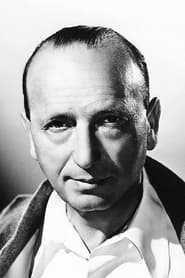
The film was one of Warner Bros.' most expensive productions of 1940, featuring large-scale battle sequences and thousands of extras. The production faced significant historical accuracy challenges, as the script took considerable liberties with the actual events and relationships between historical figures. The Harper's Ferry sequence was particularly complex to film, requiring detailed set construction and choreographed action sequences. Director Michael Curtiz pushed for maximum authenticity in military uniforms and equipment, though the timeline was compressed for dramatic effect.
Themes
Themes & topics
West PointJohn BrownHarper's FerryCivil War PreludeCavalryAbolitionismHistorical DramaRomanceMilitary AcademyKansasFort Leavenworth
Historical background
Exhibitors around 1940 slotted Santa Fe Trail into mixed bills where shorts, newsreels, and features shared the same program.
Why this film matters
Reference works on 1940 cinema cite Santa Fe Trail when tracing genre and regional production patterns.
Making of
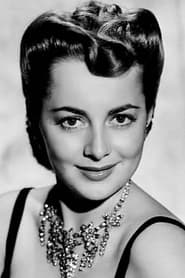
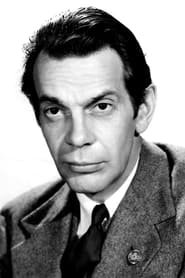
The production was a massive undertaking for Warner Bros., requiring extensive research into the period despite the fictionalized elements. Director Michael Curtiz, known for his meticulous attention to detail, worked closely with the art department to create authentic 1850s settings. The casting of Errol Flynn as J.E.B. Stuart was controversial, as Flynn was Australian and the character was historically American. However, Flynn's star power and previous successes with de Havilland made him the studio's choice. Raymond Massey spent weeks studying John Brown's writings and speeches to perfect his portrayal, creating a performance that many critics found chillingly authentic. The battle sequences were filmed using hundreds of extras and carefully choreographed stunt work, with some scenes taking days to complete. The film's score by Max Steiner was composed simultaneously with the filming, allowing the music to influence the pacing and emotional tone of key scenes.
What critics said
Trade papers near 1940 listed Santa Fe Trail as program material rather than headline art cinema.
Did you know?
- This was the eighth of nine films that Errol Flynn and Olivia de Havilland made together, following their successful collaborations in 'Captain Blood' and 'The Adventures of Robin Hood'.
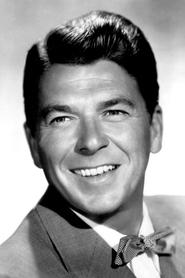
- Ronald Reagan, who plays Custer, would later become President of the United States, making this one of several films where a future president portrayed a historical figure.
- Raymond Massey's portrayal of John Brown was so convincing that he received death threats from people who thought he was actually promoting abolitionist views.
- The film was controversial upon release for its sympathetic portrayal of Southerners and its depiction of John Brown as a fanatic rather than a hero.
- Historical inaccuracies abound: Stuart and Custer were not at West Point together, and Stuart was not present at Brown's execution.
- The film was nominated for two Academy Awards despite its historical liberties.
- Max Steiner's score incorporated variations on 'The Battle Hymn of the Republic' and 'Dixie' to represent the North-South conflict.
- The Harper's Ferry set was so elaborate that it remained standing for months, being used in other productions.
- Olivia de Havilland reportedly disliked the historical inaccuracies but fulfilled her contract obligation.
- The film's success led to Warner Bros. considering a sequel about the Civil War, though it was never produced.
Awards & recognition
- Academy Award for Best Art Direction (Black-and-White) - Nominated
Visual style
The cinematography by Sol Polito employed the deep focus and dramatic lighting characteristic of Warner Bros. productions of the era. The film features sweeping landscapes and carefully composed battle scenes that emphasize the scale of the conflict. Polito used low-angle shots to enhance the heroic stature of the protagonists and dramatic shadows during John Brown's scenes to create visual tension. The Harper's Ferry sequence sophisticated camera movement and editing techniques that heighten the action sequences. The black-and-white photography creates stark contrasts that mirror the moral and political divisions at the heart of the story.
Innovations
The film featured innovative techniques for its large-scale battle sequences, using multiple cameras to capture complex action choreography. The Harper's Ferry set construction was a technical marvel, featuring detailed reproductions of 19th-century buildings and strategic positioning for dramatic camera angles. The production utilized advanced matte painting techniques to extend sets and create the illusion of larger locations. The sound engineering team developed new methods for recording dialogue during loud battle scenes, ensuring clarity while maintaining the chaos of combat. The film's special effects, particularly in the burning of Harper's Ferry, were considered state-of-the-art for 1940.
Music
Max Steiner's powerful score incorporates variations on period songs including 'The Battle Hymn of the Republic' and 'Dixie' to musically represent the North-South conflict. Steiner composed original themes for the main characters, with a noble theme for Stuart and more ominous music for John Brown. The score uses leitmotifs to develop the narrative and emotional arc, particularly in the romantic scenes between Flynn and de Havilland. The battle sequences feature dynamic orchestral arrangements that enhance the action without overwhelming the dialogue. Steiner's music was nominated for an Academy Award, reflecting its contribution to the film's impact and its technical excellence.
Famous quotes
John Brown: 'I am consecrated to this work. I have sworn eternal war against slavery!'
J.E.B. Stuart: 'There's a right way and a wrong way to do things, and the Army way is the right way!'
Kit Carson Holliday: 'You can't serve two masters, J.E.B. - your heart and your duty.'
John Brown: 'I would rather die for freedom than live without it!'
George Custer: 'Some day we'll all have to choose sides, and I hope we choose the right one.'
Memorable scenes
- The intense confrontation between J.E.B. Stuart and John Brown in the Kansas jail, where Massey's powerful delivery of Brown's abolitionist rhetoric creates palpable tension.
- The elaborate Harper's Ferry raid sequence, featuring hundreds of extras, burning buildings, and choreographed combat that the film's technical prowess.
- The emotional West Point graduation scene where the cadets receive their assignments, establishing the characters' military careers and personal relationships.
- The romantic riverboat scene between Flynn and de Havilland, providing a moment of tenderness amid the historical drama.
- John Brown's final speech before his execution, where Raymond Massey delivers a haunting performance that elevates the film beyond typical Western fare.
What audiences thought
The film was a commercial success upon its release, resonating with audiences who were drawn to its combination of action, romance, and historical drama. Errol Flynn's star power and his chemistry with Olivia de Havilland were major draws, as was the film's spectacular battle sequences. Audiences of the time were less concerned with historical accuracy than with entertainment value, and the film delivered on that front. The movie's themes of duty, honor, and national unity struck a chord with viewers in 1940-41, as America faced its own moment of national decision. The film's success at the box office demonstrated the enduring appeal of Westerns and historical epics to American audiences during this period.
Film connections
Influenced by
- Gone with the Wind (1939)
- Stagecoach (1939)
- Jezebel (1938)
- The Life of Emile Zola (1937)
This film influenced
- They Died with Their Boots On (1941)
- The Cavalry (1936)
- Union Pacific (1939)
- The Great Race (1965)
Film restoration
The film is well-preserved in the Warner Bros. archive and has been digitally restored for home video releases. The original nitrate negatives were successfully transferred to safety stock in the 1950s. The film is part of the Warner Bros. library maintained by the UCLA Film and Television Archive. A high-definition restoration was completed in 2015 for the Warner Archive Collection Blu-ray release, which included extensive cleanup of damage and color correction for optimal viewing quality.
Where to watch
- Warner Archive Blu-ray
- iTunes/Apple TV
- Amazon Prime Video (for purchase/rental)
- Google Play Movies
- Vudu
- The Criterion Channel (occasionally featured)
- Turner Classic Movies (periodically broadcast)