Films
1 film
About Enid Stamp-Taylor
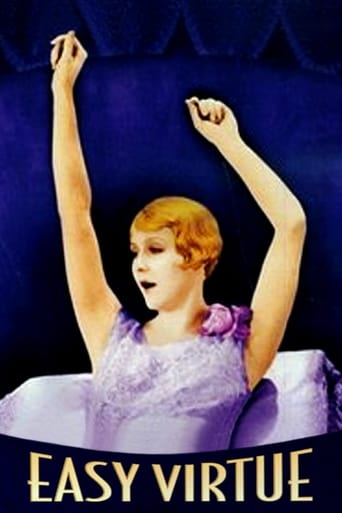
British actress of the late silent-era and early sound period: screen career appears to have been brief, with the surviving record placing her film activity in 1928. She is Enid Stamp-Taylor appeared in Easy Virtue (1928), the silent adaptation of Noel Coward's play directed by Alfred Hitchcock, which situates her within transitional moments in British cinema. Because her known filmography is extremely limited, much of her career cannot be reconstructed with certainty from readily available surviving sources, and she appears to have been one of many performers whose work was concentrated in a short span rather than a long, heavily documented Hollywood-style career. Her name suggests she worked in British entertainment circles during a period when stage-trained actors frequently moved between theatre and the growing film industry. No reliable evidence has been found here for a substantial body of later screen work, major studio stardom, or a long list of credits, which makes her a somewhat elusive figure in classic film history. Even so, her association with Easy Virtue means she remains part of the historical record of early Hitchcock and late silent British cinema. As with many performers from the period, her biography is constrained by incomplete archival documentation, and some personal details are not firmly verifiable from standard reference sources.
The Craft
Milestones
- Appeared in Easy Virtue (1928), a notable late silent-era British film directed by Alfred Hitchcock
- Was part of the cast of a film adaptation of a Noel Coward work, linking her to prominent interwar British theatrical culture
- Represents the class of performers who worked briefly in silent or early transitional cinema and are preserved primarily through film credits rather than extensive publicity records
Best Known For
Iconic Roles
Must-See Films
Working Relationships
Worked Often With
Studios
Why They Matter
Impact on Culture
Enid Stamp-Taylor's cultural impact lies less in celebrity than in historical presence: she is one of the many performers who helped populate the transitional British screen at the end of the silent era. Her connection to Easy Virtue places her within an important cinematic lineage, since the film belongs to Alfred Hitchcock's early work and to the adaptation of a Noel Coward property, both significant names in British cultural history. Performers like Stamp-Taylor are valuable to film historians because they illustrate the breadth of acting talent that supported the emerging film industry beyond the most famous stars. Even when individual careers were brief, these actors contributed to the texture, authenticity, and social world depicted in period cinema. Her presence in the archival record underscores how many early film artists are known today primarily through surviving casts and trade references rather than extensive biographies.
Lasting Legacy
Her lasting legacy is primarily archival and historical: she is remembered through the credit record of Easy Virtue and through her inclusion in film histories of early British cinema. For researchers and database users, she represents the many lesser-documented performers whose work is essential to understanding the full cast ecology of silent-era filmmaking. Because her screen career is so sparsely documented, her legacy is tied to preservation and identification rather than fame, making her an example of how fragile early film stardom can be in the historical record. She remains notable to Hitchcock scholars and silent-film historians as part of the ensemble surrounding one of Hitchcock's early surviving features. In that sense, her importance is not in a large body of work but in the fact that she is one of the names that helps reconstruct the collaborative fabric of 1920s British cinema.
Who They Inspired
There is no documented evidence that Enid Stamp-Taylor directly influenced later actors or directors in a measurable way. Her influence is indirect and historical, insofar as her participation in a surviving early Hitchcock film contributes to the broader understanding of performance styles, casting practices, and production culture in late silent British cinema. For modern scholars, performers like her help illuminate the kinds of supporting players who shaped the screen language of the period even when they did not become major stars. Her presence is therefore influential to film history research rather than to a clearly traceable artistic lineage.
Off Screen
No reliable, widely accessible biographical record was found detailing Enid Stamp-Taylor's personal life, family background, marriages, or later years. She appears to have been a performer whose public trace survives mainly through her screen credit rather than through extensive press coverage or memoir material. Because of that, it is not possible to state with confidence whether she married, had children, or pursued a longer stage career under the same name. Any more specific claims would risk confusion with similarly named individuals or undocumented performers of the era.
Did You Know?
- She is Enid Stamp-Taylor appeared in Easy Virtue (1928), a film now especially interesting for Alfred Hitchcock scholarship.
- Her known screen activity falls entirely within a single year, 1928, making her an elusive figure in the record.
- Because she appears in a late silent-era British film, she likely worked during a time when many actors were transitioning between stage and screen.
- Her surname includes a hyphenated form, Stamp-Taylor, which helps distinguish her from similarly named performers in historical databases.
- There is no widely available evidence of a long filmography, so her surviving public trace is unusually compact.
- She is an example of the many early cinema performers whose work survives mainly through cast lists rather than publicity material.
- Her association with a Noel Coward adaptation links her to interwar British theatrical prestige.
- She should not be confused with later or similarly named entertainers, as her film record appears to be specific to the late 1920s.
Frequently Asked Questions
Who was Enid Stamp-Taylor?
British with credits in this catalog. Her surviving film record is very brief, so she is primarily remembered as part of the cast history of early British cinema rather than as a major star.
What films is Enid Stamp-Taylor best known for?
Titles linked here include Easy Virtue (1928).
When was Enid Stamp-Taylor born and when did she die?
Her birth and death dates could not be reliably verified from the available record. As a result, both details remain unknown here, and care should be taken not to speculate without stronger archival evidence.
What awards did Enid Stamp-Taylor win?
No awards or formal honors are documented in the accessible record for Enid Stamp-Taylor. This is not unusual for performers from the silent era, especially those whose screen careers were short and sparsely recorded.
What was Enid Stamp-Taylor's acting style?
Her acting style cannot be assessed in detail from the surviving information available here. Since her known screen work is limited, any description would be speculative without reviewing her performance directly and comparing it to contemporary reviews or production notes.
What is Enid Stamp-Taylor's legacy in film history?
Her legacy is primarily historical and archival. She is part of the cast record of a significant early Hitchcock film, which makes her relevant to scholars studying late silent British cinema and the many supporting performers who helped shape it.