
Films
2 films

About Lia Borré
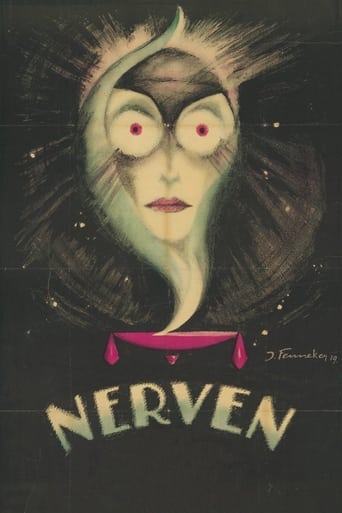
Lia Borré appears once in this catalog: Nerves (1919). She emerged German cinema, appearing in significant productions that reflected the artistic experimentation of the time. Her most prominent role was in Robert Reinert's influential film 'Nerves' (1919), a work that explored psychological themes and was considered ahead of its time in its approach to mental health and urban anxiety. Borré also appeared in 'The Artificial Man' (1916), another early German production that showcased the country's developing film industry. Her career, though short, coincided with the birth of German Expressionism in cinema, placing her at the forefront of an artistic revolution. Unfortunately, like many actors from this transitional period, detailed records of her life and career are scarce, reflecting the often undocumented nature of early film work. Her disappearance from film records after 1919 suggests she may have left the industry during the chaotic post-World War I period in Germany.
The Craft
On Screen
Borré's acting style was representative of the transitional period between theatrical and cinematic performance, likely employing the exaggerated gestures typical of early silent film while beginning to embrace more naturalistic expressions that would become standard in German Expressionist cinema. Her performance in 'Nerves' suggested an ability to convey complex psychological states, fitting the film's avant-garde approach to mental and emotional turmoil.
Milestones
- Starred in 'Nerves' (1919), a landmark German psychological drama
- Appeared in 'The Artificial Man' (1916) during early German cinema development
- Worked during the birth of German Expressionist cinema movement
Best Known For
Iconic Roles
Must-See Films
Working Relationships
Worked Often With
Studios
Why They Matter
Impact on Culture
Lia Borré's cultural impact is primarily tied to her participation in 'Nerves' (1919), a film that has been recognized by film historians as an important precursor to German Expressionist cinema. The film's exploration of psychological themes and urban modernity was groundbreaking for its time, and Borré's contribution, though not extensively documented, places her within this significant artistic movement. Her work represents the transition from early narrative cinema to more psychologically complex filmmaking that would define German cinema's golden age in the 1920s.
Lasting Legacy
Lia Borré's legacy is that of a representative figure from the foundational period of German cinema, particularly the era that gave birth to German Expressionism. While not a major star whose name would be widely recognized today, her participation in historically significant films like 'Nerves' ensures her place in film history as part of the artistic revolution that transformed cinema from mere entertainment to a serious art form. Her brief career exemplifies the many actors who contributed to cinema's development but whose stories remain largely untold.
Who They Inspired
As an actor from the transitional period of German cinema, Borré's influence would have been primarily through her participation in films that pushed the boundaries of cinematic expression. Her work in 'Nerves' contributed to the development of psychological realism in film, which would influence subsequent generations of German and international filmmakers. However, due to the limited documentation of her career and the loss of many films from this period, her direct influence on other actors cannot be definitively traced.
Off Screen
Very little is documented about Lia Borré's personal life, which was common for many actors of the early silent era who were not major stars. The brevity of her career (only three years) and the turbulent historical period in Germany during and immediately after World War I may have contributed to the scarcity of personal records. Like many early film actors, she may have come from a theatrical background or been discovered during the rapid expansion of the German film industry.
Did You Know?
- Appeared in films during the exact period when German Expressionism was emerging as a major artistic movement
- Her film 'Nerves' (1919) was directed by Robert Reinert, a figure in German cinema
- The Artificial Man (1916) was made during World War I, a period of significant change in German film production
- Her career ended just as German cinema was entering its golden age of the 1920s
- Like many silent era actors, her complete filmography may never be known due to lost films and incomplete records
- Her participation in 'Nerves' places her within the tradition of early German psychological cinema
- The brevity of her career was not uncommon for actors of this period, many of whom left the industry as it professionalized
Frequently Asked Questions
Who was Lia Borré?
German actress active during the silent film era from 1916 to 1919. She appeared in notable early German films including 'The Artificial Man' (1916) and 'Nerves' (1919), working during the pivotal period when German Expressionist cinema was emerging.
What films is Lia Borré best known for?
Titles linked here include Nerves (1919), The Artificial Man (1916).
When was Lia Borré born and when did she die?
Unfortunately, specific birth and death dates for Lia Borré are not documented in available historical records, which is common for many actors from the early silent era who were not major stars.
What awards did Lia Borré win?
No awards or nominations for Lia Borré have been documented, which reflects the limited formal recognition systems for film actors during the very early silent era in Germany.
What was Lia Borré's acting style?
Borré's acting style was representative of the transitional period between theatrical and cinematic performance, likely employing the exaggerated gestures typical of early silent film while beginning to embrace more naturalistic expressions that would become standard in German Expressionist cinema.