Siri Lundin
Actor
- Active
- 1916-1916
Films 2
About Siri Lundin
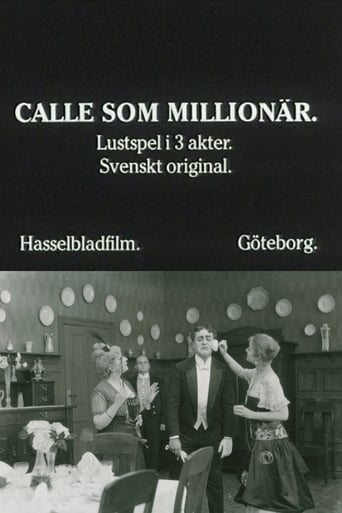
Siri Lundin appears in surviving film credits as a Swedish silent-era actor, with confirmed screen work in 1916 in Calle as a Millionaire and The Minister President. Beyond those two film appearances, readily verifiable biographical information is extremely limited, which is not unusual for minor performers from the silent period whose careers were documented only sparsely in period trade papers and fragmented film records. The available evidence suggests that Lundin was active in Scandinavian cinema during the mid-1910s, a formative moment when the industry was developing its own styles and personnel separate from stage traditions. Because no authoritative, widely cited biographical source has preserved fuller details of her life, much of her personal history, training, and later career remains undocumented in standard reference works. Her name survives primarily through filmography listings rather than through extensive critical commentary or star publicity. As a result, Siri Lundin is best understood today as part of the broader body of early Nordic screen performers whose work contributed to silent cinema history even when the historical record is incomplete.
More about Siri Lundin
In film history
Siri Lundin's cultural significance lies less in celebrity than in historical presence: she is part of the early cohort of Scandinavian screen artists whose work helped shape silent cinema in the 1910s. Even when documentation is scarce, credited appearances in surviving filmographies contribute to the mapping of national film industries and the reconstruction of personnel networks from the period. Her film work helps scholars understand the breadth of participation in early Swedish-language or Scandinavian production, where many performers worked in a rapidly evolving, pre-star-system environment. Her legacy is therefore archival as much as artistic. For film historians and database researchers, names like Lundin matter because they preserve evidence of otherwise overlooked contributors to early cinema. She stands as a reminder that film history is built not only around major auteurs and marquee stars, but also around lesser-documented actors whose performances supported the growth of the medium in its silent era.
Later reputation
Siri Lundin's lasting legacy is the preservation of her name in silent-film records, where even a small filmography can hold value for historians tracing the development of early Scandinavian cinema. Her surviving credit entries provide evidence of an active performing community in 1916 and help fill out the cast rosters of otherwise obscure historical productions. In the absence of richer biographical data, her importance today is primarily documentary: she remains a verifiable participant in the early film culture of Sweden. That alone makes her a useful figure for archival databases, restoration notes, and national cinema histories that aim to recover the full scope of silent-era labor. Her legacy is therefore one of historical representation and research value rather than mainstream fame.
Influence
No direct influence on later actors or filmmakers can be verified from the available evidence. However, performers such as Siri Lundin contributed to the foundation of early Scandinavian screen acting by participating in productions that established performance norms before synchronized sound and modern studio systems. Her presence in surviving credits indirectly reflects the broader influence of early silent-era actors on the evolution of naturalistic, camera-aware performance in Nordic cinema.
Off screen
No reliable public information is readily available about Siri Lundin's personal life, including family background, marriages, children, or later years. Silent-era performers who did not become major international stars were often documented only briefly in cast lists, leaving modern researchers with little to reconstruct beyond film appearances. At present, no verified biographical record provides details about her private life or activities after 1916.
Credits
- Appeared in the 1916 silent film Calle as a Millionaire
- Appeared in the 1916 silent film The Minister President
- Represents one of the many early Scandinavian screen performers active during the formative silent era
Films
- Calle as a Millionaire (1916)
- The Minister President (1916)
Notes
- Siri Lundin is documented in film records mainly through two 1916 silent-film credits.
- Her known screen career, at least in surviving sources, is extremely short or extremely under-documented.
- She is associated with early Swedish or Scandinavian silent cinema rather than later Golden Age Hollywood.
- Because of limited surviving documentation, many standard biography fields remain unknown rather than merely unconfirmed.
- Her filmography includes titles whose English-language renderings suggest period political and social drama themes.
- Researchers often encounter silent-era performers like Lundin only through cast lists, not through extensive personal archives.
- Her case illustrates how many early film artists remain difficult to reconstruct in detail despite confirmed screen work.
Questions
Who was Siri Lundin?
Siri Lundin was a Swedish silent-era actor known from surviving film credits in 1916. She is a minor but verifiable figure in early Scandinavian cinema, with documentation limited primarily to her screen appearances.
What films is Siri Lundin best known for?
She is best known for Calle as a Millionaire (1916) and The Minister President (1916). These are the only confirmed film titles readily associated with her in surviving records.
When was Siri Lundin born and when did she die?
Her birth date, birthplace, and death date are not reliably documented in readily available sources. As a result, those details remain unknown rather than verified.
What awards did Siri Lundin win?
No awards or nominations are currently documented for Siri Lundin in surviving reference material. This is common for many early silent-era actors whose careers were only lightly recorded.
What was Siri Lundin's acting style?
Her specific acting style is not preserved in detailed criticism or surviving performance analysis. Given her era, she would have worked within silent-film conventions that emphasized expressive gesture, facial clarity, and visual storytelling.
What is Siri Lundin's legacy in film history?
Her legacy is primarily archival and historical. She remains part of the documented cast of early 1916 cinema, helping researchers reconstruct the development of Swedish silent film and its performers.