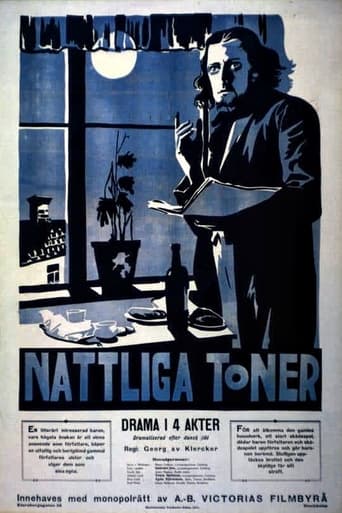
Also available on: Archive.org
The Minister President

The Minister President

1916 Sweden
Romantic rivalryGreed and financial corruptionMoral conflictSocial ambitionThe consequences of unethical business practices

Plot

Jean Bazard and the lawyer Alphonse Car compete for the affection of the beautiful Rose Legrange, and Bazard ultimately wins her love. While the romantic rivalry unfolds, Car proves more adept at ruthless financial speculation, joining forces with banker Leroux, who is also Rose’s uncle. The story contrasts sincere emotional attachment with corrupt ambition, using the love triangle to expose moral decay in business and politics. As the characters maneuver for advantage, the film develops into a critique of greed, social climbing, and the damage caused when private desire and public power are entangled. The title suggests a political dimension, but the narrative emphasis, as preserved in the known plot outline, centers on intrigue, speculation, and the personal consequences of unethical behavior.

About the Production

Release Date 1916

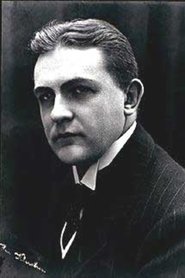
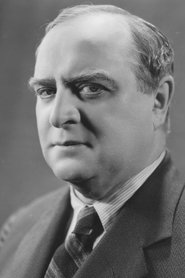
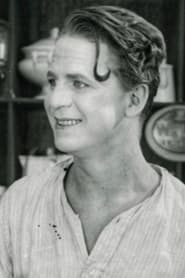
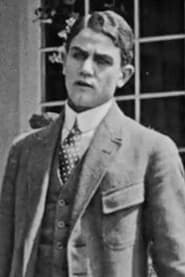
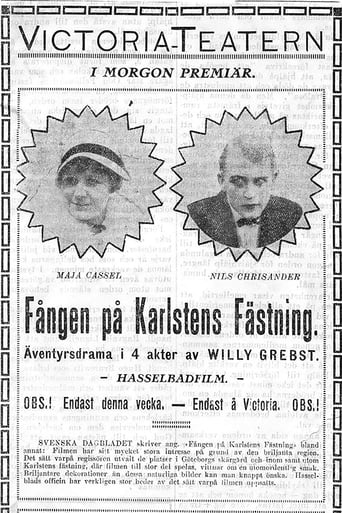
The film was directed by Georg af Klercker, one of the notable figures of early Swedish cinema, during the silent era when feature-length dramatic films were becoming an important export form for Scandinavian studios. Surviving documentation for this title is limited, and many standard production details such as exact company credits, shoot locations, and budget figures are not readily verifiable from available reference sources. Like many films from the 1910s, it was likely produced under constrained studio conditions with staged interiors and carefully composed tableaux rather than extensive location work. The film’s cast includes Carl Barcklind, Maja Cassel, and Manne Göthson, indicating the involvement of established stage or screen performers typical of Swedish productions of the period.

Historical Background

The Minister President was made in 1916, during the height of the silent era and in the midst of World War I, a period when Scandinavian cinema—especially Swedish film—was unusually influential in Europe. Swedish films of the 1910s were often admired for their literary tone, natural landscapes, and morally serious drama, contrasting with the more frenetic popular melodramas produced elsewhere. The film’s story of romance, speculation, and ethical compromise fits well within the era’s fascination with social realism and the dangers of modern capitalism. It also reflects a time when cinema was becoming more sophisticated in narrative structure, with feature-length stories that intertwined emotional and social conflicts. In historical terms, the film belongs to an important transitional moment when the silent feature was consolidating as a major artistic form and Nordic filmmakers were helping define its prestige style.

Why This Film Matters

Although The Minister President is not widely cited as one of the canonical masterpieces of Scandinavian silent cinema, it remains culturally significant as part of the broader output of Georg af Klercker and the Swedish film industry in the 1910s. Films like this helped establish the region’s reputation for serious, adult-oriented storytelling and moral complexity, a reputation that influenced how Swedish cinema was perceived internationally. Its focus on financial speculation and unethical business practices gives it a social dimension that feels contemporary in theme even though its style is rooted in early silent melodrama. For modern scholars and archivists, the film matters as evidence of the diversity of Swedish production beyond the best-known names and titles, and as a reminder of how much early film culture has been lost or survives only in fragmentary form. It also contributes to the documentation of stage and screen actors such as Carl Barcklind and Maja Cassel, whose careers are part of the early Scandinavian screen tradition.

Making Of

Little detailed behind-the-scenes information about this production appears to survive in widely available references, which is not unusual for a 1916 silent film. What can be established is that it comes from the productive period of Georg af Klercker’s career, when Swedish cinema was gaining international prestige through serious dramas, literary adaptations, and emotionally charged moral narratives. The casting of Carl Barcklind, Maja Cassel, and Manne Göthson suggests a production that relied on accomplished performers capable of conveying character conflict through gesture and expression rather than dialogue. Given the era, the film would have been shot on orthochromatic stock and staged for strong pictorial clarity, with emphasis on face-to-face confrontation, expressive body language, and carefully arranged compositions. No secure evidence has been found for unusual production incidents, but the film’s survival in archival metadata rather than detailed studio records underscores how many early Scandinavian features are now only partially documented.

Visual Style

No detailed shot-by-shot cinematographic analysis is readily available, but as a 1916 silent Swedish drama the film would have relied on the visual grammar of the period: static or lightly moving camera setups, staged interiors, balanced compositions, and expressive use of actor blocking. Early Swedish cinema was often notable for its naturalistic lighting and disciplined mise-en-scène, with compositions designed to clearly communicate narrative relationships and emotional tensions. In a drama about rivalry, speculation, and moral conflict, the cinematography would likely have emphasized face-to-face confrontations, symbolic separation of characters within the frame, and visual contrasts between domestic intimacy and the world of finance and intrigue. The look would have been shaped by the technical limitations and artistic conventions of the time, favoring clarity and theatrical expressiveness over rapid editing or camera mobility.

Innovations

The film does not appear to be associated with a documented technical innovation, but it belongs to a period in which feature-length silent drama was refining its storytelling tools. Its achievement lies more in the disciplined deployment of early cinematic grammar than in overt experimentation. The production likely depended on carefully organized blocking, expressive framing, and intertitles to handle the interweaving of romance and financial intrigue. As with many Scandinavian films of the era, the technical value is tied to the clarity of its visual storytelling and the mature control of atmosphere rather than to special effects or mechanical novelty.

Music

As a silent film, The Minister President would not have had a synchronized recorded soundtrack. Like most silent-era features, it would have been shown with live musical accompaniment in theaters, often provided by a pianist, organist, or small ensemble depending on venue and market. No original cue sheet or composer information is readily verifiable from available sources, so a definitive score cannot be identified. Any music heard today would depend on archival presentation, restoration materials, or modern compilation accompaniment chosen by a curator or distributor. The film’s original musical experience was therefore exhibition-specific rather than fixed.

Memorable Scenes

  • The central rivalry in which Jean Bazard and Alphonse Car compete for Rose Legrange’s affection, setting up the film’s emotional core.
  • The revelation that Car is entangled in shameful financial speculation with banker Leroux, linking private desire to public corruption.
  • The contrast between Bazard’s successful romantic pursuit and Car’s morally dubious rise in the world of money.
  • The scenes involving Rose’s uncle Leroux, which underscore the family and business dimensions of the plot.

Did You Know?

  • This is a silent-era Swedish drama from 1916, directed by Georg af Klercker.
  • The film’s surviving plot description highlights speculative finance and moral corruption, a common concern in early 20th-century European drama.
  • Carl Barcklind and Maja Cassel are among the named cast members associated with the film.
  • The title can be misleading to modern viewers because it sounds political, but the known storyline is rooted in personal rivalry and business intrigue rather than cabinet politics.
  • Georg af Klercker was an important early Swedish filmmaker whose work is often discussed alongside the broader development of Scandinavian silent cinema.
  • The film appears in modern film databases under the English title The Minister President, but it is a vintage Scandinavian production from the World War I era.
  • Because of the age of the film, many archival specifics are incomplete or uncertain, which is common for productions from 1916.
  • The known cast list is small, suggesting a compact melodramatic structure centered on a few principal characters.
  • Its plot combines romance, family ties, and financial scheming, reflecting the moralizing drama style prevalent in silent cinema.
  • The film is identified by both a Wikidata entry and a TMDb listing, helping distinguish it from any later works with similar political-sounding titles.

What Critics Said

Contemporary critical reception is not well documented in the readily accessible sources available for this title, so it is difficult to state with certainty how the film was reviewed at the time of release. In general, Swedish silent dramas of this period were often praised for their seriousness, visual restraint, and refined acting, especially when compared with more sensational melodramas from other national industries. In modern terms, the film is primarily of interest to historians, archivists, and silent-cinema specialists rather than mainstream critics, largely because it is obscure and incompletely documented. Its reputation today is therefore tied less to a robust review history than to its place in Georg af Klercker’s body of work and in the development of Scandinavian silent drama. Where discussed, films of this type are usually evaluated for their historical value, performance style, and contribution to the period’s moral and social themes.

What Audiences Thought

Specific audience-response records are not readily available for this film, which is common for productions from the silent era. Like many Swedish dramas of the 1910s, it was likely intended for both domestic audiences and possibly broader Nordic or European circulation, where socially serious melodrama had strong appeal. Audiences of the time often responded to clear moral conflict, romantic rivalry, and stories involving wealth, family, and corruption, all of which are present here. In the absence of box-office or exhibition reports, the best conclusion is that the film’s reception is now primarily archival rather than popularly remembered. Its present-day audience is mostly composed of researchers and enthusiasts of silent cinema who seek out rare titles from the early Scandinavian canon.

Film Connections

Influenced By

  • Early Swedish silent melodrama
  • Stage-inspired acting traditions
  • European moral drama of the 1910s
  • Social-problem narratives centered on money and ethics

This Film Influenced

  • No specific later films can be confidently verified as directly influenced by this title

Film Restoration

Preservation status is uncertain from the available information. The film is documented in modern databases, but no widely available confirmation of a complete surviving print, restoration, or active distribution source could be verified here. It should therefore be treated as a rare silent-era title with incomplete archival visibility unless a specific archive record proves otherwise.

Themes & Topics