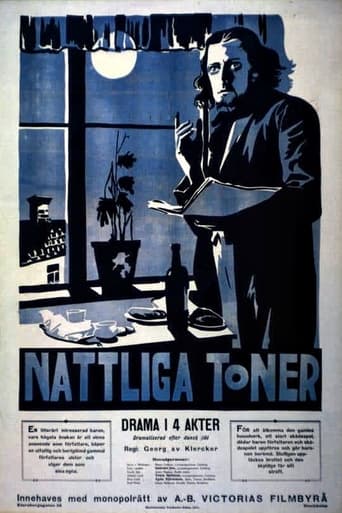
1917 · Unknown; commonly listed as a feature-length silent film

Also available on: Archive.org
Between Life and Death

Between Life and Death

1917 Unknown; commonly listed as a feature-length silent film Sweden
Scientific ambitionRomantic longingClass differenceProfessional ethicsModernity and medical progress

Plot

Dr. Brinck and his assistant Inger Holm spend long hours in his laboratory pursuing a revolutionary cure for poisoning, a breakthrough that could bring both medical fame and professional advancement. Inger is deeply in love with Brinck, but her devotion is complicated by the strict division between their professional roles and his apparent emotional distance. A chance encounter outside the laboratory brings Brinck into contact with Warren and Warren’s daughter Elsa, whom he helps after noticing an injury to her foot. That act of kindness leads to an invitation into the wealthy manufacturer’s social circle, drawing Brinck away from the laboratory and into a world of luxury, status, and personal intrigue. As the film moves between scientific experimentation, romantic tension, and social ambition, the characters’ private desires become increasingly entangled with the consequences of the medical discovery.

About the Production

Release Date 1917
Production Svenska Biografteatern
Filmed In Sweden

Between Life and Death is a Swedish silent-era melodrama-thriller directed by Georg af Klercker, a filmmaker associated with the early development of Swedish cinema before the international prominence of directors such as Victor Sjöström and Mauritz Stiller. Like many Scandinavian productions of the period, the film blended domestic drama, class conflict, and moral peril with a strong emphasis on visual storytelling rather than intertitles. Surviving documentation for the production is limited, and detailed records about budget, exact shooting locations, and studio logistics are not widely available in modern reference sources. The film appears to have been mounted within the infrastructure of Svenska Biografteatern, the major Swedish production company active in the 1910s, and reflects the company’s interest in sophisticated feature-length narratives.

Historical Background

Between Life and Death was made in 1917, during the final year of World War I, a period when Scandinavia remained neutral but was still deeply affected by wartime shortages, international uncertainty, and social change. Swedish cinema in the 1910s was rapidly gaining artistic respect, with filmmakers increasingly focusing on psychological realism, moral dilemmas, and visually expressive compositions. The film emerges from this environment of experimentation and prestige-building, when Swedish productions were becoming known for a seriousness of tone and technical refinement that would influence international silent cinema. Its concern with medicine, wealth, and personal responsibility also reflects broader early-twentieth-century anxieties about modernity, scientific progress, and the tension between professional duty and private desire.

Why This Film Matters

Although not among the most famous surviving Swedish silents, Between Life and Death is culturally significant as part of the larger body of work that helped establish Sweden as a major silent-film nation. Georg af Klercker’s films are important to film history because they show the diversity and sophistication of Swedish production beyond the better-known canonical titles. The film’s narrative mix of science, romance, and social encounter anticipates later melodramatic thrillers in which professional expertise and personal emotion collide. For scholars of silent cinema, it is also valuable as evidence of the thematic range and production ambitions of Svenska Biografteatern at a time when the country was exporting a distinctive cinematic style to Europe and beyond.

Making Of

Between Life and Death was produced during a formative moment in Swedish cinema, when feature-length narratives were becoming more ambitious in scope and more polished in visual style. Georg af Klercker had already established himself as a director capable of handling drama with atmosphere, and this film appears to fit that profile by combining laboratory scenes, romantic tension, and the polished interiors of a wealthy household. The surviving evidence suggests a production typical of Svenska Biografteatern’s serious dramatic output, though extensive behind-the-scenes documentation has not survived in widely accessible form. Like many silent films of the era, its emotional weight would have been carried by staging, gesture, and intertitle text rather than dialogue, which places strong demands on the director’s visual planning and the performers’ expressiveness.

Visual Style

As a Swedish silent film of the mid-1910s, Between Life and Death would have relied on carefully arranged compositions, expressive lighting, and strong attention to spatial relationships between characters. The contrast between the laboratory, the street encounter, and the wealthy domestic interior likely provided opportunities for visual differentiation and symbolic staging. Early Swedish cinema was known for a restrained but elegant mise-en-scène, often using depth, naturalistic interiors, and subtle visual emphasis rather than excessive camera movement. Even without detailed shot-by-shot documentation, the film can reasonably be situated within this tradition of composed, emotionally legible silent-era cinematography.

Innovations

The film does not appear in modern sources as a title associated with a specific technical breakthrough, but it is representative of the maturation of Swedish silent filmmaking in the 1910s. Its likely achievement lies in the disciplined integration of laboratory settings, domestic drama, and suspenseful plotting into a coherent feature narrative. The challenge of portraying scientific experimentation and emotional conflict without sound would have required clear visual storytelling and controlled mise-en-scène. In that sense, its technical value is historical and stylistic rather than tied to a single named invention or patented device.

Music

As a 1917 silent film, Between Life and Death originally had no synchronized recorded soundtrack. It would have been accompanied in theaters by live music, typically a pianist, organist, or small ensemble depending on the venue and market. No widely documented original score survives in standard reference sources, and any modern presentations would rely on reconstructed or improvised accompaniment. The precise music used at the premiere is not currently well documented.

Memorable Scenes

  • Dr. Brinck working with his assistant Inger Holm in the laboratory while they pursue a cure for poisoning, establishing the film’s blend of science and emotional tension.
  • Brinck’s chance outdoor meeting with Warren and Elsa, which shifts the story from the laboratory into a more socially charged world.
  • The moment Brinck notices Elsa’s damaged foot and helps her, creating the crucial social connection that opens the door to the wealthy household.
  • Brinck’s invitation into Warren’s luxurious home, a visual contrast between scientific austerity and upper-class comfort.
  • The film’s interplay between Inger’s unspoken love and Brinck’s attention moving elsewhere, a classic silent-era scene type built on gesture and implication.

Did You Know?

  • The film was directed by Georg af Klercker, one of the important early figures in Swedish cinema whose work is less widely known internationally than that of Sjöström or Stiller.
  • It belongs to the Swedish silent-film tradition that often combined melodrama with psychological conflict and socially conscious storytelling.
  • The story centers on a medical researcher and his assistant, placing scientific experimentation at the heart of a romance-and-intrigue plot, which was a relatively modern subject for a 1917 feature.
  • Mary Johnson, listed among the cast, would later become one of the notable actresses of Scandinavian silent cinema and a recognizable name to historians of the period.
  • The film’s title in English, Between Life and Death, signals its interest in medicine, danger, and moral liminality, themes common in suspense dramas of the era.
  • Detailed surviving production records, publicity material, and contemporary reviews are scarce, making the film difficult to document compared with better-preserved Swedish classics.
  • The film is associated with Svenska Biografteatern, a company that played a major role in shaping Sweden’s silent-film industry before the studio system matured.
  • Because many early Swedish films were exported and re-titled for different markets, the film may be referenced under variant titles in archival catalogues.
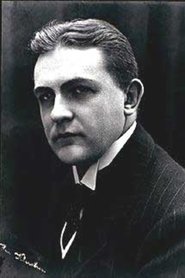
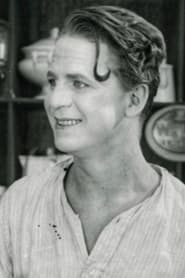
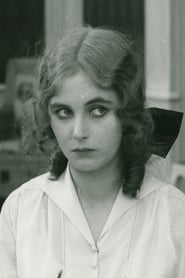
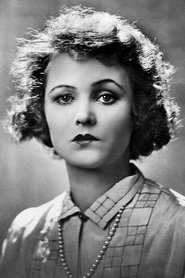
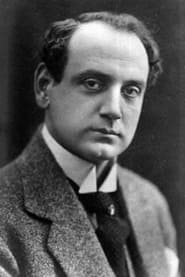
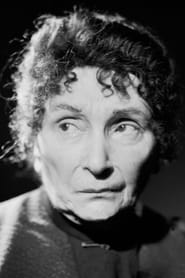
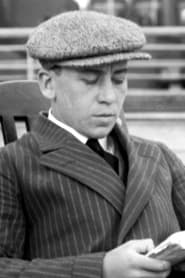
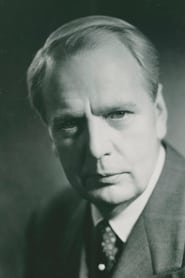
  • The cast list includes Manne Göthson, Lilly Cronwin, and Mary Johnson, names that are valuable to silent-film researchers even when plot documentation is fragmentary.
  • As with many 1910s Scandinavian dramas, the film likely relied heavily on expressive acting, composition, and editing to convey emotional nuance without synchronized sound.

What Critics Said

Contemporary critical reception is difficult to reconstruct in detail because accessible reviews and trade commentary are limited, and the film has not remained as prominent in popular memory as major Swedish silent classics. In historical terms, films of this type were generally judged by their emotional effectiveness, visual clarity, and moral seriousness, and Georg af Klercker’s work has often been reassessed by later historians as an important part of early Swedish film development. Modern evaluation tends to focus less on mass reputation and more on archival significance, directorial craft, and the film’s role in building the reputation of Scandinavian silent drama. As a result, its current critical standing is primarily among specialists rather than the general public.

What Audiences Thought

Specific audience-response data is not widely documented, which is common for a 1917 regional silent film. At the time of release, it would likely have been encountered by Swedish audiences as a serious feature designed for urban cinemas and general entertainment programming, where melodrama, suspense, and romance were major attractions. Today, its audience reception is largely limited to archivists, historians, and silent-film enthusiasts who encounter it through catalogues, restoration programs, or scholarly discussion. Its broader reputation depends more on historical interest than on enduring popular familiarity.

Film Connections

Influenced By

  • Early Swedish stage-like melodrama
  • Turn-of-the-century medical and scientific fiction
  • Contemporary silent melodramas with romantic intrigue

This Film Influenced

  • Later Swedish silent dramas that blended social realism with melodrama
  • Medical thrillers and romance-dramas in European silent cinema

Film Restoration

Preservation status is uncertain in widely accessible modern references. The film appears to be a rare early Swedish silent that is not broadly available in circulation, and no widely cited restoration or complete surviving print is commonly referenced in standard summaries. It may survive in archival holdings or in incomplete form, but the safest description is that its public availability is limited and documentation is sparse.

Themes & Topics

laboratorymedicinepoisoning cureassistant in lovewealthy familyinjurysocial invitationsilent dramaSwedish cinema1910s thriller