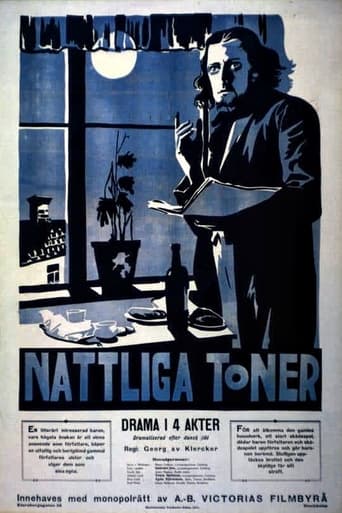
Also available on: Archive.org
For the Fatherland

For the Fatherland

1914 Sweden
Patriotism and national loyaltyEspionage and infiltrationClass vulnerability and privilegeSeduction as a tool of deceptionPrivate emotion versus public duty

Plot

The film centers on a foreign spy who insinuates himself into respectable society by charming the upper-class young woman Ebba, using her access to help him approach powerful and influential men. As he gains confidence and trust, his true loyalties remain hidden beneath a polished and seductive exterior, turning social grace into a weapon of espionage. The drama builds around the vulnerability of elite domestic life to political intrigue, with private feelings and public duty coming into direct conflict. The story develops as suspicion rises and the danger of betrayal becomes clearer, exposing the fragility of class privilege in the face of international conflict. In the end, the film functions as both a melodrama and a patriotic cautionary tale about vigilance, loyalty, and the threat posed by foreign infiltration.

About the Production

Release Date 1914
Production Svenska Biografteatern
Filmed In Sweden

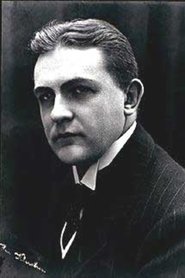
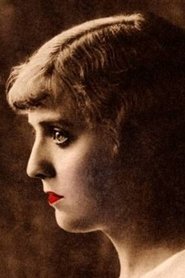
For the Fatherland is an early Swedish silent drama directed by Georg af Klercker, made during the formative years of Scandinavian feature filmmaking. Surviving documentation is limited, and detailed production records such as budget, box office, or exact shooting locations are not generally available in standard film reference sources. The cast includes Lilly Jacobson, Georg af Klercker, and J. Lange, reflecting the small-company production style typical of the period. Like many Scandinavian films of the 1910s, it was likely staged with a strong emphasis on pictorial composition, expressive performance, and clear narrative action rather than elaborate technical spectacle. The film appears to have been conceived as a topical patriotic thriller-drama in response to the political anxieties of the pre-World War I era.

Historical Background

For the Fatherland was released in 1914, a moment of intense geopolitical unease in Europe on the eve of World War I. Spy narratives and stories of foreign intrigue resonated strongly with audiences in this atmosphere because they dramatized fears about hidden enemies, social penetration, and national vulnerability. In Sweden, as in other neutral or semi-neutral European countries, cinema was increasingly becoming a serious cultural form capable of addressing contemporary anxieties through melodrama and spectacle. The film belongs to an era when Swedish cinema was developing its own identity, before the later global acclaim of directors such as Victor Sjöström and Mauritz Stiller made the national industry more widely famous. Its patriotic overtones and espionage premise reveal how cinema was already being used to negotiate ideas of loyalty, class, masculinity, and national security in a rapidly changing Europe.

Why This Film Matters

Although not a widely remembered title today, For the Fatherland is culturally significant as an example of early Scandinavian engagement with espionage melodrama and patriotic narrative. Films like this helped establish the narrative grammar later used in countless spy thrillers: the charming infiltrator, the compromised social circle, and the tension between private desire and public duty. It also illustrates how silent cinema participated in shaping national sentiment before and during the upheavals of the First World War. For scholars of Swedish film history, the movie is part of the broader early output that laid the groundwork for the international reputation of Swedish cinema in the 1910s and 1920s. Its value now lies not in fame or awards, but in what it reveals about genre development, political imagination, and the film culture of its time.

Making Of

Very little detailed behind-the-scenes documentation survives for For the Fatherland, which is common for Scandinavian productions of the early 1910s. What can be established is that the film was made under the Swedish silent-era studio system, where compact crews, theater-trained actors, and economical production methods were the norm. Georg af Klercker’s involvement as director and cast member suggests a hands-on approach to filmmaking, with directors of the period often taking active roles in shaping performance and staging. The production likely relied on straightforward location or studio-set tableaux, with the emphasis placed on legible storytelling, expressive acting, and carefully arranged visual compositions. Because the film is now an obscure title, the surviving record is mostly bibliographic rather than anecdotal, leaving many specific production circumstances unconfirmed.

Visual Style

Specific cinematographic details are not well preserved in standard references, but as a Swedish silent film from 1914 it was likely photographed in a style emphasizing stable framing, expressive tableau composition, and clear staging within the image. Early Scandinavian cinema often favored carefully arranged interiors and naturalistic lighting where possible, with attention to actor movement and spatial relationships. Because the story hinges on social infiltration and deception, the visual style likely depended on contrasts between intimate domestic spaces and the more public world of influential men and political power. The film would have used intertitles to clarify plot developments and emotional turns, while performance and mise-en-scène carried much of the dramatic burden. Any surviving prints or records would be especially valuable for determining whether the film employed exterior location work or remained primarily studio-bound.

Innovations

The film does not appear to be associated with any specific technical innovation, and no special-effects or camera breakthroughs are documented in surviving reference material. Its significance is instead rooted in early genre development and the professionalization of narrative film in Sweden. The careful handling of espionage melodrama in a feature-length format would itself have been part of the evolving technical language of cinema at the time. As with many films of 1914, the technical achievements were likely in disciplined staging, editing for continuity, and expressive visual storytelling rather than overt innovation. If extant prints survive, they may be of value for studying early Swedish production technique and silent-era performance style.

Music

As a 1914 silent film, For the Fatherland did not have a synchronized recorded soundtrack. It would have been accompanied during exhibition by live music, typically performed by a pianist, organist, or small ensemble depending on the venue and its resources. The exact cue sheet or original musical arrangement, if one ever existed, is not known in the readily available record. In silent cinema of this period, exhibitors often tailored accompaniment to the mood of the film using stock pieces, improvisation, or locally assembled music selections. No original score survives in standard references for this title.

Memorable Scenes

  • The spy’s introduction into respectable upper-class society, where charm and social confidence conceal his true motives.
  • Ebba’s growing entanglement with the foreign agent, a sequence that likely carries the film’s central emotional and suspenseful charge.
  • The gradual revelation that the protagonist’s social access is being exploited for political ends, transforming domestic intrigue into national danger.

Did You Know?

  • The film is a Swedish silent drama from 1914, placing it among the early feature-length works produced in Scandinavia before the region’s internationally better-known silent masterpieces of the later 1910s.
  • Georg af Klercker is credited as both director and performer, which was not unusual in early cinema but does make the film particularly interesting from a production-history standpoint.
  • The story uses espionage and social infiltration, a plot pattern that became very common in cinema once international tensions rose in the years before and during World War I.
  • The title suggests a strongly patriotic framing, which is consistent with many films of the era that blended melodrama with nationalist sentiment.
  • Surviving information on the film is sparse compared with later Swedish silent films, so much of its significance is reconstructed from catalog records and cast/credit data.
  • The movie is identified in modern databases by the Wikidata item Q10501103 and TMDB ID 464799, helping distinguish it from later works with similar patriotic or espionage themes.
  • Because it is a 1914 silent film, it would originally have been accompanied by live music in theaters rather than a fixed recorded soundtrack.
  • The plot’s focus on an upper-class woman named Ebba reflects a recurring silent-era melodramatic motif in which personal romance and national security are tightly intertwined.
  • Films like this are important for understanding how Scandinavian cinema participated in the broader international trend toward suspenseful spy melodramas before the formalization of the modern espionage genre.
  • No widely documented award history is associated with the film, which is typical for many silent films from the 1910s since formal award systems were not yet established.

What Critics Said

Contemporary critical reception is not well documented in accessible modern sources, and detailed reviews have not survived in common reference compilations. As a result, the film’s immediate critical standing cannot be stated with confidence. In retrospective terms, historians tend to regard it as an interesting but obscure example of early Swedish silent drama rather than a canonical masterpiece. Its importance lies more in historical context than in a widely discussed critical legacy. The limited survival of information also means that its reputation today is largely that of a cataloged historical artifact rather than a frequently revived or heavily analyzed work.

What Audiences Thought

There is no substantial surviving audience-response record for the film in readily available modern sources. Like many early silent films, its reception would have depended heavily on local exhibition conditions, live musical accompaniment, and the political mood of the audience at the time. A patriotic espionage melodrama in 1914 would likely have found its greatest immediate appeal in its topical tension and emotional clarity. However, without box office records, newspaper attendance reports, or extensive trade coverage, its popular reception remains uncertain. Today it is primarily encountered by researchers, historians, and database users rather than mainstream audiences.

Film Connections

Influenced By

  • Popular stage melodrama traditions
  • Early European spy and intrigue fiction
  • Patriotic wartime storytelling currents in pre-World War I Europe
  • Silent-era social melodramas centered on romance and betrayal

This Film Influenced

  • Later Scandinavian espionage melodramas
  • Early wartime spy thrillers of the 1910s and 1920s
  • Silent-era patriotic dramas that combine romance with national danger

Film Restoration

Preservation status is unclear in widely available reference sources. The film is not commonly available in mainstream circulation, and no widely publicized restoration is documented in standard summaries. It may survive in archival holdings or in incomplete form, but a definitive preservation assessment is not readily confirmed from accessible catalog information. For database purposes, it should be treated as a rare early silent film with uncertain accessibility rather than a commonly preserved title.

Themes & Topics