
Fear and Desire
"Survival frays into something uglier."
Keys: Space play/pause · ←/→ 10s · F fullscreen · M mute · </> speed
About this film
Four soldiers survive a plane crash behind enemy lines and trek through hostile woods toward their battalion. Tensions spike when they capture a young peasant woman, and the group's veneer of discipline gives way to fear and violence. Stanley Kubrick's 1953 feature debut, shot in California's San Gabriel Mountains with a crew of about fifteen, frames war as a psychological trap.
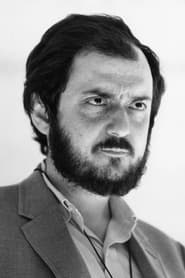
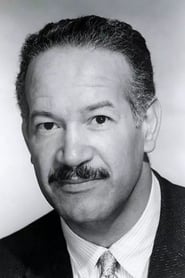
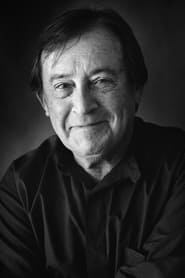
Cast & crew
More Drama films
View all →






More about this film
About the production
Release dateMarch 1953
Budget$9,000-10,000 (mostly Kubrick's personal funds and family investments)
Box officeLess than $5,000 (very limited theatrical run)
ProductionStanley Kubrick Productions
Filmed inSan Gabriel Mountains, California, Burbank, California
Shot in approximately 4-5 weeks with a minimal crew of 5-6 people. Kubrick served as director, cinematographer, and editor simultaneously. The film was made with a single 35mm camera that Kubrick purchased used. Due to budget constraints, many scenes were shot in sequence to save on continuity costs. The sound quality during filming was poor, requiring extensive post-production dubbing of all dialogue. Natural lighting was used extensively to save on equipment costs.
Themes
The dehumanizing effects of warThe thin line between civilization and savageryFear as a corrupting influenceThe loss of individual identity in combatMoral ambiguity in wartime
Themes & topics
Historical background
Kubrick financed the low-budget independent production between magazine assignments, releasing it in March 1953 as Hollywood was churning out Korean War pictures.
Why this film matters
Though Kubrick later disowned the film, it remains studied as his first narrative feature and a precursor to the moral ambiguity of his later war films.
Making of
The production of 'Fear and Desire' was proof of Kubrick's determination and resourcefulness. Working with a minuscule budget, Kubrick convinced his uncle to invest $9,000, with Kubrick contributing his own savings from his previous work as a photographer. The cast was largely composed of amateur actors and friends, with only Frank Silvera having significant professional experience. Kubrick's approach to cinematography was heavily influenced by his background in still photography, utilizing natural light and careful composition. The production faced numerous challenges including poor weather conditions in the San Gabriel Mountains, equipment malfunctions, and the need to dub all dialogue in post-production. Despite these obstacles, Kubrick completed the film and managed to secure a limited theatrical release through the efforts of distributor Joseph Burstyn.
What critics said
Initial notices were mixed and box-office receipts minimal; later retrospectives treat Fear and Desire as a rough but revealing apprentice work.
Did you know?
- This was Stanley Kubrick's first feature film as director, made when he was only 24 years old
- Kubrick later disowned the film, calling it 'a bumbling amateur film exercise' and attempted to suppress screenings
- The film was financed primarily by Kubrick's uncle, Martin Perveler, who was a pharmacist
- Paul Mazursky, who played Private Sidney, later became a successful director of films like 'An Unmarried Woman' and 'Down and Out in Beverly Hills'
- The film was thought to be lost for decades until Kubrick's estate found a print in the 1980s
- Kubrick worked as the film's editor, cinematographer, and director simultaneously to save money
- The dialogue was entirely post-dubbed due to poor sound quality during location shooting
- The film's title was suggested by Kubrick's future wife, Ruth Sobotka
- Frank Silvera, who played the Lieutenant, was one of the few professional actors in the cast
- The film was shot with a Mitchell 35mm camera that Kubrick purchased for $1,500
Visual style
The cinematography, handled by Kubrick himself, shows remarkable sophistication for a first-time filmmaker. Utilizing natural lighting and careful composition, Kubrick created a visual style that emphasized the psychological state of the characters through framing and shadow. The film employs high-contrast lighting and deep focus techniques that would become hallmarks of Kubrick's later work. The mountainous locations were used to create a sense of isolation and entrapment, with wide shots emphasizing the characters' vulnerability in the vast landscape. Kubrick's background as a photographer is evident in the carefully composed static shots and the use of geometric patterns within the frame.
Innovations
For its budget and era, the film achieved several technical innovations. Kubrick's use of natural lighting in exterior scenes was uncommon for the time, particularly for low-budget productions. The film's extensive use of post-production dubbing, while born of necessity, resulted in a stylized sound design that enhanced its abstract quality. The location shooting in difficult terrain demonstrated resourcefulness that would characterize Kubrick's entire career. The film's editing rhythm, particularly in the montage sequences, showed an early understanding of cinematic time and space manipulation. Despite technical limitations, the production achieved a level of visual polish that exceeded its budget constraints.
Music
The film's music was composed by Gerald Fried, who would later collaborate with Kubrick on 'The Killing' and 'Paths of Glory'. The score is minimalist and atmospheric, utilizing strings and woodwinds to create a sense of tension and psychological unease. Fried's music eschews traditional martial themes in favor of dissonant, modernist compositions that reflect the film's abstract approach to warfare. The soundtrack also makes effective use of silence and ambient sounds from the natural environment, particularly during the outdoor sequences. The musical themes often counterpoint rather than underscore the action, creating an intellectual rather than emotional response in the viewer.
Famous quotes
There is a war on. There's always a war on.
We're all in this together, whether we like it or not.
Fear is the enemy. Not them.
In war, you have to kill to live. That's all there is to it.
Memorable scenes
- The sequence where the soldiers capture the peasant girl and their varying reactions reveal their psychological states
- The final confrontation in the forest where the thin veneer of civilization completely breaks down
- The opening plane crash sequence shot with minimal effects but maximum tension
- The scene where the soldiers attempt to cross the river, symbolizing their journey from civilization to primal survival
What audiences thought
The film received virtually no audience reception upon its initial release due to its extremely limited theatrical run. It played in only a few theaters for a short period before being withdrawn. For decades, the film was essentially unseen by the public, as Kubrick actively prevented its distribution. In recent years, following its rediscovery and limited availability through archives and special screenings, it has developed a cult following among Kubrick enthusiasts and cinema scholars who appreciate it as a historical curiosity and evidence of the director's early development.
Film connections
Influenced by
- Max Ophüls (for camera movement)
- Orson Welles (for deep focus)
- German Expressionism (for lighting)
- Existentialist philosophy
- Shakespearean tragedy
This film influenced
- Paths of Glory (1957)
- Full Metal Jacket (1987)
- Apocalypse Now (1979)
- The Thin Red Line (1998)
Film restoration
The film was thought to be lost for many years until a print was discovered in Kubrick's private collection. The film has been preserved by the Library of Congress and the Museum of Modern Art. Several restoration efforts have been undertaken, though the original negative is believed to be lost. The existing prints show signs of deterioration but are viewable. Kubrick's estate has restricted access to the film, respecting his wish that it not be widely distributed.
Where to watch
- The film is extremely difficult to find due to Kubrick's restrictions. It occasionally screens at film archives and cinematheques. Bootleg copies circulate among collectors, but official distribution is virtually nonexistent. Some film studies programs may have access through educational archives. The film is not available on major streaming platforms or through official home video releases.