
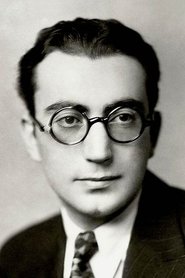
Rouben Mamoulian
Director
Born: October 8, 1897 in Tiflis, Russian Empire (now Tbilisi, Georgia) Died: December 4, 1987 Active: 1927-1963 Birth Name: Rouben Zachary Mamoulian
Films
2 films
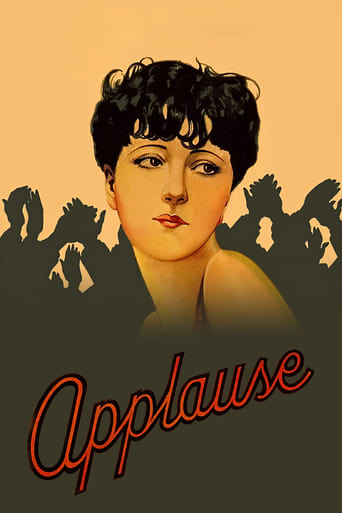
About Rouben Mamoulian
Film and theater director: innovative techniques revolutionized both stage and screen during the transition from silent to sound cinema. Born in Tiflis, Georgia (then part of the Russian Empire), he studied at Moscow's Art Theatre before emigrating to the United States in 1923. His directorial debut was the musical 'Porgy' in 1927, which caught Hollywood's attention. Mamoulian made his film debut with 'Applause' (1929), an early sound film that demonstrated remarkable technical sophistication with its fluid camera movements and innovative use of sound. He followed this with the first three-strip Technicolor feature film, 'Becky Sharp' (1935), pushing the boundaries of color cinematography. His Hollywood career included acclaimed films like 'Dr. Jekyll and Mr. Hyde' (1931), 'Queen Christina' (1933), and 'The Mark of Zorro' (1940). Despite his artistic successes, Mamoulian's career was hampered by conflicts with studio executives, leading to fewer opportunities in his later years. He returned to theater directing in the 1950s and 1960s, staging successful Broadway productions before his death in 1987.
The Craft
Behind the Camera
Mamoulian was renowned for his innovative visual techniques, including fluid camera movements, dramatic lighting, and bold use of color. He pioneered the subjective camera technique, showing scenes from characters' perspectives, and was masterful at creating psychological depth through visual storytelling. His direction emphasized theatricality and spectacle while maintaining emotional authenticity, often employing sweeping crane shots and elaborate compositions that enhanced narrative themes.
Milestones
- Directed first feature film 'Applause' (1929)
- Created first three-strip Technicolor feature 'Becky Sharp' (1935)
- Directed acclaimed versions of 'Dr. Jekyll and Mr. Hyde' (1931)
- Helmed Greta Garbo in 'Queen Christina' (1933)
- Staged original Broadway production of 'Oklahoma!' (1943)
- Pioneered innovative camera techniques in early sound films
Best Known For
Must-See Films
Accolades
Won
- New York Film Critics Circle Award for Best Director (1941) for 'Blood and Sand'
Nominated
- Academy Award nomination for Best Assistant Director (1929) for 'Applause'
- Venice Film Festival Golden Lion nomination (1935) for 'Becky Sharp'
- Academy Award nomination for Best Art Direction (1935) for 'Becky Sharp'
Special Recognition
- Hollywood Walk of Fame star (1960)
- Directors Guild of America Lifetime Achievement Award (1982)
- American Film Institute honored 'Dr. Jekyll and Mr. Hyde' in AFI's 100 Thrills list
Working Relationships
Worked Often With
Studios
Why They Matter
Impact on Culture
Rouben Mamoulian fundamentally transformed early sound cinema by demonstrating that the new technology could enhance rather than restrict visual storytelling. His film 'Applause' proved that sound films could be as visually dynamic as silent pictures, using innovative camera movements and sound design techniques that influenced generations of filmmakers. 'Becky Sharp' revolutionized color cinema by showing that three-strip Technicolor could be used artistically rather than just as a novelty. Mamoulian's theater work, particularly his direction of the original 'Oklahoma!', helped establish the modern musical theater format that dominated Broadway for decades.
Lasting Legacy
Mamoulian's legacy lies in his spirit and technical innovations that pushed the boundaries of both film and theater. He demonstrated early on that new technologies like sound and color could be used artistically to enhance storytelling rather than merely as gimmicks. His films are studied in film schools for their innovative techniques, particularly his use of subjective camera and fluid motion. Despite being somewhat overlooked in film history, his influence can be seen in the work of directors like Alfred Hitchcock, Orson Welles, and Martin Scorsese. His theatrical innovations helped shape the modern American musical, and his techniques continue to influence contemporary filmmakers.
Who They Inspired
Mamoulian influenced countless filmmakers through his innovative camera techniques and visual storytelling methods. His use of fluid camera movement in early sound films inspired directors like Max Ophüls and Stanley Kubrick. The subjective camera techniques he pioneered in 'Dr. Jekyll and Mr. Hyde' influenced psychological thrillers for decades. His bold use of color in 'Becky Sharp' paved the way for Technicolor masterpieces by directors like Michael Curtiz and Vincente Minnelli. In theater, his staging techniques for musicals influenced choreographers and directors including Bob Fosse and Harold Prince.
Off Screen
Rouben Mamoulian married three times throughout his life. His first marriage was to actress Azadia Newman in 1925, which ended in divorce. He then married playwright and screenwriter Adeline Hall in 1932, with whom he had one child before their divorce. His final marriage was to actress and dancer Florence Eldridge in 1946, which lasted until his death in 1987. Mamoulian was known for his sophisticated tastes and was a prominent figure in both Hollywood and New York social circles.
Education
Studied at Moscow Art Theatre under Konstantin Stanislavski, attended University of London, graduated from George Washington University with a degree in drama
Family
- Azadia Newman (1925-1930)
- Adeline Hall (1932-1945)
- Florence Eldridge (1946-1987)
Did You Know?
- Was fluent in five languages: English, Russian, French, German, and Armenian
- Originally wanted to be a painter before turning to theater
- Was fired from directing 'Laura' (1944) and replaced by Otto Preminger
- His version of 'Dr. Jekyll and Mr. Hyde' featured groundbreaking transformation scenes
- Was the first director to use a zoom lens in a feature film
- Turned down the opportunity to direct 'Gone with the Wind'
- His Broadway production of 'Oklahoma!' revolutionized musical theater staging
- Was a close friend of Greta Garbo and helped shape her screen persona
- His films were often more successful in Europe than in America
- Was blacklisted during the Red Scare but later cleared
- His original cut of 'Blood and Sand' was 30 minutes longer than the released version
- Taught directing at USC School of Cinematic Arts in his later years
In Their Own Words
The camera should be a participant, not an observer.
I don't make pictures to please the public; I make pictures to please myself.
Color should be used as music, not as decoration.
The most important thing in a picture is not what you see, but what you feel.
In every picture I make, I try to do something that hasn't been done before.
Frequently Asked Questions
Who was Rouben Mamoulian?
Film and theater on YTB.my. He directed groundbreaking films like 'Applause' (1929) and 'Becky Sharp' (1935), the first three-strip Technicolor feature. His work revolutionized both cinematic and theatrical storytelling during Hollywood's Golden Age.
What films is Rouben Mamoulian best known for?
Titles linked here include Applause (1929), Dr. Jekyll and Mr. Hyde (1931).
When was Rouben Mamoulian born and when did he die?
Born October 8, 1897; died December 4, 1987.
What awards did Rouben Mamoulian win?
Mamoulian won the New York Film Critics Circle Award for Best Director in 1941 for 'Blood and Sand'. He received several Academy Award nominations including Best Assistant Director for 'Applause' (1929) and multiple nominations for 'Becky Sharp'. He was honored with a star on the Hollywood Walk of Fame in 1960 and received the Directors Guild of America Lifetime Achievement Award in 1982.
What was Rouben Mamoulian's directing style?
Mamoulian's directing style was characterized by innovative visual techniques, fluid camera movements, and bold use of new technologies. He pioneered the subjective camera technique, showing scenes from characters' perspectives, and was masterful at creating psychological depth through visual storytelling. His direction emphasized theatricality and spectacle while maintaining emotional authenticity.