

Becky Sharp
"In early 19th century England"
Keys: Space play/pause · ←/→ 10s · F fullscreen · M mute · </> speed
About this film
In early 19th century England, ambitious and ruthless orphan Rebecca Sharp advances from the position of governess to the heights of British society. The first feature length film to use three-strip Technicolor.
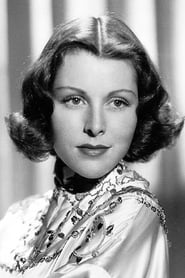
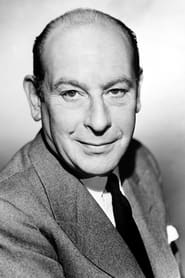
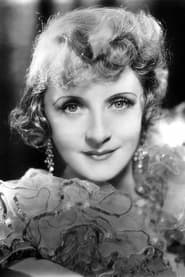
Cast & crew
More films like this
More Drama films
View all →







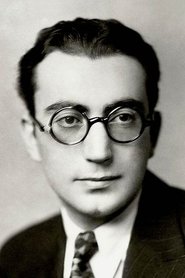
More from Rouben Mamoulian
View all →
More about this film
About the production
Release dateJune 13, 1935
Budget$1,000,000 (unusually high for the time due to Technicolor costs)
Box officeModest commercial success, though the high costs made it less profitable than hoped
ProductionPioneer Pictures, RKO Radio Pictures
Filmed inRKO Studios, Hollywood, California
The production faced significant challenges with the new three-strip Technicolor process, requiring massive lighting setups and careful color coordination. The film took nearly twice as long to shoot as a typical black and white film due to the technical requirements. Director Rouben Mamoulian insisted on using color to enhance the storytelling rather than as a gimmick, carefully designing each scene's color palette to reflect emotional content.
Themes
Social climbing and ambitionThe corrupting influence of societyWomen's limited options in the 19th centuryThe price of ruthless ambitionClass mobility and its limitations
Themes & topics
social climbergovernessRegency Englandambitionsocietymanipulationromancebetrayalredemptionclass struggle
Historical background
By 1935, sound cinema, wartime mobilization, and changing censorship norms were reshaping what audiences expected from narrative features.
Why this film matters
Becky Sharp remains part of the screen heritage of its era, offering evidence of prevailing genres, production methods, and audience tastes. Later revivals, archive screenings, and digitization have kept such titles accessible to researchers and dedicated viewers long after their first commercial runs.
Making of
The making of 'Becky Sharp' was a monumental technical undertaking that pushed the boundaries of 1930s filmmaking. The three-strip Technicolor process was still experimental, requiring a special camera that split the light into three beams, each recording a different color spectrum on separate black and white film strips. These had to be perfectly synchronized and later combined through a complex dye-transfer process. The set design had to be completely rethought - many colors that appeared normal to the human eye photographed strangely in Technicolor, leading to extensive testing of paints, fabrics, and makeup. Director Rouben Mamoulian approached color as a narrative tool, using warm reds and oranges for passionate scenes and cool blues for moments of isolation. The production was so technically demanding that it took nearly six months to complete what would normally be a six-week shoot, with the cast and crew enduring sweltering conditions under the powerful lighting required by the Technicolor process.
What critics said
Reception records for Becky Sharp are uneven; interest today is concentrated among archivists, historians, and viewers of older cinema. Modern assessment tends to emphasize historical value, craft, and cultural context rather than box-office performance.
Did you know?
- This was the first feature-length film shot entirely in three-strip Technicolor, a revolutionary process that would dominate color filmmaking for decades
- The Technicolor camera required massive amounts of light - up to three times more than black and white filming
- Miriam Hopkins had to undergo extensive makeup tests to find colors that would photograph properly in the new process
- The film was based on a stage adaptation of Thackeray's 'Vanity Fair' rather than the novel directly
- Rouben Mamoulian was chosen as director partly because of his experience with color in the short film 'La Cucaracha' (1934)
- The original negative was considered lost for decades until a complete print was discovered in the 1980s
- The film's commercial disappointment nearly bankrupted Pioneer Pictures
- Cedric Hardwicke was reportedly difficult during filming, clashing with Mamoulian over interpretation of his character
- The costume budget was enormous as fabrics had to be tested for how they would appear in Technicolor
- The film's premiere was a major Hollywood event with extensive media coverage about the 'birth of color cinema'
Awards & recognition
- Venice Film Festival - Volpi Cup for Best Actress (Miriam Hopkins, nomination)
Visual style
The cinematography by Ray Rennahan was groundbreaking, utilizing the new three-strip Technicolor process to create a rich, vibrant visual palette. Rennahan, who would become one of Hollywood's most respected color cinematographers, worked closely with Mamoulian to use color as emotional storytelling. The film features carefully composed shots that maximize the impact of color, from the warm golden tones of Becky's triumphant moments to the cold blues of her isolation. The lighting had to be extraordinarily bright to register properly on the Technicolor film, creating a distinctive high-key look that characterized early color films. The camera work also incorporated techniques from German Expressionism, with dramatic angles and shadows that took on new dimension in color.
Innovations
Beyond being the first three-strip Technicolor feature, 'Becky Sharp' pioneered several technical innovations. The film required the development of new lighting techniques, makeup formulations, and costume dye processes specifically for color filming. The production team had to solve problems with color bleeding and registration that had plagued earlier color processes. The film also experimented with using color to create psychological effects, a technique that would become standard in later color films. The successful completion of the feature proved that three-strip Technicolor was commercially viable, leading to its adoption by major studios and eventual dominance in color cinematography until the 1950s.
Music
The musical score was composed by Roy Webb, who was RKO's house composer at the time. Webb's music incorporated period-appropriate themes while using the expanded orchestral palette that sound films of the mid-1930s allowed. The score featured several original songs that reflected the Regency period setting, including 'The World Is Yours' and 'The Girl I Left Behind Me.' The soundtrack also made innovative use of diegetic music, with characters performing songs that advanced the plot. The recording process was complicated by the need to synchronize with the Technicolor filming, requiring careful coordination between the music department and the camera crew.
Famous quotes
I must be a lady... and I will be a lady!" - Becky Sharp
I've been a poor little girl all my life, and I'm not going to be a poor little woman!" - Becky Sharp
Revenge may be wicked, but it's perfectly natural." - Becky Sharp
I don't mean to be brave, or good, or clever... I mean to be a success!" - Becky Sharp
The world is a looking-glass and gives back to every man the reflection of his own face." - Opening narration
Memorable scenes
- The opening sequence where Becky graduates from finishing school and declares her ambition to conquer society
- The ballroom scene where Becky makes her grand entrance in a stunning red dress, using color to emphasize her dangerous allure
- The confrontation scene between Becky and Lady Steyne, where the tension is heightened through contrasting color schemes
- The final scene in Germany where Becky, humbled by experience, meets Amelia again, showing her transformation through softer, muted colors
What audiences thought
Initial audience response was mixed, with many viewers more interested in the novelty of color than the story itself. The film drew curious crowds initially, but word-of-mouth was not strong enough to sustain long-term box office success. Some viewers complained that the colors were too bright and artificial compared to reality. However, the film did develop a cult following among cinema enthusiasts who appreciated its technical achievements. In retrospect, audiences have come to value the film as a pioneering work, with restored versions allowing modern viewers to appreciate the innovative cinematography and Hopkins' memorable performance.
Film connections
Influenced by
- Vanity Fair by William Makepeace Thackeray
- Stage adaptation of Vanity Fair by Langdon Mitchell
- German Expressionist cinema
- 1930s Hollywood costume dramas
This film influenced
- Gone with the Wind (1939)
- The Wizard of Oz (1939)
- The Adventures of Robin Hood (1938)
- Becky Sharp (1972 TV movie)
- Vanity Fair (2004)
Film restoration
For decades, 'Becky Sharp' was considered a lost film, with only incomplete versions surviving. In the 1980s, a complete 35mm nitrate print was discovered in a private collection, allowing for a full restoration. The film has since been preserved by the UCLA Film and Television Archive and the Museum of Modern Art. A restored version was released on DVD by Kino International, allowing modern audiences to see the film as originally intended. The restoration process was challenging due to the deterioration of the original Technicolor elements, but the final result preserves the film's groundbreaking color photography.
Where to watch
- Available on DVD from Kino Lorber
- Streaming on The Criterion Channel
- Available for digital rental on Amazon Prime Video
- Occasionally airs on Turner Classic Movies
- Available for viewing at film archives including UCLA Film & Television Archive