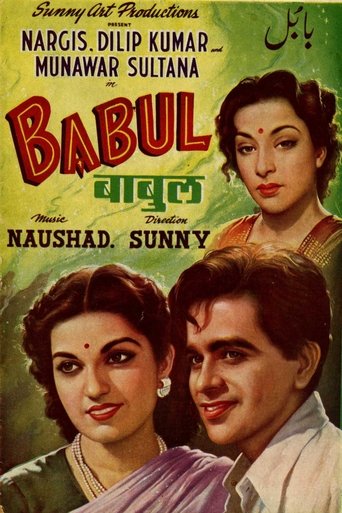
Munawar Sultana
Actor
Born: 1924 in Lahore, British India (now Pakistan) Died: 1995 Active: 1947-1955
Films
2 films

About Munawar Sultana
Prominent actress in the golden era of Indian cinema, particularly active during the late 1940s and early 1950s. She began her career during the transitional period when Indian cinema was evolving from the studio system to more independent productions. Her breakthrough came with the 1947 film 'Elan,' which showcased her acting prowess and screen presence at a time when the Indian film industry was undergoing significant changes following the country's independence. She gained further acclaim for her performance in the 1950 classic 'Babul,' where she worked alongside actors of the time. Munawar Sultana was known for her ability to portray emotionally complex characters with depth and authenticity, making her a favorite among directors of that era. Her career, though relatively brief, left a significant mark on the early Hindi/Urdu cinema landscape. She represented the new wave of actresses who brought more realism and naturalism to Indian film performances, moving away from the theatrical style of earlier decades.
The Craft
On Screen
Naturalistic and emotionally authentic, Munawar Sultana brought a new level of realism to Indian cinema during the 1940s. Her performances were characterized by subtle expressions and nuanced emotional delivery, which contrasted with the more theatrical style prevalent in earlier Indian films. She had a particular talent for portraying complex female characters with depth and sensitivity, making her roles relatable to audiences of her time.
Best Known For
Iconic Roles
Must-See Films
Accolades
Won
- No major formal awards documented from her active period
Nominated
- No formal nominations documented from the 1940s-1950s era
Special Recognition
- Recognized as one of the actresses of early Indian cinema
Working Relationships
Worked Often With
Studios
Why They Matter
Impact on Culture
Munawar Sultana contributed to the evolution of Indian cinema during a crucial transitional period following India's independence. Her work in films like 'Elan' (1947) and 'Babul' (1950) helped establish a new standard for realistic acting in Hindi cinema, moving away from the theatrical traditions of earlier decades. As a working actress during the partition era, she was part of the generation that helped rebuild and reshape the Indian film industry. Her performances reflected the changing social dynamics and aspirations of newly independent India, making her work culturally significant beyond mere entertainment. She represented the emergence of more sophisticated and nuanced female characters in Indian cinema, paving the way for future generations of actresses.
Lasting Legacy
Munawar Sultana's legacy lies in her contribution to establishing naturalistic acting in early Indian cinema. Though her career was relatively brief, her work in landmark films of the late 1940s and early 1950s has been recognized by film historians as significant in the evolution of Hindi cinema. She is remembered as part of the generation of actresses who brought greater depth and authenticity to Indian film performances. Her films, particularly 'Babul' (1950), continue to be studied and appreciated as classics of early Indian cinema. While not as widely remembered as some of her contemporaries, her influence on acting styles in Indian cinema has been acknowledged by cinema scholars and historians.
Who They Inspired
Munawar Sultana influenced subsequent generations of Indian actresses by demonstrating the power of naturalistic acting in cinema. Her approach to character development and emotional authenticity helped establish new standards for performance in Hindi films. The subtlety and depth she brought to her roles inspired other actresses to move beyond theatrical gestures toward more realistic portrayals. Her work during the transitional period of Indian cinema showed how film performances could evolve to reflect contemporary social realities, influencing the direction Indian cinema would take in the following decades.
Off Screen
Munawar Sultana was born in Lahore in 1924, which was part of British India at the time. Like many actresses of her era, she maintained a relatively private personal life. Her career coincided with the partition of India in 1947, which significantly impacted the Indian film industry and many artists' careers. She eventually moved to Bombay (now Mumbai), which was becoming the center of Hindi cinema. She married and had children, though specific details about her family life are limited in historical records.
Education
Limited information available about her formal education, which was typical for many actresses of her era
Family
- Information not widely documented in historical records
Did You Know?
- Her career began during the tumultuous year of India's independence in 1947
- She worked in the film industry during the major transition from the studio system to independent productions
- Like many actresses of her era, she often had to sing her own songs in films before the practice of playback singing became standardized
- Her film 'Elan' (1947) was released in the same year as the partition of India, a period that dramatically affected the Indian film industry
- She was part of the generation of actresses who helped establish Bombay as the center of Hindi cinema
- Her natural acting style was considered revolutionary compared to the theatrical performances common in earlier Indian films
- The 1950 film 'Babul' in which she appeared is now considered a classic of early Indian cinema
- Information about many actresses from her era is limited due to inadequate documentation of early Indian cinema history
In Their Own Words
No widely documented quotes are available from Munawar Sultana, which is common for actors of her era
Frequently Asked Questions
Who was Munawar Sultana?
When was Munawar Sultana born and when did she die?
Born 1924; died 1995.
What awards did Munawar Sultana win?
What was Munawar Sultana's acting style?
Munawar Sultana was known for her naturalistic and emotionally authentic acting style, which was revolutionary for Indian cinema of her time. She moved away from theatrical performances toward more subtle and realistic portrayals, helping establish a new standard for acting in Hindi films.