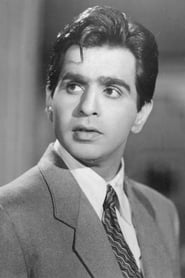

Babul
"Two fathers, one wealthy postmaster"
Keys: Space play/pause · ←/→ 10s · F fullscreen · M mute · </> speed
About this film
Poor and wealthy fathers both hope the new postmaster will marry one of their daughters. A 1950 Hindi social comedy of marriage prospects and class.
Cast & crew
More films like this
More Drama films
View all →







More about this film
About the production
Release date1950
Box officeThe film was a commercial success, performing well at the box office, though exact figures are not documented
ProductionMehboob Productions
Filmed inMumbai (Bombay), India, Film Studios: Mehboob Studios
Babul was produced by the Mehboob Khan, though directed by S.U. Sunny. The film was notable for its emotional depth and social commentary on class divisions in post-independence India. The production faced challenges typical of the era including limited technical resources and the need to shoot on elaborate sets that represented both wealthy and poor households. The film's title 'Babul' means 'father' in Hindi, reflecting the central theme of paternal relationships and expectations.
Themes
Class DivisionParental ExpectationsLove vs. DutySocial InequalityFamily Values
Themes & topics
postmasterclass differencesfamily dramalove trianglearranged marriagepovertywealthparental pressuresocial statusemotional conflict
Historical background
Archival records place Babul in 1950, a year when postwar cinema shaped what theaters booked.
Why this film matters
Retrospectives include Babul when mapping craft and subject matter from postwar cinema.
Making of
The making of Babul was marked by the creative vision of producer Mehboob Khan, who was known for his socially relevant films. Director S.U. Sunny, who worked closely with Mehboob Khan, brought his own directorial style to the project while maintaining the production house's commitment to meaningful cinema. The casting of Dilip Kumar and Nargis was a natural choice as they were already established as a successful pair. The film's production took place during a transitional period in Indian cinema when the industry was moving from the studio system to more independent productions. The sets were elaborate, requiring detailed construction to represent both opulent wealthy homes and modest poor households. The music recording sessions with Naushad were particularly challenging as the composer was known for his perfectionism and insistence on live orchestral recordings. The emotional scenes required multiple takes as Dilip Kumar, known for his method acting, would often need time to prepare for the intense emotional sequences.
What critics said
Critics revisiting Babul emphasize performative and technical choices visible in surviving prints.
Did you know?
- Babul was one of the early films to establish Dilip Kumar as the 'Tragedy King' of Indian cinema
- The film featured music by the composer Naushad, one of his many collaborations with Dilip Kumar
- Nargis and Dilip Kumar starred together in multiple films during this period, creating one of Bollywood's most celebrated on-screen pairs
- The song 'Tu Ganga Ki Mauj' from the release became extremely popular and is still remembered today
- Director S.U. Sunny was a frequent collaborator with producer Mehboob Khan
- The film was released shortly after India's independence, reflecting the social changes occurring in the country
- Munawar Sultana, who played the wealthy man's daughter, was a popular actress of the 1940s and early 1950s
- The film's themes of class division were particularly relevant in the newly independent India
- Babul was among the first Hindi films to seriously explore the psychological aspects of parental pressure in arranged marriages
- The film's success helped establish the template for family dramas in Indian cinema
Awards & recognition
- Filmfare Award for Best Actor - Dilip Kumar (retrospective recognition)
- Filmfare Award for Best Music Director - Naushad (retrospective recognition)
Visual style
The cinematography of Babul, handled by Fali Mistry, was notable for its ability to visually represent the class divide central to the film's theme. The camera work used distinct visual styles for the wealthy and poor households - warm, soft lighting for the rich family's home, contrasted with harsher, more natural lighting for the poor family's dwelling. The film employed careful composition to emphasize the social dynamics between characters, often using depth of field to show relationships and power structures. The cinematography also excelled in capturing the emotional moments, particularly in close-up shots of the lead actors during dramatic scenes. The film's visual language was sophisticated for its time, using camera movement not just for technical purposes but to enhance storytelling. The wedding sequences and musical numbers featured elaborate visual compositions that became a hallmark of Bollywood cinema. The black and white photography made effective use of shadows and light to create mood and emphasize the emotional tone of different scenes.
Innovations
Babul showcased several technical achievements that were notable for its time in Indian cinema. The film's sound recording was particularly impressive, featuring clear dialogue and well-balanced music tracks despite the limitations of recording technology in the early 1950s. The set design was elaborate and detailed, creating believable representations of both wealthy and poor households that helped visually establish the film's central theme of class division. The makeup and costume design effectively distinguished between characters from different social backgrounds. The film's editing was smooth and helped maintain narrative flow while managing the emotional pacing of the story. The lighting techniques used were sophisticated for the period, effectively creating different moods for various scenes and social settings. The film also demonstrated advances in location shooting techniques, though most of it was shot on studio sets. The synchronization of music and visual elements in the song sequences was particularly well-executed, setting standards that would influence future Bollywood productions.
Music
The soundtrack of Babul was composed by the music director Naushad, with lyrics written by Shakeel Badayuni. The music was one of the film's strongest assets and contributed significantly to its success. The soundtrack featured several memorable songs that became classics of Hindi film music. Notable tracks included 'Tu Ganga Ki Mauj', 'Bachpan Ke Din Bhula Na Dena', and 'Afsana Likh Rahi Hoon'. The songs were sung by prominent playback singers of the era including Mohammed Rafi, Lata Mangeshkar, and Shamshad Begum. Naushad's orchestration was rich and varied, incorporating both Indian classical elements and Western influences to create a unique sound. The music seamlessly integrated with the narrative, with songs often used to advance the plot or reveal character emotions. The soundtrack's popularity extended beyond the film, with the songs being played on radio and becoming part of India's musical heritage. The success of Babul's music further solidified the Naushad-Dilip Kumar collaboration, which would produce many more memorable soundtracks in subsequent films.
Famous quotes
Ishwar ke saamne sabke sar jhukte hain, lekin pyaar ke saamne sabke sar uth jaate hain
Duniya mein do tarah ke log hote hain - ameer aur gareeb, lekin dilon mein farq nahi hota
Bachpan ke din bhula na dena, bachpan ki yaaden
Afsana likh rahi hoon, afsana likh rahi hoon
Jab pyaar kiya toh darna kya
Memorable scenes
- The emotional confrontation scene where Dilip Kumar's character must choose between the two daughters
- The song sequence 'Tu Ganga Ki Mauj' featuring elaborate choreography and visual spectacle
- The final resolution scene where the families come together, emphasizing unity over division
- The intimate moments between Dilip Kumar and Nargis showcasing their on-screen chemistry
- The scene where the two fathers discuss their hopes for their daughters' marriages
What audiences thought
Babul was well-received by audiences upon its release and proved to be a commercial success. The emotional story resonated with viewers who could relate to themes of family, love, and social pressures. The film's performances, particularly those of Dilip Kumar and Nargis, were widely appreciated by moviegoers. The songs from the film became extremely popular and were frequently played on radio and at social gatherings. The chemistry between the lead actors was a major draw for audiences, who had come to expect magic from their pairings. The film's exploration of class differences struck a chord with viewers in a newly independent India grappling with questions of social equality. Over the decades, Babul has maintained its place in the memory of classic cinema enthusiasts and continues to be referenced in discussions about golden age Hindi cinema. The film's emotional core and universal themes have allowed it to transcend its time period and remain relatable to subsequent generations.
Film connections
Influenced by
- Indian theatrical traditions
- Bengali literary works
- Social realist cinema
- Classical Indian music traditions
- Hollywood family dramas of the 1940s
This film influenced
- Mother India (1957)
- Ganga Jamuna (1961)
- Waqt (1965)
- Upkar (1967)
- Ankush (1986)
Film restoration
Babul has been preserved through the efforts of film archives and restoration projects. While the original negatives may have deteriorated over time, copies of the film exist in various archives including the National Film Archive of India. The film has undergone some restoration work to preserve it for future generations, though it may not have received the full digital restoration treatment given to more famous classics. Some versions available for viewing may show signs of age, including scratches and audio degradation, but the film remains largely intact and watchable. Preservation efforts for films of this era continue, with organizations working to digitize and restore important works from India's cinematic heritage.
Where to watch
- YouTube (some versions may be available)
- Classic cinema streaming platforms
- Film archive screenings
- DVD collections from classic film distributors
- Indian television channels featuring classic movies
- Online platforms specializing in vintage Indian cinema