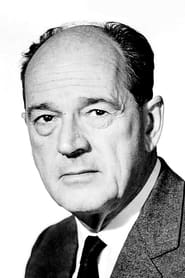
Anthony Mann
Director
Born: June 30, 1906 in San Diego, California, USA Died: April 29, 1967 Active: 1942-1967 Birth Name: Anton Emil Friedrich
Films
2 films
About Anthony Mann
Anthony Mann (born Anton Emil Friedrich) was an American film director who rose to prominence during the Golden Age of Hollywood, becoming respected directors of film noir and Westerns. After beginning his career as an actor in New York theater and appearing in over 30 Broadway productions, Mann transitioned to directing in the early 1940s, finding his true calling behind the camera. He established himself excelled in film noir with visually striking, psychologically complex thrillers like 'T-Men' (1947) and 'Raw Deal' (1948), often collaborating with cinematographer John Alton to create some of the most atmospheric films of the era. In the 1950s, Mann revolutionized the Western genre through his celebrated collaboration with James Stewart, creating morally complex protagonists and psychological depth in films like 'Winchester '73' (1950) and 'The Naked Spur' (1953). His directing style emphasized dramatic low angles, stark lighting, and characters struggling with past traumas and moral dilemmas. Mann successfully transitioned to large-scale epics in the 1960s, directing 'El Cid' (1961) and 'The Fall of the Roman Empire' (1964), though his career was cut short by his death in 1967. Throughout his career, Mann directed over 40 films across multiple genres, establishing himself as one of Hollywood's most versatile and visually sophisticated directors.
The Craft
Behind the Camera
Anthony Mann's directing style was characterized by visual sophistication and psychological depth. He pioneered dramatic low angles and stark, shadowy compositions in his film noirs, creating an atmosphere of moral ambiguity and tension. His Westerns transcended traditional genre conventions, featuring protagonists haunted by past traumas and struggling with ethical dilemmas. Mann emphasized the psychological cost of violence and often presented morally complex characters rather than clear-cut heroes and villains. His collaboration with cinematographer John Alton resulted in some of the most visually striking films of the 1940s, with innovative use of light and shadow that became hallmarks of film noir. In his later epics, Mann maintained his visual sophistication while working on grander scales, bringing psychological realism to historical narratives.
Milestones
- Directed classic film noirs including 'T-Men' (1947), 'Raw Deal' (1948), and 'Border Incident' (1949)
- Created celebrated Western series with James Stewart including 'Winchester '73' (1950), 'Bend of the River' (1952), and 'The Naked Spur' (1953)
- Nominated for Academy Award for Best Director for 'El Cid' (1961)
- Directed the epic historical drama 'The Fall of the Roman Empire' (1964)
- Pioneered psychological complexity in genre films
- Collaborated extensively with cinematographer John Alton to define film noir aesthetics
Best Known For
Must-See Films
Accolades
Won
- Directors Guild of America Award for Outstanding Directorial Achievement in Motion Pictures (1962) for 'El Cid'
- New York Film Critics Circle Award for Best Director (1950) for 'Winchester '73'
Nominated
- Academy Award nomination for Best Director (1961) for 'El Cid'
- Directors Guild of America Award nomination for 'The Fall of the Roman Empire' (1964)
- Golden Lion nomination at Venice Film Festival for 'El Cid' (1961)
Special Recognition
- Hollywood Walk of Fame star (located at 6821 Hollywood Blvd)
- National Film Registry induction for 'Winchester '73' (2015)
- Retrospective at Museum of Modern Art (1970)
- Cannes Film Festival retrospective (1986)
Working Relationships
Worked Often With
Studios
Why They Matter
Impact on Culture
Anthony Mann fundamentally transformed American genre cinema, particularly film noir and Westerns, by introducing psychological complexity and moral ambiguity. His film noirs, characterized by stark visual contrasts and morally compromised protagonists, helped define the visual language of post-war American cinema and influenced the French New Wave directors who admired his work. Mann's Westerns revolutionized the genre by moving beyond simple good-versus-evil narratives, creating psychologically complex characters wrestling with past traumas and ethical dilemmas. His collaboration with James Stewart transformed Stewart's screen persona from the everyman hero to a more complex, morally ambiguous figure. Mann's visual techniques, particularly his use of low angles and dramatic lighting, became staples of American cinema and influenced countless directors. His work represented a bridge between classical Hollywood storytelling and the more psychologically complex narratives that would dominate American cinema in the 1960s and 1970s.
Lasting Legacy
Anthony Mann's legacy endures through his profound influence on American genre cinema and the directors he inspired. His film noirs remain masterpieces of the genre, studied for their visual sophistication and psychological depth. Mann's Westerns are credited with elevating the genre from simple entertainment to serious artistic expression, paving the way for the revisionist Westerns of the 1960s and beyond. Directors like Martin Scorsese, Clint Eastwood, and Michael Mann have cited his work as influential. His visual style, particularly his collaboration with John Alton, created a template for film noir aesthetics that continues to influence contemporary filmmakers. Mann's ability to work across genres while maintaining a consistent artistic vision demonstrated the possibilities for directorial authorship within the studio system. His films are regularly screened at film festivals and retrospectives, cementing his status as one of Hollywood's most important and influential directors.
Who They Inspired
Anthony Mann's influence extends across multiple generations of filmmakers and genres. His psychological approach to Westerns directly influenced directors like Budd Boetticher and Sam Peckinpah, who further developed his vision of morally complex frontier narratives. French New Wave directors, particularly Jean-Pierre Melville, admired his film noirs and incorporated his visual techniques into their work. Contemporary directors like Martin Scorsese have cited Mann's use of violence and psychological trauma as influential. His collaboration with James Stewart created a template for the modern Western protagonist that influenced actors and directors for decades. Mann's visual techniques, particularly his dramatic use of light and shadow, influenced cinematographers and directors working in neo-noir. His ability to bring psychological realism to genre films demonstrated that popular entertainment could also be artistically sophisticated, influencing the auteur theory of cinema. Directors as diverse as Clint Eastwood, Michael Mann, and the Coen Brothers have drawn inspiration from his approach to genre filmmaking.
Off Screen
Anthony Mann was married twice and had two children from his first marriage. His first marriage to Mildred H. Cline lasted from 1936 to 1958, during which she often worked as his assistant on film sets. In 1958, he married Anna K. Mann, who remained with him until his death. Mann struggled with depression later in his life, which may have influenced the darker themes in his work. He was known as a demanding director who pushed actors to their emotional limits, but also as a passionate filmmaker deeply committed to his craft. Mann died of a heart attack in Berlin at the age of 60, while preparing to direct 'The Blue Max' (1966), which was ultimately completed by another director.
Education
San Diego State University (studied drama)
Family
- Mildred H. Cline (1936-1958)
- Anna K. Mann (1958-1967)
Did You Know?
- Began his career as an actor in New York theater, appearing in over 30 Broadway productions
- His directorial debut was 'Dr. Broadway' (1942)
- Was originally hired to direct 'Spartacus' (1960) but was replaced by Stanley Kubrick early in production
- His films often featured protagonists haunted by past traumas, a recurring theme throughout his career
- Collaborated with James Stewart on eight films, fundamentally changing Stewart's screen image
- His partnership with cinematographer John Alton created some of the most visually striking film noirs ever made
- Despite his critical acclaim, Mann never won an Academy Award
- His Westerns were praised for their realistic depiction of violence and its psychological consequences
- Was known for being extremely demanding on set, often pushing actors to emotional extremes
- His film 'Winchester '73' was one of the first Westerns to use psychological depth as a central element
- Died in Berlin while preparing to direct 'The Blue Max', which was completed by John Guillermin
- His birth name was Anton Emil Friedrich, which he anglicized when entering the film industry
In Their Own Words
The camera is the director's brush
In every film, there must be a human story at its core
Westerns are American myths that reveal deeper truths about our national character
A director is only as good as his team
The best way to work within a genre is to push its boundaries
Every character has a past that haunts them
The audience can always tell when something is fake
Violence in films should always have consequences
Frequently Asked Questions
Who was Anthony Mann?
Highly influential American on YTB.my. He directed over 40 films between 1942 and 1967, establishing himself excelled in visual storytelling and psychological complexity, particularly through his collaborations with James Stewart and cinematographer John Alton.
What films is Anthony Mann best known for?
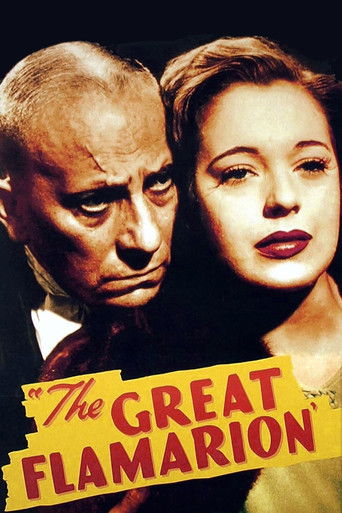
Titles linked here include The Great Flamarion (1945), T-Men (1947).
When was Anthony Mann born and when did he die?
Born June 30, 1906; died April 29, 1967.
What awards did Anthony Mann win?
Mann received a Directors Guild of America Award for 'El Cid' and a New York Film Critics Circle Award for 'Winchester '73.' He was nominated for an Academy Award for Best Director for 'El Cid' and had his film 'Winchester '73' inducted into the National Film Registry in 2015.
What was Anthony Mann's directing style?
Mann's directing style was characterized by visual sophistication, dramatic low angles, and psychological depth. He pioneered atmospheric film noir aesthetics with cinematographer John Alton and revolutionized Westerns by introducing morally complex characters and psychological realism. His films often featured protagonists struggling with past traumas and ethical dilemmas.
How did Anthony Mann influence cinema?
Mann fundamentally transformed American genre cinema by bringing psychological complexity to film noir and Westerns. His visual techniques influenced the French New Wave, while his psychological approach to Westerns paved the way for revisionist Westerns. He demonstrated that popular entertainment could be artistically sophisticated, influencing generations of directors from Martin Scorsese to contemporary filmmakers.
What was Anthony Mann's relationship with James Stewart?
Mann and James Stewart collaborated on eight films between 1950 and 1955, creating some of the most psychologically complex Westerns in cinema history. Their partnership transformed Stewart's screen persona from a simple everyman hero to a more morally ambiguous character, fundamentally changing both their careers and the Western genre.