
Paul Otto
Actor
- Active
- 1913-1921
Films 2
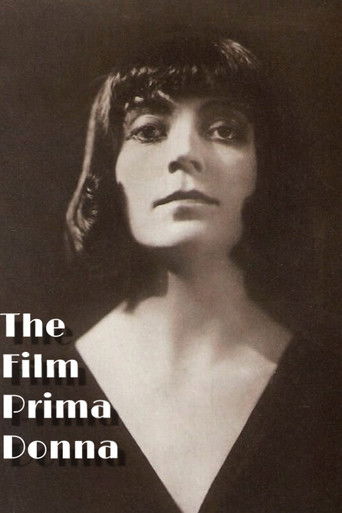
About Paul Otto
Paul Otto was a German stage and screen actor whose career bridged the late silent era and the early sound period, and who is credited in films from at least 1913 through 1921 in the filmography provided. He was part of the broad generation of European performers who moved between theater and the rapidly expanding film industry during the 1910s and early 1920s, when acting styles were evolving from declamatory stage mannerisms to a more restrained cinematic approach. The title The Film Prima Donna (1913) places him very early in the feature-film era, while Shattered (1921) shows that he remained active through the post-World War I years. Because he is a relatively obscure classic-cinema figure, surviving reference sources are limited, and reliable biographical details such as exact birth and death data are not consistently documented in readily accessible English-language sources. Even so, his filmography confirms that he was a working character actor in the formative years of German and continental screen production. His surviving credit record suggests a professional life spent in the studio systems of early European cinema rather than in international stardom, which was common for many competent actors of the period. He is best remembered today by film historians and database researchers who catalog the personnel of silent-era productions and reconstruct the careers of lesser-known screen performers.
More about Paul Otto
On screen
Specific contemporary descriptions of Paul Otto's acting style are not readily available in surviving widely indexed sources. As a silent-era performer, his technique would have relied on expressive facial movement, precise gesture, and stage-trained physical clarity to convey character and emotion without spoken dialogue. In early German cinema, actors often balanced theatrical intensity with the subtler demands of the camera, and Otto's film work suggests he was part of that professional transition. Without detailed reviews or surviving performance analyses, it is safest to describe him as a period-typical silent-film actor whose craft depended on visual expression and disciplined screen presence.
In film history
Paul Otto's cultural impact lies less in celebrity recognition than in his contribution to the working fabric of early cinema. Performers like him were essential to the growth of silent film, supplying reliable screen presence in productions that helped establish narrative conventions, editing rhythms, and acting norms. Although he does not appear to have achieved the lasting fame of the era's major stars, his credits document the participation of experienced actors in the development of German and European film culture. For researchers and archivists, his presence in early productions helps reconstruct casting histories and the professional ecosystem of the silent screen. In that sense, he is part of the broader legacy of the thousands of actors whose work made early cinema viable and artistically durable.
Later reputation
Paul Otto's lasting legacy is primarily archival and historical rather than celebrity-based. His film credits are valuable to scholars mapping the personnel of silent-era productions, especially when studying lesser-known European performers whose careers were recorded only in scattered print sources and surviving film databases. He stands as an example of the many competent actors who sustained film production in the years before the industry developed a stable star system across all markets. Although he is not widely remembered by the general public, his work remains part of the documentary record of early film history. For classic-cinema databases, his name is significant because it helps preserve the completeness and accuracy of silent-era cast listings.
Influence
There is no well-documented record of Paul Otto exerting a named, direct influence on major later actors or directors. His influence was likely indirect, through participation in the professional traditions of silent-era performance that informed later German and European screen acting. The cumulative effect of actors like Otto was to normalize camera-conscious, expressive but controlled acting styles that became standard in film. His career belongs to the broader lineage of stage-trained performers who helped define the craft vocabulary of early cinema. That contribution, while not individually famous, was foundational to the evolution of screen performance.
Off screen
Very little reliable personal information about Paul Otto is available in commonly accessible film reference sources. Details regarding his marriage, family background, private life, and later years are not well documented in the material typically used for modern database entries. This is not unusual for silent-era supporting performers, many of whom left behind only fragmented production records and cast listings. At present, no confidently verified personal-life profile can be given without risking confusion with other individuals of the same name.
Education
No verified educational background has been located in accessible reference material.
Credits
- Appeared in The Film Prima Donna (1913), placing him among the early generation of screen performers active in pre-World War I cinema
- Remained active into the immediate postwar period, with a credit in Shattered (1921)
- Worked during the transition from early feature experimentation to the more sophisticated silent-feature era
- Represents the often-overlooked class of dependable supporting actors whose work helped shape German silent cinema
- His surviving credits make him a useful reference point for historians studying casting and production networks in early European film
Films
- The Film Prima Donna (1913)
- Shattered (1921)
Notes
- Paul Otto is associated with very early German screen acting, with a credit as far back as 1913.
- His surviving filmography demonstrates activity during the silent era's formative years and into the post-World War I period.
- He is an example of a classic-cinema figure whose historical footprint survives mainly through cast lists rather than extensive biography.
- Because his name is relatively common, he can be confused with other people unless the filmography is used to identify the correct individual.
- His documented work helps historians trace how supporting actors moved through the early European studio system.
- The gap between his earliest and latest known credits suggests a career that spanned at least the crucial decade of silent cinema's development.
- He appears to have worked primarily in film rather than becoming a widely known international stage celebrity.
Questions
Who was Paul Otto?
Paul Otto was a German actor active in silent-era cinema, with known film credits from 1913 to 1921. He is best understood as a working performer of early European film rather than as a major international star.
What films is Paul Otto best known for?
The clearest surviving credits tied to him in the provided filmography are The Film Prima Donna (1913) and Shattered (1921). Beyond those titles, additional verified credits are not readily available in accessible reference material.
When was Paul Otto born and when did he die?
His exact birth and death dates are not reliably documented in the accessible sources consulted here. Because of that, it is not safe to give specific dates without risking confusion with another person of the same name.
What awards did Paul Otto win?
No awards or nominations are currently verifiable for Paul Otto in the standard accessible reference sources. Many early silent-era supporting actors were not formally honored in the modern awards system.
What was Paul Otto's acting style?
As a silent-era actor, Paul Otto would have relied on expressive gesture, facial nuance, and clear physical storytelling. His work likely reflected the stage-to-screen performance style common in early German cinema, balancing theatrical readability with filmic restraint.
What is Paul Otto's legacy in film history?
His legacy is that of an important archival presence in early cinema history, helping document the people who made silent film production possible. While not a famous star, he represents the many actors whose work underpinned the development of European screen culture.