
Isidor Annensky
Director
Born: 1906 in Warsaw, Russian Empire (now Poland) Died: 1979 Active: 1939-1960s Birth Name: Isidor Markovich Annensky
Films
2 films
About Isidor Annensky
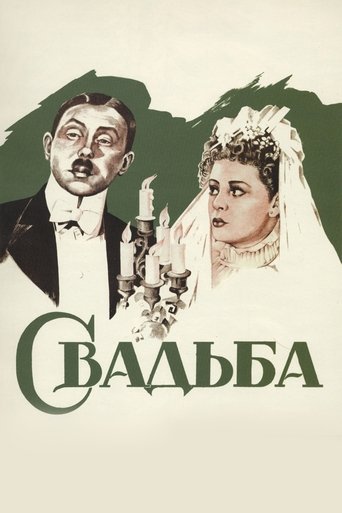
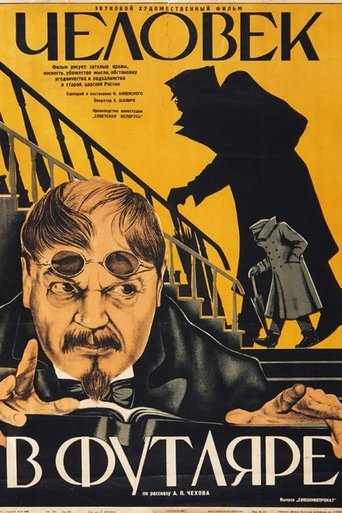
Isidor Markovich Annensky — prominent Soviet film director and screenwriter who made significant contributions to Soviet cinema during the 1930s and 1940s. Born in Warsaw in 1906, he developed a reputation for his masterful adaptations of classical Russian literature, particularly the works of Anton Chekhov. His directorial debut came in the late 1930s, and he quickly established himself as a filmmaker with a keen eye for literary detail and psychological depth. Annensky's most celebrated works include 'Man in a Shell' (1939), an adaptation of Chekhov's short story, and 'Wedding' (1944), based on Chekhov's one-act play. Throughout his career, he demonstrated a unique ability to translate complex literary narratives into compelling cinematic experiences, earning recognition both within the Soviet Union and internationally. His work continued through the 1950s and 1960s, though his most influential period was during the 1930s-1940s. Annensky's films are now regarded as important examples of Soviet literary cinema, showcasing his talent for bringing classic Russian literature to the screen with artistic integrity and emotional resonance.
The Craft
Behind the Camera
Annensky was known for his meticulous approach to literary adaptations, emphasizing psychological depth and character development. His directing style combined realistic performances with careful attention to period details and literary authenticity. He favored intimate, character-driven narratives that explored the complexities of human relationships and social dynamics, particularly in the context of Russian society. His visual style was often understated yet emotionally powerful, allowing the performances and literary material to take center stage.
Milestones
- Directed 'Man in a Shell' (1939)
- Directed 'Wedding' (1944)
- Known for literary adaptations
- Pioneer in Soviet psychological cinema
- Adapted works of Anton Chekhov
Best Known For
Must-See Films
Accolades
Won
- Stalin Prize (1946) for 'Wedding'
- Order of the Red Banner of Labour
- Honored Artist of the RSFSR
Nominated
- Moscow International Film Festival (1959) nomination
Special Recognition
- Honored Artist of the Russian Soviet Federative Socialist Republic
- Order of the Red Banner of Labour recipient
Working Relationships
Worked Often With
Studios
Why They Matter
Impact on Culture
Isidor Annensky played a significant role in establishing the tradition of literary adaptation in Soviet cinema. His films helped to bring classical Russian literature to mass audiences during a period when access to original literary works was sometimes limited. By adapting works by Chekhov and other Russian masters, he contributed to the preservation and popularization of Russian cultural heritage during the Soviet era. His approach to psychological realism influenced subsequent generations of Soviet filmmakers who sought to create more nuanced and character-driven narratives within the constraints of the Soviet system.
Lasting Legacy
Annensky's legacy lies in his successful synthesis of literary artistry and cinematic technique, particularly in his adaptations of Russian classical literature. His films remain important examples of Soviet cinema's ability to produce artistically significant works while operating within ideological constraints. Today, his films are studied as examples of how Soviet filmmakers navigated the complex relationship between art, literature, and politics. His work continues to be featured in retrospectives of Soviet cinema and is valued for its contribution to the preservation of Russian literary classics in cinematic form.
Who They Inspired
Annensky influenced subsequent Soviet directors who sought to adapt literary works for the screen, demonstrating how to maintain the integrity of source material while creating effective cinema. His psychological approach to character development influenced the more nuanced Soviet films of the 1950s and 1960s. His success in adapting Chekhov's works paved the way for other directors to tackle complex literary adaptations, contributing to a richer tradition of literary cinema in the Soviet Union.
Off Screen
Isidor Annensky was born into a Jewish family in Warsaw when it was part of the Russian Empire. He moved to Moscow to pursue his career in cinema and became part of the Soviet film industry during its formative years. His personal life was largely private, though he was known to be married and had children. He experienced the challenges of working as a filmmaker during the Stalin era, navigating the strict ideological requirements of Soviet cinema while maintaining his artistic vision. Despite the political pressures of the time, he managed to create films that balanced artistic merit with Soviet cultural expectations.
Education
Studied at the State Institute of Cinematography (VGIK) in Moscow
Family
- Unknown - information not widely documented
Did You Know?
- His 1939 film 'Man in a Shell' was based on Anton Chekhov's short story about a reclusive schoolteacher
- 'Wedding' (1944) was adapted from Chekhov's one-act play and became one of his most celebrated works
- He worked during
- His films often featured ensemble casts that included some of the Soviet Union's most respected actors
- Annensky was particularly skilled at capturing the subtle humor and social commentary in Chekhov's works
- His adaptation of 'The Gadfly' (1955) was based on the popular revolutionary novel by Ethel Lilian Voynich
- He received the prestigious Stalin Prize in 1946, one of the highest honors for Soviet artists
- Despite his success, many of his films were not widely distributed outside the Soviet Union during his lifetime
In Their Own Words
Literature provides the soul, cinema provides the body - together they create life
To adapt Chekhov is not merely to film his words, but to capture his understanding of human nature
In every character, there is a universe waiting to be discovered by the camera
Frequently Asked Questions
Who was Isidor Annensky?
Soviet on YTB.my. He was a prominent figure in Soviet cinema who specialized in bringing literary classics to the screen with psychological depth and artistic integrity.
What films is Isidor Annensky best known for?
Titles linked here include Man in a Shell (1939), Wedding (1944).
When was Isidor Annensky born and when did he die?
Born 1906; died 1979.
What awards did Isidor Annensky win?
Annensky received several prestigious honors including the Stalin Prize in 1946 for his film 'Wedding', the Order of the Red Banner of Labour, and was named an Honored Artist of the Russian Soviet Federative Socialist Republic. These awards recognized his significant contributions to Soviet cinema.
What was Isidor Annensky's directing style?
Annensky's directing style was characterized by meticulous attention to literary detail, psychological depth, and character development. He excelled at creating intimate, character-driven narratives that balanced artistic merit with Soviet cultural expectations, particularly in his adaptations of Russian classical literature.