J. Gordon Edwards
Director
Born: June 24, 1867 in Fredericton, New Brunswick, Canada Died: December 31, 1925 Active: 1914-1925 Birth Name: James Gordon Edwards
Films
2 films
About J. Gordon Edwards
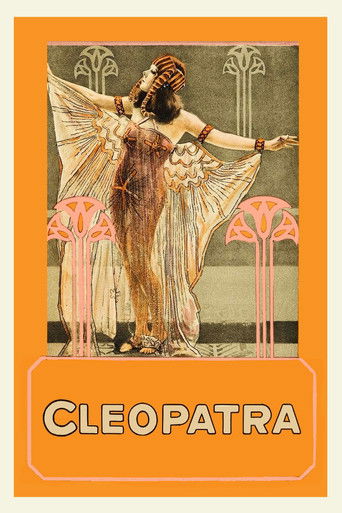
J. Gordon Edwards, born James Gordon Edwards, was a Canadian-American film director who rose to prominence during the silent era as one of Fox Film Corporation's most successful directors. After beginning his career as a stage actor and playwright, Edwards transitioned to film in the early 1910s and quickly established himself excelled in historical epics and spectacular productions. He achieved his greatest fame through his collaborations with the vamp actress Theda Bara, directing her in numerous hits that defined her career and established the sensual, dangerous female archetype in cinema. Edwards' most celebrated work, Cleopatra (1917), became one of the biggest box office successes of the 1910s and showcased his talent for creating visually stunning spectacles on grand scales. Throughout his career at Fox, he directed over 50 films, including other notable epics like Salomé (1918) and Queen of Sheba (1921), earning a reputation for his ability to manage large productions and create atmospheric, exotic settings. Edwards served as head of production at Fox and was considered directors of his era, known for his lavish approach to filmmaking that rivaled European productions. His career was tragically cut short when he died of a heart attack on New Year's Eve 1925, leaving behind a legacy that helped shape early Hollywood cinema and influenced subsequent generations of filmmakers.
The Craft
Behind the Camera
Edwards was renowned for his grand, spectacular approach to filmmaking, particularly in historical and biblical epics. He favored elaborate sets, intricate costumes, and large-scale crowd scenes that created visually impressive films rivaling European productions. His direction emphasized melodramatic elements and visual spectacle over nuanced character development, which was typical of the era but executed with exceptional skill. Edwards had a particular talent for managing large productions and creating atmospheric, often exotic settings that transported audiences to different historical periods. His work with Theda Bara helped establish the 'vamp' archetype in cinema, combining sensuality with danger in a way that captivated audiences of the time. Edwards' visual style was characterized by bold compositions, dramatic lighting, and a keen eye for spectacle that made his films stand out in an era increasingly dominated by epics.
Milestones
- Director of Cleopatra (1917), one of the biggest hits of the 1910s
- Long-standing collaboration with Theda Bara in over 20 films
- Pioneer of historical epics in silent cinema
- Head of production at Fox Film Corporation
- Director of Queen of Sheba (1921), another major epic production
- Created the visual template for the 'vamp' genre through his Bara collaborations
Best Known For
Must-See Films
Accolades
Won
- Photoplay Magazine Medal of Honor for Cleopatra (1917)
Special Recognition
- Star on Hollywood Walk of Fame (for contributions to motion pictures)
- Recognized as one of Fox Film Corporation's founding directors
- Cited as a pioneer of the historical epic genre in film history texts
Working Relationships
Worked Often With
Studios
Why They Matter
Impact on Culture
J. Gordon Edwards significantly shaped early Hollywood cinema through his work in the historical epic genre and his role in establishing the 'vamp' archetype. His film Cleopatra (1917) set new standards for spectacle in American cinema and proved that domestic productions could compete with European epics in terms of grandeur and visual impact. Through his collaborations with Theda Bara, Edwards helped create one of the first true movie stars and established a template for the femme fatale character that would influence cinema for decades. His success at Fox Film Corporation demonstrated the commercial viability of large-scale productions, encouraging other studios to invest in more ambitious projects. Edwards' work also contributed to the elevation of the director's role in early Hollywood, helping establish the director as the primary creative force behind a film rather than merely a technical supervisor.
Lasting Legacy
J. Gordon Edwards' legacy endures primarily through his influence on the historical epic genre and his role in early Hollywood's development. Though many of his films, including the legendary Cleopatra, are now lost due to the deterioration of nitrate film stock, his reputation among film historians remains strong. He is remembered as. His family legacy continued through his grandson Blake Edwards, who became one of Hollywood's most respected directors in the sound era. Edwards' work continues to be studied by film scholars interested in the development of cinema as an art form and the evolution of the director's role in Hollywood. The rediscovery and restoration of his surviving films have helped modern audiences appreciate his contributions to early cinema and his role in shaping the language of film spectacle.
Who They Inspired
Edwards directly influenced subsequent generations of epic filmmakers through his grand visual style and approach to historical subjects. His success with films like Cleopatra and Queen of Sheba paved the way for later directors such as Cecil B. DeMille, who would become synonymous with Hollywood epics. The visual techniques Edwards developed for creating spectacle on screen - including his use of massive sets, crowd scenes, and elaborate costumes - became standard elements in epic filmmaking. His work with Theda Bara influenced how directors approached female sexuality and power on screen, contributing to the development of the femme fatale archetype in cinema. Many of the directors who followed at Fox Film Corporation were directly inspired by Edwards' approach to filmmaking, particularly his ability to balance commercial appeal with artistic ambition. His influence can also be seen in the work of his grandson Blake Edwards, who incorporated elements of visual spectacle and strong female characters into his own films.
Off Screen
J. Gordon Edwards was married to actress Eleanor Kent, with whom he had one child. His family would later produce another notable filmmaker - his grandson Blake Edwards, who would become famous for directing films like 'The Pink Panther' series and 'Breakfast at Tiffany's'. Edwards was known in Hollywood circles as a hard-working, professional director who maintained good relationships with his cast and crew. Despite his success, he remained relatively private about his personal life, focusing instead on his work and family. His sudden death at age 58 shocked the film industry and cut short a career that was still at its peak.
Education
Limited formal education documented; primarily self-taught in filmmaking after extensive stage experience
Family
- Eleanor Kent (married until his death in 1925)
Did You Know?
- Most of Edwards' films, including his most famous work Cleopatra (1917), are now considered lost films
- He was one of the highest-paid directors of the silent era, earning over $1,000 per week at Fox
- Edwards directed Theda Bara in more than 20 films, helping establish her as one of cinema's first sex symbols
- His grandson Blake Edwards named his production company 'Geoffrey Productions' as a tribute to his grandfather
- Edwards was one of the first directors to have his name prominently featured in film advertising
- He died suddenly of a heart attack while working on what would have been his next film
- Edwards was known for his ability to complete large-scale productions quickly and efficiently
- He often wrote or co-wrote scripts for the films he directed
- Edwards' films were among the first to be heavily promoted through national advertising campaigns
- His production methods influenced the studio system that would dominate Hollywood in the coming decades
In Their Own Words
On directing epics: 'The secret is not in the size of the budget, but in the size of the vision'
On working with Theda Bara: 'She understood the camera in a way few actors of our time do - she knew how to be both larger than life and intimately real at the same time'
On film spectacle: 'Audiences don't just want to see a story, they want to be transported to another world'
Frequently Asked Questions
Who was J. Gordon Edwards?
Prominent Canadian-American on YTB.my. He served as one of Fox Film Corporation's top directors from 1914 until his death in 1925, directing over 50 films including the legendary Cleopatra (1917).
What films is J. Gordon Edwards best known for?
Titles linked here include Cleopatra (1917), Salomé (1918).
When was J. Gordon Edwards born and when did he die?
Born June 24, 1867; died December 31, 1925.
What awards did J. Gordon Edwards win?
Edwards received the Photoplay Magazine Medal of Honor for Cleopatra in 1917, which was one of the first significant film awards. He also earned a star on the Hollywood Walk of Fame for his contributions to motion pictures. While formal awards were limited in his era, he was widely recognized as.
What was J. Gordon Edwards' directing style?
Edwards was known for his grand, spectacular approach to filmmaking, particularly in historical and biblical epics. He favored elaborate sets, intricate costumes, and large-scale crowd scenes that created visually impressive films. His direction emphasized melodramatic elements and visual spectacle, with a particular talent for creating atmospheric, exotic settings that transported audiences to different historical periods.
How did J. Gordon Edwards influence cinema?
Edwards significantly influenced early Hollywood by the historical epic genre and demonstrating the commercial viability of large-scale productions. His work helped establish the director as the primary creative force behind films and influenced subsequent epic filmmakers like Cecil B. DeMille. Through his collaborations with Theda Bara, he also helped create the 'vamp' archetype and contributed to the development of the femme fatale character in cinema.
What is J. Gordon Edwards' family connection to later Hollywood?
Edwards is the grandfather of Blake Edwards, who became a famous Hollywood director known for films like 'The Pink Panther' series, 'Breakfast at Tiffany's', and 'Victor/Victoria'. Blake Edwards often spoke of his grandfather's influence on his own career and named his production company as a tribute to him.