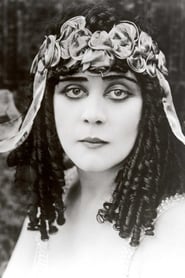

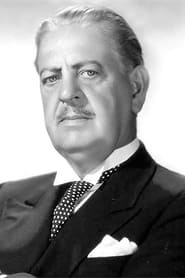
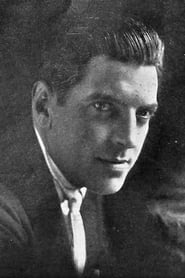
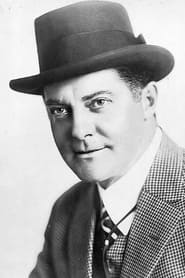
Cleopatra
"Caught between greatest and julius"
Keys: Space play/pause · ←/→ 10s · F fullscreen · M mute · </> speed
About this film
The story of Cleopatra, the fabulous queen of Egypt, and the epic romances between her and the greatest men of Rome, Julius Caesar and Antony. Only a small fragment of survives. Gordon Edwards.
Cast & crew
More films like this
More Drama films
View all →







More from J. Gordon Edwards
View all →
More about this film
About the production
Release dateOctober 14, 1917
Budget$500,000 (enormous sum for 1917, equivalent to over $10 million today)
Box officeVery successful, grossing over $1 million at the box office
ProductionFox Film Corporation
Filmed inFox Studio Lot, Los Angeles, California, Santa Monica Beach, California (for battle scenes)
The production was among the costliest of its time, featuring elaborate sets including a massive reproduction of Cleopatra's barge and the Egyptian palace. Theda Bara's costumes were scandalously revealing for the era, with some scenes requiring her to wear only strategically placed jewelry. The film used thousands of extras for the battle sequences and featured groundbreaking special effects for the time, including miniature ships for the naval battle scenes.
Themes
Power and its corrupting influenceThe conflict between love and dutyFemale sexuality as a source of powerEast-West cultural conflictThe price of ambition
Themes & topics
Historical background
Cleopatra (1917) emerged during the silent era before feature-length dominance, when exhibition habits and national film industries were still taking shape.
Why this film matters
Cleopatra remains accessible through digital archives, giving modern viewers a direct link to 1917 screen culture.
Making of
The production of Cleopatra was a massive undertaking for Fox Film Corporation, representing their most ambitious project to date. Director J. Gordon Edwards worked closely with Theda Bara, who was his frequent collaborator and one of the biggest stars in Hollywood. The filming process was challenging due to the elaborate costumes and sets, with Bara reportedly fainting multiple times from heat exhaustion while filming in heavy Egyptian robes. The famous scene where Cleopatra arrives in Rome on her golden barge required the construction of a massive floating set on Santa Monica Bay, which had to be carefully maneuvered by dozens of crew members. The production also faced censorship challenges from local film boards, requiring several cuts and reshoots to satisfy moral standards of the time.
What critics said
Retrospective notes on Cleopatra emphasize its value as a silent-era document rather than blockbuster reception.
Did you know?
- Theda Bara wore over 50 different costumes in the film, some of which were so revealing that they caused moral outrage among conservative audiences
- The film's sets were so elaborate and expensive that Fox reused them in several subsequent productions to recoup costs
- During filming, a fire broke out on set destroying several valuable props and costumes, requiring emergency reconstruction
- Theda Bara's makeup for the role took over two hours to apply each day, requiring heavy eye makeup that became her trademark look
- The film was banned in several cities due to its perceived sexual content and moral implications
- A famous promotional campaign claimed the film was 'The Most Magnificent Motion Picture Ever Produced'
- Only a few fragments of the film survive today, totaling less than 5 minutes of footage
- The original nitrate prints were destroyed in the 1937 Fox vault fire, along with many other silent films
- Theda Bara was paid $4,000 per week for her role, making her one of the highest-paid actresses of the era
- The film's success led to a wave of historical epics in the late 1910s, with other studios trying to replicate its formula
Visual style
The cinematography by John W. Arnold and Sol Polito was groundbreaking for its time, utilizing innovative lighting techniques to create dramatic shadows and highlights that enhanced Bara's mysterious persona. The film employed elaborate camera movements, including tracking shots during the battle sequences that were technically sophisticated for 1917. The visual style emphasized exoticism and decadence, with careful attention to lighting Bara's revealing costumes to maximize their impact while navigating censorship restrictions. The film also made effective use of location photography at Santa Monica Beach, creating impressive wide shots for the naval battle scenes that conveyed the epic scale of the production.
Innovations
Cleopatra featured several technical innovations for its time, including the use of matte paintings to extend the scale of the Egyptian sets and create the illusion of massive architectural structures. The film's miniature effects for the naval battle scenes were particularly sophisticated, using detailed model ships filmed in large water tanks. The production also pioneered techniques for creating the illusion of massive crowds using multiple exposures and careful positioning of extras. The elaborate costume designs incorporated innovative materials and construction methods to achieve the desired exotic effects while allowing for the practical demands of filming.
Music
As a silent film, Cleopatra was accompanied by live musical performances in theaters. Fox provided a detailed musical cue sheet for theater organists and orchestras, suggesting specific pieces for various scenes. The recommended score included classical works by composers like Tchaikovsky and Wagner, as well as original compositions by Fox's music department. The music was designed to enhance the film's emotional impact, with romantic themes for Cleopatra's love scenes and dramatic, martial music for the battle sequences. Large urban theaters often employed full orchestras for the presentation, while smaller venues used piano or organ accompaniment.
Famous quotes
I am Egypt! I am the Nile! I am life itself!" - Cleopatra
Rome shall learn that Egypt is not a province to be ruled, but a power to be reckoned with" - Cleopatra
In my arms, even Caesar is but a man" - Cleopatra
Love is a weapon more powerful than any Roman legion" - Cleopatra
I would rather die as a queen than live as a captive" - Cleopatra
Memorable scenes
- Cleopatra's dramatic entrance in Rome rolled in a magnificent carpet, which unrolls to reveal her in all her exotic splendor
- The passionate love scene between Cleopatra and Mark Antony aboard her golden barge on the Nile
- The spectacular naval battle sequence with miniature ships and thousands of extras
- Cleopatra's final suicide scene with the asp, filmed with dramatic lighting and emotional intensity
- The lavish banquet scene where Cleopatra dissolves a pearl in wine to demonstrate her wealth
What audiences thought
Cleopatra was a tremendous commercial success, drawing record crowds to theaters across America and becoming one of the highest-grossing films of 1917. Audiences were particularly captivated by Theda Bara's sensual performance and the film's spectacular visual elements. The film's scandalous reputation actually increased its appeal, with many theaters using its controversial nature in their advertising. Despite facing bans in several conservative cities, where it was deemed morally objectionable, the film's notoriety only enhanced its box office performance. Contemporary audience accounts describe packed theaters and enthusiastic responses to Bara's performance, with many viewers returning multiple times to see the spectacle.
Film connections
Influenced by
- Shakespeare's Antony and Cleopatra
- George Bernard Shaw's Caesar and Cleopatra
- Historical paintings of Cleopatra by artists like Lawrence Alma-Tadema
- Earlier Italian historical epics like Cabiria (1914)
This film influenced
- Cleopatra (1934) starring Claudette Colbert
- Cleopatra (1963) starring Elizabeth Taylor
- The Sign of the Cross (1932)
- The Ten Commandments (1923 and 1956)
- Ben-Hur (1925 and 1959)
Film restoration
Considered a lost film with only fragments surviving. Approximately 5-6 minutes of footage exists in various film archives, including the Museum of Modern Art and the Library of Congress. The film was one of many silent features destroyed in the 1937 Fox vault fire, which claimed the majority of Fox's silent film output. The surviving fragments consist of short clips from various scenes, giving only a glimpse of the film's original magnificence. Film preservationists continue to search for any additional footage that might exist in private collections or foreign archives.
Where to watch
- The surviving fragments are occasionally shown at silent film festivals and special screenings
- Some fragments are available on DVD compilations of lost silent films
- Brief clips can be found on YouTube and other online archives
- The film is studied in film history courses using the surviving footage
- Museum of Modern Art and Library of Congress hold viewing copies for research purposes