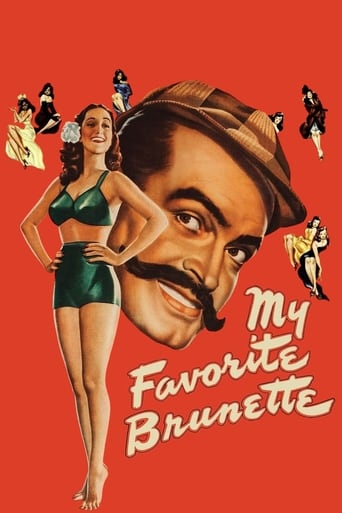

Bob Hope
Actor
Born: May 29, 1903 in Eltham, London, England Died: July 27, 2003 Active: 1920s-2000s (active years covered over 80 years) Birth Name: Leslie Townes Hope
Films
2 films
About Bob Hope
Bob Hope, born Leslie Townes Hope on May 29, 1903, in Eltham, London, England, was beloved entertainers of the 20th century whose an remarkable eight decades across vaudeville, Broadway, radio, film, and television. His family immigrated to Cleveland, Ohio when he was four years old, and he began his entertainment career in vaudeville during the 1920s before transitioning to Broadway in the 1930s. Hope's breakthrough in Hollywood came with the highly successful 'Road to.' film series alongside Bing Crosby and Dorothy Lamour, which established him excelled in comedy and improvisation. Beyond his prolific film career, Hope became for his decades-long dedication to entertaining U.S. Troops overseas through the USO, beginning during World War II and continuing through the Gulf War. He hosted the Academy Awards a record 19 times and received numerous honors including five honorary Academy Awards for his contributions to American entertainment. Hope's career encompassed over 70 film appearances, countless radio and television shows, and live performances that made him an American cultural icon. He passed away on July 27, 2003, at the age of 100, just two months after celebrating his centennial birthday, leaving behind an unparalleled legacy in entertainment history.
The Craft
On Screen
Bob Hope's acting style was characterized by rapid-fire wit, self-deprecating humor, and masterful timing that made him a pioneer of film comedy. He was known for breaking the fourth wall, speaking directly to the audience with asides and winks that created an intimate connection with viewers. Hope's comedic approach combined vaudeville timing with sophisticated wordplay and improvisation, often playing the charming but slightly cowardly character who talked his way out of dangerous situations. His signature style included exaggerated facial expressions, physical comedy that never went too far into slapstick, and a natural ability to ad-lib that kept his performances fresh and spontaneous. Hope perfected the 'straight man with a twist' persona, appearing to be the sensible one while delivering the funniest lines, often at his own expense. His chemistry with co-stars, particularly Bing Crosby, created a new dynamic in comedy films that influenced generations of performers.
Milestones
- Breakthrough in vaudeville during the 1920s
- Broadway success in 'Roberta' and 'Ziegfeld Follies of 1936'
- Film debut in 'The Big Broadcast of 1938'
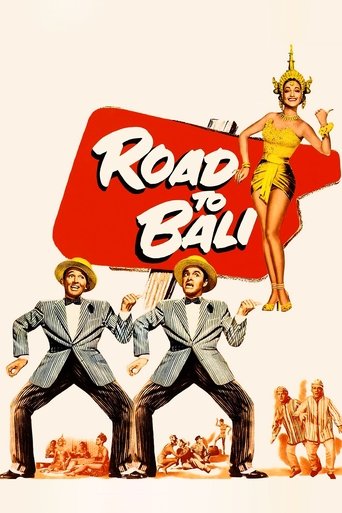
- Star of the 'Road to.' film series (7 films, 1940-1962)
- First USO tour in 1941, entertaining troops for 50+ years
- Hosted Academy Awards 19 times (record)
- Received 5 honorary Academy Awards
- Peabody Award for television work
- Kennedy Center Honors recipient (1985)
- Centennial birthday celebration in 2003
Best Known For
Iconic Roles
Must-See Films
Accolades
Won
- Academy Honorary Award (1944)
- Academy Honorary Award (1952)
- Academy Honorary Award (1959)
- Academy Honorary Award (1965)
- Academy Honorary Award (1993)
- Jean Hersholt Humanitarian Award (1960)
- Peabody Award (1960)
- Golden Globe Cecil B. DeMille Award (1962)
- SAG Life Achievement Award (1979)
- Kennedy Center Honors (1985)
- National Medal of Arts (1995)
Nominated
- Academy Award nomination for Best Actor for 'The Princess and the Pirate' (1944)
- Academy Award nomination for Best Actor for 'The Great Lover' (1949)
- Golden Globe nominations for Best Actor in multiple years
- Emmy nominations for television specials
Special Recognition
- Hollywood Walk of Fame star (1960)
- Congressional Gold Medal (1962)
- Presidential Medal of Freedom (1969)
- Honorary Knight Commander of the Order of the British Empire (1998)
- Bob Hope Airport named in his honor
- Multiple buildings and theaters named after him
Working Relationships
Worked Often With
Studios
Why They Matter
Impact on Culture
Bob Hope fundamentally transformed American comedy by a style of self-aware, fourth-wall-breaking humor that influenced generations of performers. His 'Road to' films with Bing Crosby created a new genre of comedy that combined adventure, romance, and improvisational wit, setting the standard for buddy comedies that continues to this day. Hope's decades-long commitment to USO performances made him a symbol of American patriotism and demonstrated the power of entertainment to boost troop morale during wartime, with his Christmas specials becoming cherished traditions for military personnel worldwide. As a radio star, he helped define the medium's golden age, creating characters and catchphrases that entered the American lexicon. His transition to television made him one of the medium's first superstars, and his hosting of the Academy Awards 19 times established the template for award show comedy that persists. Hope's ability to adapt his comedy across multiple media platforms while maintaining his distinctive voice made him a unique figure in entertainment history, bridging the gap between vaudeville and modern comedy.
Lasting Legacy
Bob Hope's legacy encompasses not only his remarkable body of work but also his lasting impact on American culture and entertainment. He set the standard for comedian-hosts that influenced everyone from Johnny Carson to Jimmy Kimmel, establishing the model of quick wit, self-deprecation, and topical humor that defines late-night television. His USO tours created a lasting tradition of celebrity support for the military, inspiring countless performers to follow his example. The 'Road to' films remain classics that continue to be studied for their innovative approach to comedy and improvisation. Hope's business acumen and longevity demonstrated how entertainers could build sustainable careers across multiple media platforms. His star on the Hollywood Walk of Fame, the naming of Bob Hope Airport, and numerous other honors ensure his name remains visible to future generations. The Bob Hope Legacy continues through charitable foundations and the preservation of his extensive film and television archive, which serves as a valuable resource for studying the evolution of American comedy in the 20th century.
Who They Inspired
Bob Hope's influence on comedy is immeasurable, with his rapid-fire delivery and self-referential humor directly influencing comedians from Woody Allen to Jerry Seinfeld. His ability to blend topical references with timeless comedy established a template that late-night hosts still follow today. The improvisational style he perfected with Bing Crosby influenced generations of comedy duos and ensemble casts. Hope's success in crossing over from vaudeville to film, radio, and television created a roadmap for multi-platform entertainers that continues to guide modern performers. His political satire and willingness to comment on current events in his comedy opened doors for later comedians to address controversial topics. The way he broke the fourth wall and acknowledged the audience influenced postmodern comedy and meta-humor in film and television. Hope's longevity and ability to remain relevant across decades taught future generations of entertainers about adapting to changing times while maintaining a core identity. His combination of entertainment and patriotism influenced how celebrities engage with social and political causes.
Off Screen
Bob Hope married Dolores Reade, a nightclub singer, in 1934, and their marriage lasted 69 years until her death in 2011. The couple adopted four children: Linda, who became his producer; Tony, an author and former singer; Nora, a school administrator; and Kelly, a former model. Despite his massive fame, Hope maintained a relatively private family life and was known as a devoted husband and father. He was an avid golfer and often incorporated golf into his comedy routines and charity work. Hope was also known for his business acumen, investing wisely in real estate and other ventures that made him wealthy. He was a Republican who had friendships with politicians across party lines, including multiple U.S. Presidents. Hope was also a dedicated philanthropist, supporting numerous charities throughout his life, particularly those related to children's hospitals and education.
Education
Attended John Marshall High School in Cleveland, Ohio (did not graduate)
Family
- Dolores Reade (1934-2011)
Did You Know?
- Was born with the name Leslie Townes Hope but legally changed it to Bob Hope
- His family immigrated to America when he was four, arriving through Ellis Island
- Began his entertainment career as a boxer under the name 'Packy East'
- Made his film debut at age 34 in 'The Big Broadcast of 1938'
- Never won a competitive Academy Award but received five honorary Oscars
- Entertained troops for 50+ years through USO tours, from WWII to the Gulf War
- Was an avid golfer who played in pro-am tournaments and owned a golf course
- His nose was broken in a boxing match, which became part of his comedy routine
- Hosted the Academy Awards more times than anyone else (19 times)
- Was a close friend of every U.S. President from Franklin D. Roosevelt to Bill Clinton
- His theme song 'Thanks for the Memory' won an Academy Award for Best Original Song
- Was made an honorary knight by Queen Elizabeth II in 1998
- His centennial birthday in 2003 was marked by celebrations across America
- Never graduated from high school but received numerous honorary degrees
- Was a shrewd businessman who invested heavily in real estate, particularly in California
In Their Own Words
'I've always been in the right place and time. Of course, I steered myself there.' - On his career success
'I have a wonderful makeup crew. They're the same people restoring the Statue of Liberty.' - On aging
'Middle age is when your age starts to show around your middle.' - On getting older
'A bank is a place that will lend you money if you can prove that you don't need it.' - Classic Hope wit
'I love to go to Washington - if I'm a witness.' - Political humor
'The only thing whiskey does is make you talk louder and lie faster.' - On drinking
'I'm at the age where my back goes out more than I do.' - Self-deprecating humor
'I grew up with six brothers. That's how I learned to dance - waiting for the bathroom.' - Childhood memory
'I'm not afraid of dying. I just don't want to be there when it happens.' - On mortality
'You know you're getting old when the candles cost more than the cake.' - Birthday humor
Frequently Asked Questions
Who was Bob Hope?
Legendary American comedian, with credits in this catalog. He was best known for the 'Road to.' film series with Bing Crosby, his decades-long USO tours entertaining troops, and hosting the Academy Awards a record 19 times. His active years covered over 80 years across multiple entertainment mediums, making him.
What films is Bob Hope best known for?
Titles linked here include Road to Singapore (1940), Road to Zanzibar (1941).
When was Bob Hope born and when did he die?
Born May 29, 1903; died July 27, 2003.
What awards did Bob Hope win?
Bob Hope received five honorary Academy Awards, including the Jean Hersholt Humanitarian Award for his USO work. He also won the Golden Globe Cecil B. DeMille Award, the Peabody Award, the SAG Life Achievement Award, and the Kennedy Center Honors. Additionally, he received the Presidential Medal of Freedom, the Congressional Gold Medal, and was made an honorary knight by Queen Elizabeth II.
What was Bob Hope's acting style?
Bob Hope's acting style was characterized by rapid-fire wit, self-deprecating humor, and masterful comedic timing. He was famous for breaking the fourth wall and speaking directly to audiences with clever asides. His comedy combined vaudeville timing with sophisticated wordplay, often playing the charming but slightly cowardly character who talked his way out of situations through humor rather than action.
How many USO tours did Bob Hope do?
Bob Hope entertained American troops through USO tours for over 50 years, beginning during World War II and continuing through the Gulf War. He completed 57 USO tours, performing for millions of service members in locations ranging from Europe and the Pacific during WWII to Korea, Vietnam, and the Middle East. His Christmas specials for troops became legendary traditions.
Did Bob Hope serve in the military?
No, Bob Hope never served in the military, as he was too old for service during World War II (he was in his late 30s) and had a deferment during earlier conflicts due to his family responsibilities. However, his decades of USO performances made him. 1 Soldier in Greasepaint.'