

My Favorite Brunette
"Hope plays detective — badly"
Keys: Space play/pause · ←/→ 10s · F fullscreen · M mute · </> speed
About this film
Baby photographer Ronnie Jackson daydreams of detective work until Baroness Carlotta hires him to find her missing husband. Mistaken identity, a death sentence, and a cameo appearance by Alan Ladd as a condemned man pile absurd complications atop Bob Hope's cowardly-hero persona.
Cast & crew
More films like this
More Comedy films
View all →







More from Elliott Nugent
View all →


More about this film
About the production
Release dateApril 4, 1947
Budget$1,250,000
Box office$3,500,000 (domestic)
ProductionParamount Pictures
Filmed inParamount Studios, Hollywood, Los Angeles, California, USA
This was the third film in Bob Hope's 'My Favorite' series, following 'My Favorite Blonde' (1942) and 'My Favorite Brunette' (1947). The film was originally titled 'The Private Eye' but was changed to capitalize on the success of Hope's previous 'My Favorite' films. The production faced challenges with the film noir parody elements, as the studio was initially concerned about mixing comedy with the dark noir style that was popular at the time.
Themes
Identity and mistaken identityThe hero's journey (parodied)Appearance vs. realityThe American Dream of self-reinventionJustice and truth
Themes & topics
Historical background
My Favorite Brunette (1947) parodied private-eye pictures while Paramount still had Bing Crosby under contract, letting Hope riff on the studio's noir cycle in postwar America.
Why this film matters
The film endures as a reference point for Hope's partnership with Dorothy Lamour and for its in-joke casting of Crosby in the execution-yard framing device.
Making of
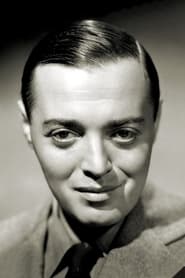
The production was a smooth affair despite its ambitious blend of comedy and noir elements. Bob Hope, known for his ad-libbing skills, was given considerable freedom to improvise on set, much to director Elliott Nugent's approval. The chemistry between Hope and Lamour was well-established from their previous 'Road to...' pictures, making their romantic scenes effortless. Peter Lorre, who had become typecast in villainous roles, embraced the opportunity to play against his sinister image in a comedy context. The film's noir parody elements were carefully crafted by cinematographer Lionel Lindon, who used low-key lighting techniques typical of film noir but maintained the bright, clear look needed for comedy. The prison scenes were filmed on standing sets that had been used in numerous other Paramount productions, modified to give them a fresh appearance.
What critics said
Reviews welcomed the spoof's warmth over hard-boiled cynicism; today it is cited mainly for Hope-Lamour chemistry and as a gateway to noir parody.
Did you know?
- This was the third and final film in Bob Hope's 'My Favorite' series, which began with 'My Favorite Blonde' (1942) and continued with 'My Favorite Spy' (1951).
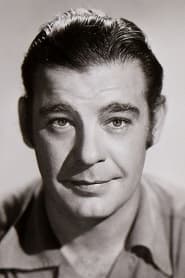
- Peter Lorre and Lon Chaney Jr. both appear in the film, marking a rare collaboration between two horror legends.
- The film features cameo appearances by Bing Crosby (uncredited) and Alan Ladd as themselves, playing on their star personas.
- Bob Hope's character shares the same name as his real-life character Ronnie Jackson, though in reality his birth name was Leslie Townes Hope.
- The film's success led to Hope and Lamour reuniting for several more films, though none in the 'My Favorite' series.
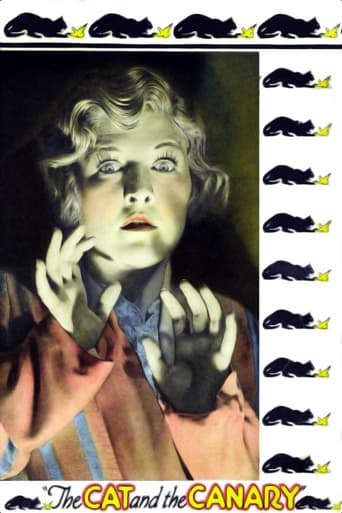
- Director Elliott Nugent was also a successful playwright and had previously directed Hope in 'The Cat and the Canary' (1939).
- The film's title was a play on Hope's earlier success 'My Favorite Blonde' and helped establish a pattern for his comedy vehicles.
- The uranium plot element was topical for 1947, as the atomic age and nuclear weapons were very much in public consciousness.
- Dorothy Lamour's costume budget was one of the highest for the film, as she wore over 15 different outfit changes.
- The film was shot in just 28 days, a relatively quick schedule even for a comedy of this era.
Visual style
Lionel Lindon's cinematography masterfully walks the line between film noir and comedy, using the shadowy lighting and dramatic camera angles typical of noir while maintaining the visual clarity needed for comedy. The film employs low-key lighting techniques in the mystery sequences, creating the appropriate noir atmosphere, but brightens considerably for the comedic moments. Lindon uses Dutch angles and deep shadows during the suspense scenes, then switches to more conventional, well-lit compositions for the dialogue-heavy comedy scenes. The contrast between these visual styles enhances the film's parody elements. The prison sequences are particularly noteworthy for their use of dramatic lighting that simultaneously creates tension and allows for Hope's comedic expressions to remain visible.
Innovations
While not groundbreaking in technical terms, 'My Favorite Brunette' achieved notable success in its seamless integration of two very different visual styles – film noir and comedy. The film's editing, supervised by Doane Harrison, effectively balanced the pacing required for both mystery and comedy, a difficult technical achievement. The production design by Hans Dreier and A. Earl Hedrick created sets that could accommodate both dramatic lighting and comedic staging. The film also demonstrated technical proficiency in its use of process photography for the driving sequences, which were common in films of this era but particularly well-executed here. The sound recording successfully captured both the whispered dialogue typical of noir and the broader comedic delivery required for Hope's performance.
Music
The musical score was composed by Robert Emmett Dolan, who frequently collaborated with Bob Hope. The soundtrack cleverly incorporates elements typical of film noir music – dramatic brass stings, moody string passages, and suspenseful percussion – but adapts them for comedic effect. The main theme, 'My Favorite Brunette,' became a minor hit and was performed by various artists of the period. Dolan's score punctuates the action with musical cues that both parody and celebrate noir conventions. The film also features several popular songs of the era, though none performed by the leads themselves. The sound design emphasizes the contrast between the serious tone of the mystery elements and the light-hearted comedy, with dramatic musical swells often undercut by Hope's comic timing.
Famous quotes
Ronnie Jackson: 'I'm a private detective.' / Baroness Carlotta Montay: 'But you're just a baby photographer!' / Ronnie Jackson: 'Exactly! I photograph babies who grow up to be private detectives!'
Ronnie Jackson: 'You know, for a dame who's supposed to be in trouble, you're causing an awful lot of it.'
Ronnie Jackson: 'I may not be Sherlock Holmes, but I can spot a phony when I see one... unless I'm looking in the mirror.'
Ronnie Jackson: 'If this is what being a detective is all about, I'm going back to babies. At least they don't carry guns.'
Ronnie Jackson: 'I've been framed! And I don't mean for hanging on a wall!'
Memorable scenes
- The opening sequence where Ronnie Jackson is photographing babies while fantasizing about being a hard-boiled detective, complete with dramatic narration and shadowy lighting that contrasts with the cheerful baby studio setting.
- The mistaken identity scene where Baroness Montay first approaches Ronnie, believing him to be detective Sam McCloud, leading to a series of increasingly desperate attempts by Ronnie to maintain the charade.
- The prison scenes where Ronnie recounts his story to reporters, using flashbacks to explain how he ended up on death row, with Hope's comedic timing creating humor even in the dire situation.
- The climactic chase sequence where Ronnie, despite his incompetence, manages to outwit the villains through sheer luck and persistence, culminating in a slapstick confrontation.
- The final scene where Ronnie's true identity as a baby photographer is revealed, but he still gets the girl, subverting traditional detective story conventions.
What audiences thought
Audiences in 1947 embraced 'My Favorite Brunette' enthusiastically, making it one of the year's highest-grossing comedies. The film's blend of mystery and romance appealed to a broad demographic, from teenagers to adults. Hope's fans particularly enjoyed seeing him play the bumbling but ultimately heroic detective, a character type that would become his signature. The film's success at the box office proved that audiences were ready for lighter fare after years of war-themed dramas. In subsequent decades, the film has maintained its popularity through television broadcasts and home video releases, with new generations discovering its charms. Modern audiences often appreciate the film's clever wordplay and the chemistry between Hope and Lamour, which transcends the specific humor of its era.
Film connections
Influenced by
- The Maltese Falcon (1941)
- The Big Sleep (1946)
- Film noir conventions of the 1940s
- Bob Hope's earlier 'My Favorite Blonde' (1942)
- The Thin Man series
- The Road to... pictures
This film influenced
- The Pink Panther series
- Austin Powers films
- Spy Hard (1996)
- Get Smart (2008)
- Kiss Kiss Bang Bang (2005)
- The Man Who Knew Too Little (1997)
Film restoration
The film is well-preserved in the Paramount Pictures archive and has been digitally restored for home video releases. The original negative is maintained in good condition, and the film has been preserved by the Library of Congress as part of the National Film Registry's collection of significant American films. Several high-quality transfers exist for both broadcast and home media, ensuring the film's accessibility for future generations.
Where to watch
- Available on DVD and Blu-ray from Universal Studios Home Entertainment
- Streaming on Paramount+ subscription service
- Available for digital rental or purchase on Amazon Prime Video
- Occasionally airs on Turner Classic Movies (TCM)
- Available on the Criterion Channel during special programming
- Can be found on various streaming platforms that specialize in classic films