
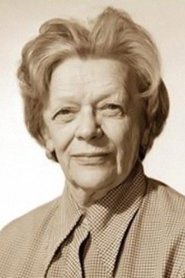
Tatyana Pelttser
Actor
Born: November 21, 1904 in Moscow, Russian Empire Died: July 16, 1992 Active: 1933-1988 Birth Name: Tatyana Ivanovna Pelttser
Films
3 films
About Tatyana Pelttser
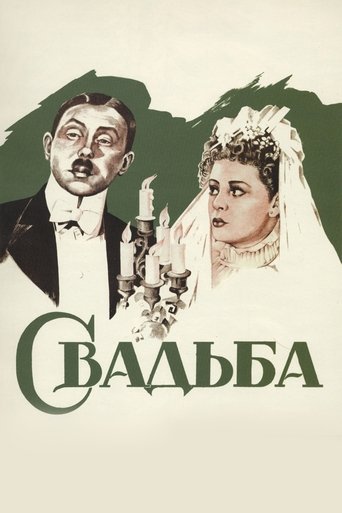
Tatyana Ivanovna Pelttser — celebrated Soviet actress whose over five decades, making her recognizable character actresses in Russian cinema. Born into a theatrical family in Moscow in 1904, she began her stage career in the 1920s and quickly established herself as a versatile performer with a particular talent for comedy. Her film debut came in 1933, but it was her roles in the 1940s, including 'Wedding' (1944) and 'Simple People' (1945), that brought her widespread recognition. Pelttser became renowned for her ability to portray ordinary Soviet citizens with warmth, humor, and authenticity, often playing mothers, grandmothers, and nosy neighbors. She was a long-time member of the Moscow Art Theatre and later worked at the Lenkom Theatre, where she continued to perform well into her 80s. Her contributions to Soviet arts were recognized with the title People's Artist of the USSR in 1972, the highest honor for performers in the Soviet Union. Pelttser remained active in both film and theater until the late 1980s, leaving behind a legacy of over 80 film performances and countless stage roles that endeared her to generations of Soviet audiences.
The Craft
On Screen
Pelttser was known for her naturalistic comedic timing and ability to create instantly recognizable character types. Her acting style was rooted in the Stanislavski system, emphasizing psychological authenticity and emotional truth. She excelled at portraying everyday Soviet citizens with warmth and humor, often playing meddling but good-hearted women. Her performances were characterized by precise physical comedy, distinctive vocal patterns, and an innate ability to find the humanity in even the most minor characters.
Milestones
- Film debut in 'A Great Citizen' (1938)
- Breakthrough role in 'Wedding' (1944)
- Awarded title of Honored Artist of the RSFSR (1954)
- Received title of People's Artist of the USSR (1972)
- Performed at Moscow Art Theatre for over 30 years
- Completed over 80 film appearances
- Continued performing into her 80s
Best Known For
Iconic Roles
Must-See Films
Accolades
Won
- People's Artist of the USSR (1972)
- Honored Artist of the RSFSR (1954)
- Order of the Red Banner of Labour (1974)
- Order of the Friendship of Peoples (1984)
- Order of the Badge of Honour (1949)
Nominated
- State Prize of the RSFSR nomination for theatrical performances (1971)
Special Recognition
- Star on the Avenue of Stars in Moscow
- Honorary citizen of Moscow (1984)
- Theatrical award named in her memory at the Lenkom Theatre
Working Relationships
Worked Often With
Studios
Why They Matter
Impact on Culture
Tatyana Pelttser became an iconic figure in Soviet popular culture, representing the ideal of the ordinary Soviet woman with her down-to-earth charm and relatable performances. Her characters often embodied the values of Soviet society - hard work, community spirit, and family devotion - while providing comic relief that made her beloved across all age groups. She helped define the genre of Soviet comedy through her work with directors like Eldar Ryazanov, creating archetypes that would influence Russian comedy for decades. Pelttser's face and voice became instantly recognizable throughout the Soviet Union, making her.
Lasting Legacy
Tatyana Pelttser left an indelible mark on Soviet and Russian cinema as. Her ability to create memorable characters in even the smallest roles set a standard for supporting actors in Russian film. The Tatyana Pelttser Award was established in her honor to recognize outstanding character actresses in Russian theater and cinema. Her films continue to be shown regularly on Russian television, introducing new generations to her work. Many contemporary Russian actresses cite Pelttser as an influence, particularly in the art of comedic timing and character development.
Who They Inspired
Pelttser influenced generations of Russian character actors through her naturalistic approach to comedy and her ability to find depth in seemingly simple roles. Her work with the Stanislavski system helped popularize psychological realism in Soviet cinema. She demonstrated that character actors could achieve the same level of recognition and respect as leading performers, paving the way for future generations of supporting actors. Her distinctive style of physical comedy and vocal characterization has been studied and emulated by acting students throughout Russia and the former Soviet republics.
Off Screen
Tatyana Pelttser came from a theatrical background, with her father being an actor. She was married twice during her lifetime, though both marriages ended in divorce. Despite her busy career, she maintained close relationships with her family and was known for her generosity toward younger actors. Pelttser never had children of her own but mentored many young performers throughout her career. She lived most of her life in Moscow, remaining in the city even after the collapse of the Soviet Union. In her later years, she suffered from health problems but continued to perform until shortly before her death at age 87.
Education
Graduated from the Moscow Art Theatre School (MKhAT) in 1924 under the tutelage of renowned theater director Konstantin Stanislavski
Family
- First husband (1925-1932)
- Vladimir Ushakov (1935-1945)
Did You Know?
- Was one of the few Soviet actresses to successfully transition from silent films to sound films
- Continued performing on stage even after breaking her hip at age 80
- Was known for her photographic memory and could recall entire plays after decades
- Her father was also an actor who performed under the stage name Pelttser
- Spent World War II performing for frontline troops
- Never learned to drive, always using public transportation in Moscow
- Was a talented painter in her spare time
- Had a distinctive speaking voice that was often imitated by comedians
- Refused several offers to leave the Soviet Union during the Cold War
- Her final film appearance was in 1988 at age 84
In Their Own Words
Acting is not about pretending to be someone else, it's about finding the truth in the character and sharing it with the audience.
Every character, no matter how small, has a story to tell. My job is to find that story and bring it to life.
Comedy is the most serious art form because it requires the most precision and understanding of human nature.
The stage is my home, and the audience is my family. I could never imagine my life without them.
Frequently Asked Questions
Who was Tatyana Pelttser?
Renowned Soviet actress known for her comedic roles and character performances in both theater and film. She was.
What films is Tatyana Pelttser best known for?
Titles linked here include Wedding (1944), Simple People (1945).
When was Tatyana Pelttser born and when did she die?
Born November 21, 1904; died July 16, 1992.
What awards did Tatyana Pelttser win?
Pelttser received numerous honors including the title of People's Artist of the USSR (1972), Honored Artist of the RSFSR (1954), and various Soviet state decorations including the Order of the Red Banner of Labour and Order of Friendship of Peoples.
What was Tatyana Pelttser's acting style?
Pelttser was known for her naturalistic comedic timing and ability to create instantly recognizable character types. Rooted in the Stanislavski system, her performances emphasized psychological authenticity, precise physical comedy, and distinctive vocal patterns.
Where did Tatyana Pelttser study acting?
Pelttser graduated from the Moscow Art Theatre School (MKhAT) in 1924, where she studied under the legendary Konstantin Stanislavski, receiving classical training that influenced her entire career.