Inna Makarova

Inna Makarova

Actor

Born: September 28, 1926 in Tayozhny, Krasnoyarsk Krai, Russian SFSR, Soviet Union Died: April 12, 2020 Active: 1945-2019 Birth Name: Inna Vladimirovna Makarova

About Inna Makarova

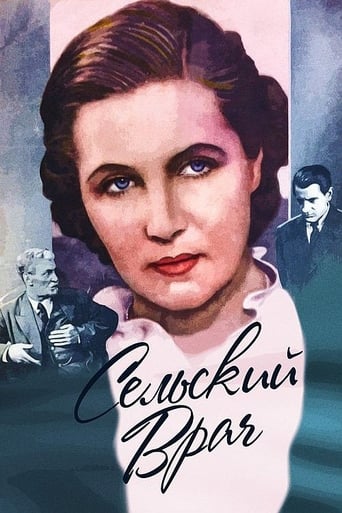
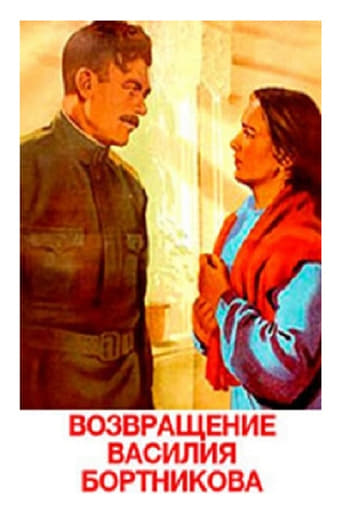
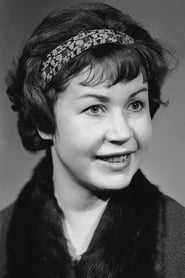
Inna Vladimirovna Makarova was a distinguished Soviet and Russian actress whose career spanned over five decades, becoming one of the most recognizable faces of Soviet cinema. Born in Siberia, she rose to prominence after graduating from the prestigious Gerasimov Institute of Cinematography (VGIK) in 1948, where she studied under renowned acting teacher Boris Zakhava. Her breakthrough role came in the wartime drama 'Young Guard' (1948), where she portrayed the heroic underground resistance fighter Lyubov Shevtsova, a performance that would define her early career and establish her as a symbol of Soviet heroism. Throughout the 1950s and 1960s, Makarova became particularly known for her portrayals of strong, principled Soviet women in films that reflected the ideals of socialist realism. Her performances in 'The Return of Vasili Bortnikov' (1953) and 'The Country Doctor' (1952) showcased her ability to embody characters who represented the moral and ethical values promoted by Soviet cinema. As she matured as an actress, Makarova transitioned to more complex roles in the 1970s and 1980s, often playing mothers and matriarchs in family dramas. Her career was recognized with the prestigious title of People's Artist of the USSR in 1985, cementing her status as one of Soviet cinema's most respected performers. Even in her later years, she continued to appear in films and television, maintaining her connection with audiences who had grown up watching her on screen.

The Craft

On Screen

Makarova was known for her naturalistic yet emotionally powerful acting style, characterized by deep psychological realism and the ability to convey complex emotions through subtle facial expressions and controlled gestures. Her approach was rooted in the Stanislavski system, which she mastered at VGIK, allowing her to create fully realized characters that embodied both personal authenticity and the collective ideals valued in Soviet cinema. She had a particular talent for portraying strong, resilient women who faced adversity with dignity and moral fortitude, bringing depth and humanity to characters that might otherwise have appeared as mere ideological symbols.

Milestones

  • Graduated from VGIK (Gerasimov Institute of Cinematography) in 1948
  • Breakthrough role in 'Young Guard' (1948) as Lyubov Shevtsova
  • Awarded Stalin Prize for 'Young Guard' (1949)
  • Received title of People's Artist of the RSFSR (1977)
  • Awarded title of People's Artist of the USSR (1985)
  • Appeared in over 50 films throughout her career

Best Known For

Iconic Roles

  • Lyubov Shevtsova in 'Young Guard' (1948)
  • Natya in 'The Country Doctor' (1952)
  • Klavdiya in 'The Return of Vasili Bortnikov' (1953)
  • Anna in 'A Big Family' (1954)

Must-See Films

  • Young Guard
  • 1948
  • The Country Doctor
  • 1952
  • The Return of Vasili Bortnikov
  • 1953
  • A Big Family
  • 1954
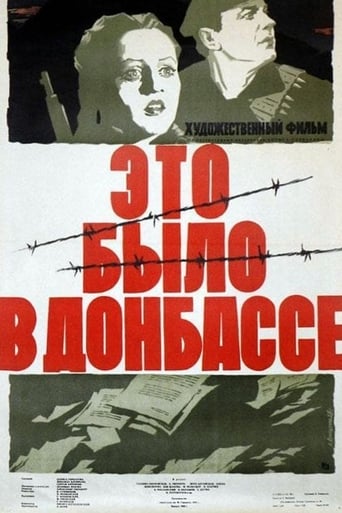
  • It Happened in the Donbass
  • 1945
  • awards
  • Stalin Prize, 2nd class (1949) for 'Young Guard',Order of the Red Banner of Labour (1976),People's Artist of the RSFSR (1977),People's Artist of the USSR (1985),Order of Friendship (1996),Order of Honour (2006),Order 'For Merit to the Fatherland', 4th class (2011)
  • nominations
  • Cannes Film Festival Best Actress nomination (1955) for 'A Big Family'
  • honors
  • Honored Artist of the RSFSR (1954),Vasilyev Brothers State Prize of the RSFSR (1966),Lifetime Achievement Award at Kinotavr Film Festival (2002)
  • personalLife
  • Makarova was married twice during her lifetime. Her first marriage was to fellow actor Vyacheslav Tikhonov, one of Soviet cinema's most beloved leading men, with whom she had a daughter, Natalya Tikhonova, who also became an actress. After her divorce from Tikhonov, she married director and screenwriter Vladimir Baskakov, with whom she remained until his death. Despite her fame, Makarova was known for being a private person who rarely discussed her personal life in public, preferring to let her work speak for itself. She maintained close relationships with her colleagues in the Soviet film industry and was respected for her professionalism and dedication to her craft.
  • spouses
  • Vyacheslav Tikhonov (1948-1963),Vladimir Baskakov (1964-1990)
  • children
  • Natalya Tikhonova (born 1950) - actress
  • education
  • Gerasimov Institute of Cinematography (VGIK), graduated 1948, studied under Boris Zakhava
  • studioAffiliations
  • Gorky Film Studio,Mosfilm,Lenfilm
  • frequentCollaborators
  • Director Sergey Gerasimov,Director Mark Donskoy,Actor Vyacheslav Tikhonov,Director Iosif Kheifits
  • mentors
  • Boris Zakhava (acting teacher at VGIK),Sergey Gerasimov (director and mentor)
  • protégés
  • Natalya Tikhonova (her daughter, whom she influenced)
  • culturalImpact
  • Inna Makarova's impact on Soviet and Russian cinema was profound, as she helped define the archetype of the ideal Soviet woman during the Stalin and post-Stalin eras. Her portrayal of Lyubov Shevtsova in 'Young Guard' became an iconic representation of female heroism and sacrifice in Soviet culture, with her character being studied in schools and held up as a model for young Soviet women. Through her numerous roles in films that promoted socialist values, Makarova contributed to the cultural narrative of Soviet identity during the Cold War period, while simultaneously bringing emotional depth and humanity to characters that might otherwise have served purely as propaganda. Her work in family dramas like 'A Big Family' helped establish more nuanced representations of Soviet domestic life, bridging the gap between ideological requirements and authentic human experiences.
  • legacy
  • Inna Makarova's legacy endures as one of Soviet cinema's most respected and beloved actresses, representing both the artistic achievements and cultural values of her era. Her films continue to be shown on Russian television and studied in film schools, where her performances are analyzed as exemplars of the Stanislavski method applied to socialist realist cinema. The characters she created, particularly Lyubov Shevtsova, remain part of Russia's cultural memory, symbolizing the courage and resilience of the Soviet people during World War II. Her career trajectory from wartime heroine to complex matriarchal roles mirrors the evolution of Soviet cinema itself, making her work a valuable lens through which to understand the country's cultural history. As one of the last surviving stars of Soviet cinema's golden age, her passing in 2020 marked the end of an era in Russian film history.
  • influence
  • Makarova influenced generations of Soviet and Russian actors through her example of combining technical mastery with emotional authenticity, demonstrating how to create compelling characters within the constraints of socialist realism. Her success in both heroic and domestic roles showed future actresses the possibilities for range and depth within the Soviet film system. Many younger actresses cited her as an inspiration for her ability to maintain artistic integrity while working within the state-controlled film industry. Her approach to character development, particularly her focus on psychological realism, influenced the evolution of acting styles in Soviet cinema as it moved away from the more stylized performances of the 1930s toward greater naturalism in the 1950s and 1960s.
  • trivia
  • Her breakthrough role in 'Young Guard' was based on real-life WWII resistance fighter Lyubov Shevtsova,She was one of the youngest actresses to receive the Stalin Prize at age 23,Her daughter Natalya Tikhonova followed in her footsteps to become an actress,Despite her fame, she lived modestly in a Moscow apartment for most of her life,She continued acting well into her 80s, appearing in TV series and films,Her first husband Vyacheslav Tikhonov became one of Soviet cinema's biggest stars,She was known for turning down roles she felt were ideologically problematic,Makarova was a member of the Communist Party, as was required for leading Soviet artists,Her performance in 'A Big Family' competed at Cannes during the Cold War,She taught acting at VGIK in her later years, passing on her knowledge to new generations
  • famousQuotes
  • An actor must believe in their character completely, even if the character is fighting for something the actor personally questions. The truth is in the performance, not in the politics.,Cinema is not just entertainment; it is the conscience of the people. We must be careful what images we put on the screen.,Playing Lyubov Shevtsova changed my life. I felt I was giving voice to all the brave women who fought and died for our country.,The greatest reward for an actor is when someone stops you on the street and tells you that your character helped them through a difficult time.
  • controversies
  • externalLinks
  • [object Object]
  • faq
  • [object Object],[object Object],[object Object],[object Object],[object Object]

Films

3 films