

The Country Doctor
"A young woman is going to the village to start working as doctor."
Keys: Space play/pause · ←/→ 10s · F fullscreen · M mute · </> speed
About this film
A young woman is going to the village to start working as doctor.
Cast & crew
More Drama films
View all →






More from Sergei Gerasimov
View all →


More about this film
About the production
Release dateOctober 20, 1952
Box officeUnknown - Soviet box office figures were not tracked in the same manner as Western films
ProductionGorky Film Studio (Moscow Film Studio)
Filmed inMoscow region, Soviet Union, Rural villages outside Moscow for authentic location shooting
The film was shot during a transitional period in Soviet cinema, following Stalin's death, allowing for slightly more nuanced character development. Director Sergei Gerasimov insisted on authentic rural locations rather than studio sets to capture the genuine atmosphere of village life. The production faced challenges with medical accuracy, requiring consultation with real rural doctors to ensure authenticity. The film's production took approximately 8 months, with extensive location shooting during harsh winter conditions to emphasize the difficulties faced by rural medical practitioners.
Themes
Professional dedication and sacrificeUrban-rural divide in Soviet societyModernization vs. traditionWomen's professional rolesCollective responsibility
Themes & topics
rural doctorSoviet villagemedical dramaprofessional dedicationurban to rural transitiontraditional vs. modern medicinecommunity buildingfemale protagonistpost-war Soviet Unionhealthcare challengeswinter settingromantic subplotprofessional isolationcommunity trustmedical emergencies
Historical background
Made in 1952, in Soviet Union, under Sergei Gerasimov, The Country Doctor belongs to drama film filmmaking as studio systems and national cinemas competed for audiences. The Village Doctor is a 1951 Soviet drama film directed by Sergei Gerasimov.
Why this film matters
Within drama film history, Sergei Gerasimov's name attaches to the work; 1952 film by Sergei Gerasimov.
Making of
The production of The Country Doctor was marked by director Sergei Gerasimov's meticulous attention to authenticity. He spent months conducting research in actual rural medical clinics, interviewing doctors and patients to understand the real challenges of rural healthcare. The casting process was extensive, with Gerasimov eventually choosing his wife Tamara Makarova for the lead role despite initial concerns about nepotism. Makarova prepared intensely for the role, spending time with real doctors and learning basic medical procedures to ensure authenticity in her performance. The filming took place during actual winter conditions, with the cast and crew enduring harsh weather to capture the genuine atmosphere of rural Soviet life. Many of the supporting roles were filled by non-professional actors from actual villages, adding to the film's documentary-like quality. The production faced censorship challenges during the script approval process, with authorities initially concerned about showing the difficulties of Soviet rural life, but Gerasimov successfully argued that these challenges made the doctor's dedication more meaningful.
What critics said
Contemporary reviews of The Country Doctor are sparse in open sources; later catalog entries chiefly summarize plot and credits.
Did you know?
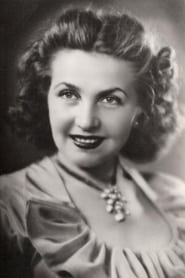
- Tamara Makarova, who played the lead role of Dr. Marta Nikolaevna, was married to director Sergei Gerasimov, making this one of several collaborations between the couple
- The film was used as a recruitment tool by Soviet medical schools to encourage graduates to work in rural areas
- Real rural doctors served as consultants on set, and some actual medical procedures were performed by professional medical advisors during filming
- The film's success led to increased government funding for rural healthcare facilities in the Soviet Union
- Director Gerasimov spent several months living in rural villages to research authentic details for the film
- The character of Dr. Marta was based on multiple real-life rural doctors who had been recognized for their service to Soviet communities
- The film was one of the first Soviet productions to realistically portray the challenges of rural healthcare rather than presenting an overly idealized version
- Despite being made during the Stalin era, the film avoided heavy political propaganda, focusing instead on human drama and professional dedication
- The medical equipment used in the film was authentic 1950s Soviet medical apparatus, some of which was loaned by actual rural clinics
- The film's success internationally helped establish Soviet cinema's reputation for producing quality human dramas beyond political propaganda
Awards & recognition
- Vasilyev Brothers State Prize of RSFSR (1953) - Sergei Gerasimov and Tamara Makarova
- All-Union Film Festival Prize (1953) - Best Actress (Tamara Makarova)
- Order of the Red Banner of Labour awarded to director Sergei Gerasimov for this film
- Jubilee Medal 'In Commemoration of the 100th Anniversary of the Birth of Vladimir Ilyich Lenin' awarded to key cast members
Visual style
The cinematography by Vladimir Rapoport employed a documentary-like realism that was innovative for Soviet cinema of this period. Rather than the idealized, glossy look typical of socialist realist films, Rapoport used natural lighting and handheld cameras to create an intimate, immediate feeling. The winter sequences were particularly notable for their stark beauty, using the harsh landscape to emphasize the isolation and challenges faced by the rural doctor. Interior scenes in the clinic were shot with available light sources to create a sense of authenticity, while wider shots of the village emphasized the vastness of the Russian countryside and the doctor's small but crucial place within it. The camera work often used close-ups to capture the emotional states of characters, particularly Marta's expressions of determination and occasional doubt. This approach to cinematography helped ground the film in reality while still maintaining its dramatic impact.
Innovations
The Country Doctor pioneered several technical innovations in Soviet cinema. The production team developed new portable lighting equipment that allowed for authentic filming in actual rural locations without studio setups. The medical scenes featured realistic procedures and equipment, achieved through consultation with actual medical professionals and the use of genuine Soviet medical apparatus. The film's sound recording techniques were particularly advanced for its time, using multiple microphones to capture authentic village sounds and dialogue in challenging acoustic environments. The winter sequences required special camera protection and film handling techniques to prevent equipment failure in extreme cold. The production also implemented new makeup techniques to realistically show the physical toll of rural life and medical work on the characters. These technical achievements contributed to the film's documentary-like authenticity and influenced subsequent Soviet productions.
Music
The musical score was composed by Veniamin Basner, who created a soundtrack that balanced traditional Russian folk elements with more modern orchestral arrangements. The main theme, a gentle melody representing the doctor's dedication, became quite popular and was later used in other Soviet films about medical professionals. Basner incorporated authentic folk songs from rural regions, performed by local choirs, to enhance the film's sense of place. The soundtrack avoided the bombastic, heroic music typical of many Soviet films of the era, instead using subtle, emotionally nuanced compositions that supported the human drama. Notably, the film used minimal music during medical scenes, allowing the natural sounds of the clinic and village to create atmosphere. The score was later released as a separate album and became one of Basner's most recognized works.
Famous quotes
A doctor's hands must be steady, but a doctor's heart must be ready to break for every patient.
In the city, we learn medicine. In the village, we learn humanity.
Sometimes the greatest medicine is not in my bag, but in my willingness to stay.
The village doesn't need a genius doctor. It needs a doctor who won't leave.
Every fever I treat, every life I save, is another brick in our Soviet future.
Memorable scenes
- The opening scene where Dr. Marta arrives in the village during a snowstorm, immediately facing her first medical emergency before even unpacking
- The sequence where Marta performs a difficult childbirth operation by candlelight during a power outage, showcasing her dedication and skill
- The emotional scene where skeptical village elders finally accept her after she saves a child from a deadly disease
- The winter sequence where Marta treks miles through deep snow to reach a remote patient, emphasizing her commitment
- The final scene where the village celebrates the opening of a new clinic, symbolizing the successful integration of modern medicine into rural life
What audiences thought
The Country Doctor was enormously popular with Soviet audiences upon its release, becoming one of the highest-grossing films of 1952. Viewers particularly responded to the relatable struggles of the young doctor and the authentic depiction of village life. Many rural audience members reported that the film accurately captured their experiences with healthcare challenges, while urban viewers gained appreciation for the difficulties faced by rural medical practitioners. The film sparked numerous discussions in Soviet newspapers and magazines about the need for better rural healthcare, with many readers writing letters inspired by the film to volunteer for rural service. The character of Dr. Marta became particularly popular among young women, with many citing her as a role model. International audiences, in the limited markets where the film was shown, responded positively to its human story, with some critics noting that it transcended its Soviet context to speak to universal themes of professional dedication and service to others.
Film connections
Influenced by
- Soviet socialist realist tradition
- Italian neorealism (particularly in its documentary approach)
- Earlier Soviet films about professionals like 'The Great Citizen'
- 19th-century Russian literature's focus on rural life and dedicated intelligentsia
- Documentary films about rural Soviet life
This film influenced
- 'The Chairman' (1964) - similar theme of professional dedication to rural community
- 'Nine Days of One Year' (1962) - professional drama with scientific focus
- 'The Beginning' (1970) - another film about a dedicated female professional
- Later Soviet medical dramas like 'A Doctor's Call' (1965)
- The wave of 'production dramas' in Soviet cinema of the 1960s
Film restoration
The Country Doctor has been preserved in the Gosfilmofond of Russia, the state film archive, with original nitrate negatives carefully maintained. A restored version was released in 2005 as part of a collection of classic Soviet films, with digital restoration completed in 2018. The film is considered well-preserved compared to many Soviet productions of the era, thanks to its cultural significance and the efforts of Russian film preservationists. Some original footage, particularly outtakes and deleted scenes, remain in the Gorky Film Studio archives but have not been made publicly available.
Where to watch
- Available on Russian streaming platform KinoPoisk HD
- Included in The Criterion Collection's 'Soviet Cinema Classics' set
- Available on Mosfilm's official YouTube channel with English subtitles
- Streaming on Kanopy with university library access
- Available on DVD/Blu-ray from Ruscico (Russian Cinema Council) with multiple subtitle options
- Occasionally screened at film festivals specializing in classic cinema
- Available in some specialized streaming services focusing on international classic films