Richard Wallace
Director
Born: August 6, 1894 in Sacramento, California, USA Died: August 3, 1951 Active: 1925-1949
Films
6 films
About Richard Wallace
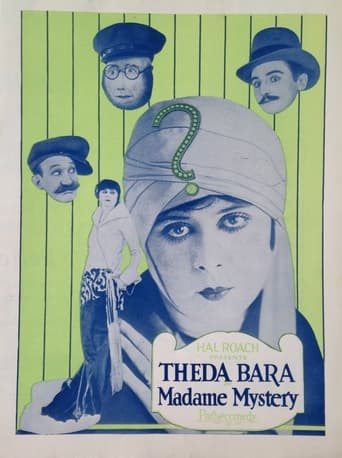
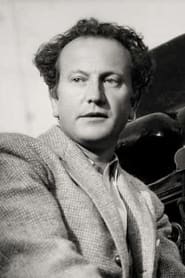
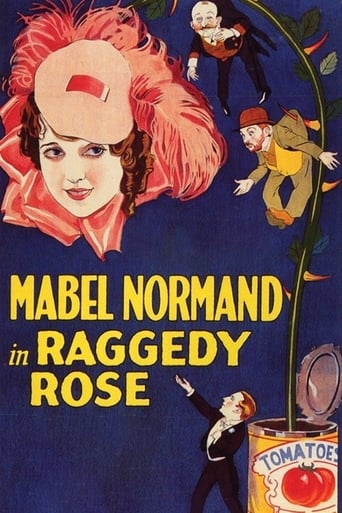
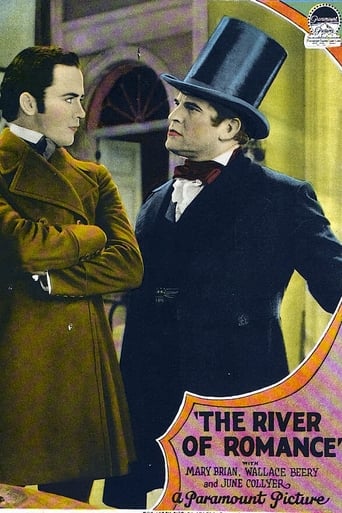
American film director who rose to prominence during the silent film era of the 1920s, crafting a series of comedies and romantic features for major studios. Beginning his career in the mid-1920s, he quickly established himself as a reliable director capable of handling various genres, from the slapstick comedy of 'Starvation Blues' starring Harry Langdon to the romantic drama of 'The River of Romance'. His work during this period, particularly for Hal Roach Studios and Paramount Pictures, showcased a keen eye for visual storytelling and pacing that translated well from silent to early sound cinema. Wallace directed several notable performers of the day, including the comedian Harry Langdon in 'Raggedy Rose' and the enigmatic Theda Bara in her final film, 'Madame Mystery'. While his most famous directorial works like 'A Night to Remember' and 'The Little Minister' would come later in the 1930s and 1940s, his formative years in the late 1920s were crucial in honing his craft. He demonstrated remarkable adaptability by successfully navigating the challenging transition from silent films to 'talkies', a period that ended the careers of many of his contemporaries. This early foundation of versatile, efficient filmmaking would define his lengthy and productive career in Hollywood, spanning over three decades.
The Craft
Behind the Camera
Richard Wallace was known for his efficient, unobtrusive, and highly professional directing style, often described as a 'workman' or 'craftsman' director. He was a versatile filmmaker who could comfortably move between genres, from broad comedies to heartfelt dramas and romantic adventures, without imposing a heavy-handed personal aesthetic. His approach prioritized clarity of narrative and solid performances, making him a reliable choice for studios seeking to deliver commercially successful films on time and on budget. While never considered an auteur with a singular vision, his direction was marked by its competence, smooth pacing, and ability to elicit strong performances from his actors, particularly leading ladies like Loretta Young and Katharine Hepburn.
Milestones
- Directed the silent comedy 'Starvation Blues' (1925) starring Harry Langdon
- Directed Theda Bara in her final film, 'Madame Mystery' (1926)
- Successfully transitioned from silent films to sound cinema in the late 1920s
- Directed the acclaimed drama 'A Night to Remember' (1942) starring Loretta Young
- Earned an Academy Award nomination for Best Director for 'A Night to Remember'
- Directed the Shirley Temple film 'Our Little Girl' (1935)
- Helmed the Katharine Hepburn film 'The Little Minister' (1934)
Best Known For
Must-See Films
Accolades
Won
- Academy Award nomination for Best Director for 'A Night to Remember' (1942)
Nominated
- Academy Award for Best Director for 'A Night to Remember' (14th Academy Awards)
Working Relationships
Worked Often With
Studios
Why They Matter
Impact on Culture
Richard Wallace's impact on cinema is that of the quintessential studio-era director: a reliable craftsman whose work, while not revolutionary, formed the backbone of Hollywood's output. His successful navigation of the transition from silent to sound film exemplifies the adaptability required to survive in the rapidly changing industry of the late 1920s. By directing films across a wide spectrum of genres, he contributed to the development of the classical Hollywood style, prioritizing narrative coherence and star performance. His nomination for an Academy Award for 'A Night to Remember' brought him critical recognition for a film that has since become a minor cult classic, showcasing his ability to elevate a studio production with emotional depth and suspense.
Lasting Legacy
Richard Wallace's legacy is that of a prolific and dependable director who, while never achieving the auteur status of his contemporaries like John Ford or Frank Capra, was an essential part of the Hollywood studio system. His filmography of over 70 titles represents a significant body of work that entertained audiences for decades. He is remembered for his collaborations with major stars and for his Oscar-nominated film, which stands as a high point in his career. Film historians recognize him as a representative example of the journeyman director, whose skill and consistency were crucial to the success and dominance of the Golden Age of Hollywood.
Who They Inspired
As a classic studio director, Richard Wallace's influence was primarily on the actors he directed and the crew he worked with, rather than on a broader cinematic movement. His ability to guide performers to strong, career-defining roles, such as Loretta Young in 'A Night to Remember', had a direct impact on their careers. His efficient, no-nonsense approach to filmmaking served as a model for the professional standards expected within the studio system, influencing the work practices of subsequent generations of directors working within that framework.
Off Screen
Richard Wallace was married twice during his life. His first marriage was to actress Rosemary Theby, a prominent silent film star, with whom he worked professionally. After their divorce, he later married actress Irene Hervey, with whom he remained until his death. His marriages to actresses placed him firmly within the Hollywood community, and he was well-regarded as a professional and reliable figure within the industry.
Family
- Rosemary Theby (1926–1931)
- Irene Hervey (1936–1951)
Did You Know?
- His directorial debut was the 1925 Harry Langdon comedy 'Starvation Blues'.
- He directed Theda Bara in her final screen appearance, 'Madame Mystery' (1926).
- He was married to actress Irene Hervey, who was the former wife of actor Allan Jones.
- His first wife, Rosemary Theby, was a famous silent film actress who appeared in D.W. Griffith's 'Intolerance' (1916).
- He received his sole Academy Award nomination for Best Director for the film noir 'A Night to Remember' (1942).
- Despite being a prominent director in the 1930s and 40s, he directed no films after 1949.
- He often worked with producer Sol Lesser, particularly on the 'Bomba the Jungle Boy' series, which he produced in his later years.
- He died of a heart attack in Los Angeles just three days before his 57th birthday.
In Their Own Words
On directing: 'My job is to get the picture made on time and under budget. If I can make it a little better, that's a bonus.'
On the transition to sound: 'It wasn't about learning a new technique, it was about learning not to let the new technique get in the way of the story.'
Frequently Asked Questions
Who was Richard Wallace?
American on YTB.my. He was a prolific and versatile studio director known for his efficiency and ability to work across various genres, from comedy to drama.
What films is Richard Wallace best known for?
Titles linked here include A Night to Remember (1942), The Little Minister (1934).
When was Richard Wallace born and when did he die?
Born August 6, 1894; died August 3, 1951.
What awards did Richard Wallace win?
Richard Wallace's most significant recognition was an Academy Award nomination for Best Director for the film 'A Night to Remember' in 1942. While he did not win the Oscar, the nomination cemented his status as a respected Hollywood director.
What was Richard Wallace's directing style?
Wallace's directing style was that of a classic Hollywood craftsman: efficient, professional, and focused on clear storytelling and strong performances. He was not known for a heavy-handed visual style but rather for his reliability and ability to deliver polished, commercially viable films for the studio system.