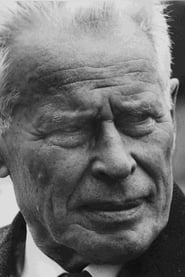
Aleksandr Medvedkin
Director
Born: February 24, 1900 in Penza, Russian Empire Died: February 19, 1989 Active: 1926-1984 Birth Name: Aleksandr Ivanovich Medvedkin
Films
4 films
About Aleksandr Medvedkin
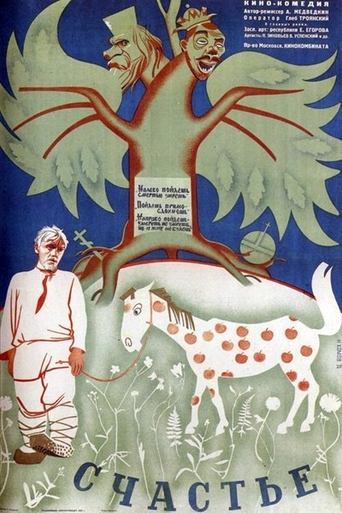
Aleksandr Ivanovich Medvedkin — Soviet film director and screenwriter whose the crucial decades of early Soviet cinema. He began his artistic journey in the Red Army during the Russian Civil War, where he organized agitprop trains that brought cinema and political messages to remote regions. His breakthrough came with the founding of the 'Cinema Train' in 1932, a mobile film studio that traveled across the Soviet Union creating documentaries and educational films. Medvedkin's most celebrated work, 'Happiness' (1935), was a brilliant satire that cleverly critiqued collectivization while appearing to support Soviet ideology, showcasing his ability to navigate the treacherous political landscape of Stalinist cinema. During World War II, he directed frontline newsreels and documentaries, capturing the Soviet struggle against Nazi invasion. His post-war career was marked by continued work in documentary filmmaking, though he never again achieved the artistic freedom and acclaim of his pre-war period. Medvedkin's legacy lies in his innovative use of mobile cinema, his satirical approach to Soviet reality, and his influence on later generations of Soviet documentary filmmakers.
The Craft
Behind the Camera
Medvedkin's directing style combined sharp political satire with innovative documentary techniques. He masterfully used irony and allegory to critique Soviet policies while appearing to conform to socialist realism requirements. His approach often featured grotesque characters, exaggerated situations, and a blend of comedy with social commentary. He was particularly skilled at finding humor in the absurdities of Soviet bureaucracy and collectivization, using visual gags and satirical dialogue to convey complex political messages. His mobile cinema work emphasized real people and authentic locations, creating a bridge between documentary and fiction filmmaking.
Milestones
- Founded the Cinema Train mobile film studio (1932)
- Directed the satirical masterpiece 'Happiness' (1935)
- Created frontline documentaries during World War II
- Pioneered mobile cinema techniques in the Soviet Union
- Mentored Chris Marker who later made documentary about him
Best Known For
Must-See Films
Accolades
Won
- Order of the Red Banner of Labour (1967)
- Order of the Patriotic War (1945)
- Order of the Red Star (1944)
- People's Artist of the RSFSR (1969)
Nominated
- Vasilyev Brothers State Prize of the RSFSR (1975)
Special Recognition
- Honored Artist of the RSFSR (1958)
- People's Artist of the RSFSR (1969)
Working Relationships
Worked Often With
Studios
Why They Matter
Impact on Culture
Medvedkin's impact on Soviet and world cinema extends far beyond his relatively small body of work. His Cinema Train concept revolutionized how films could reach rural and working-class audiences, influencing documentary practices worldwide. His satirical approach to Soviet reality, particularly in 'Happiness,' demonstrated how filmmakers could embed criticism within officially sanctioned art, a technique that influenced subsequent generations of Soviet directors. The film's survival and continued appreciation demonstrate the enduring power of art that speaks truth to power, even when disguised as propaganda. Medvedkin's work during World War II created some of the most authentic and moving documentary records of the Eastern Front, preserving crucial historical moments for posterity.
Lasting Legacy
Medvedkin's legacy is that of a cinematic innovator who navigated the treacherous waters of Soviet censorship while maintaining artistic integrity. His work in mobile cinema prefigured modern documentary practices and his satirical genius continues to influence filmmakers working under restrictive regimes. Chris Marker's 1993 documentary 'The Last Bolshevik' brought international attention to Medvedkin's work, introducing him to Western audiences excelled in political satire. The Medvedkin Group, a collective of British filmmakers formed in the 1970s, named themselves after him and adopted his approach to political filmmaking. His films, particularly 'Happiness,' are now recognized as masterpieces of world cinema, studied for their brilliant use of satire and their historical significance as documents of their time.
Who They Inspired
Medvedkin influenced generations of documentary filmmakers through his innovative techniques and political courage. His work directly inspired the Medvedkin Group in Britain, who sought to create politically engaged cinema for working-class audiences. French filmmaker Chris Marker was so profoundly influenced by Medvedkin that he dedicated years to studying his life and work, resulting in the acclaimed documentary 'The Last Bolshevik.' Soviet directors of the Khrushchev Thaw era looked to Medvedkin as an example of how to embed social criticism within officially sanctioned art. His mobile cinema techniques influenced documentary practices in developing countries, where access to traditional studios was limited. Contemporary filmmakers working in authoritarian regimes continue to study Medvedkin's methods of using satire and irony to convey subversive messages.
Off Screen
Medvedkin's personal life was deeply intertwined with the tumultuous events of 20th century Russian history. He served in the Red Army during the Russian Civil War, an experience that shaped his political consciousness and artistic vision. He married fellow filmmaker Vera Stroyeva, with whom he collaborated on several projects. The couple had one daughter, Natalya, who also worked in the film industry. Despite the political dangers of his profession during the Stalin era, Medvedkin managed to avoid the purges that claimed many of his contemporaries, though he often had to compromise his artistic vision to survive. His later years were marked by recognition from the Soviet state and continued work in documentary filmmaking until his health declined in the early 1980s.
Education
Studied at the Leningrad Film College (now St. Petersburg State Institute of Film and Television) and later at the State Institute of Cinematography (VGIK) in Moscow
Family
- Vera Stroyeva (1930s-1970s)
Did You Know?
- His Cinema Train was a complete mobile film studio with editing equipment, projection facilities, and living quarters for the crew
- The film 'Happiness' was nearly banned by Soviet censors but was saved after Stalin reportedly found it amusing
- He served as a machine gunner in the Red Army during the Russian Civil War before turning to cinema
- His documentary work during WWII included filming at the Battle of Stalingrad
- The Medvedkin Group, a British filmmaking collective, was named after him in the 1970s
- Chris Marker spent 10 years researching Medvedkin's life for his documentary 'The Last Bolshevik'
- Despite his critical success, Medvedkin never directed another feature film after 'Happiness'
- His films were rarely shown in the West until the 1980s due to Cold War politics
- He was one of the few Soviet directors who successfully navigated the transition from silent to sound films
- His daughter Natalya became a prominent film editor in the Soviet Union
In Their Own Words
Cinema must be a weapon in the class struggle
If you want to make people laugh, you must first understand what makes them cry
The camera is the most honest weapon in the fight for truth
Satire is the mirror that shows society its true face
Every film should be both a document and a criticism
Frequently Asked Questions
Who was Aleksandr Medvedkin?
Soviet on YTB.my. He worked primarily during the 1930s and 1940s, creating both feature films and documentaries that blended political commentary with artistic innovation.
What films is Aleksandr Medvedkin best known for?
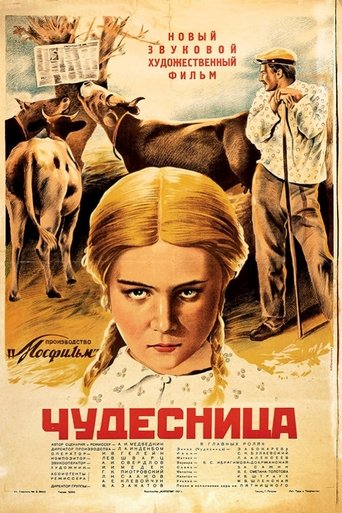
Titles linked here include Happiness (1935), The Miracle Worker (1936).
When was Aleksandr Medvedkin born and when did he die?
Born February 24, 1900; died February 19, 1989.
What awards did Aleksandr Medvedkin win?
Medvedkin received several prestigious Soviet honors including the Order of the Red Banner of Labour (1967), the Order of the Patriotic War (1945), and was named People's Artist of the RSFSR in 1969. He also received the Vasilyev Brothers State Prize nomination in 1975.
What was Aleksandr Medvedkin's directing style?
Medvedkin's directing style combined sharp political satire with innovative documentary techniques. He masterfully used irony and allegory to critique Soviet policies while conforming to socialist realism requirements, featuring grotesque characters and exaggerated situations to convey complex political messages through humor.