The Miracle Worker
"Harvest songs in a Russian village"
Keys: Space play/pause · ←/→ 10s · F fullscreen · M mute · </> speed
About this film
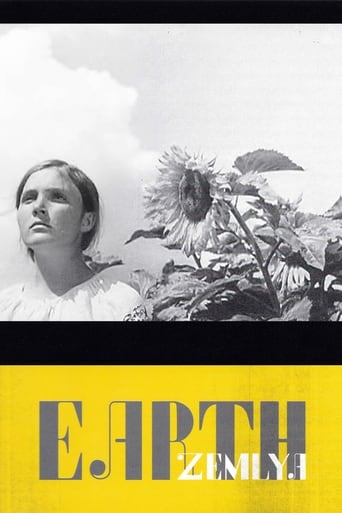
Life in a Russian village at harvest time as idealized peasant pastoral, concentrating on the landscapes and folk songs of the region.
Cast & crew
More films like this

More Drama films
View all →







More from Aleksandr Medvedkin
View all →
More about this film
About the production
Release date1936
ProductionSoyuzkino
Filmed inRussian village settings in the Soviet Union; specific location details are not widely documented in available sources
The Miracle Worker was made as a brief Soviet rural film in the mid-1930s, during a period when cinema was often used to support state ideals of collectivism, agricultural productivity, and cultural uplift. Detailed production records are scarce, which is common for short Soviet films of this era, but the film is associated with Aleksandr Medvedkin's broader interest in village life, social satire, and the presentation of ordinary people. Its emphasis on harvest landscapes and folk songs suggests a production shaped less by studio spectacle than by location-based observation and stylized ethnographic portraiture. No reliable public documentation has surfaced for budget, earnings, or specific behind-the-scenes production difficulties.
Themes
Peasant life and rural laborCollective work and communityAgricultural abundance and harvest ritualIdealized countryside imageryFolk culture and song
Themes & topics
Historical background
By 1936, The Miracle Worker had entered distribution via Soyuzkino, reflecting standard practice for its budget tier.
Why this film matters
Specialists compare The Miracle Worker with contemporaries to trace how 1936 cinema handled life in a russian village at harvest time as idealized peasant pastoral, concentrating on .
Making of
Very little surviving behind-the-scenes documentation is publicly available for this film, which is not unusual for a short Soviet production from 1936. What is clear is that Aleksandr Medvedkin frequently worked in modes that mixed direct observation, staged performance, and political stylization, and The Miracle Worker appears to fit that pattern through its harvest-season village setting and emphasis on folk performance. The production likely relied on rural imagery, local or semi-local settings, and a cast suited to portraying the collective life of the village rather than star-centered drama. Because archival sources are limited, the film's making is best understood within the larger context of Soviet cinema's mid-1930s attention to agricultural themes, song, and communal labor.
What critics said
Modern notes on The Miracle Worker focus on its life in a russian village at harvest time as idealized peasant pastoral, concentrating on rather than any original 1936 sensation.
Did you know?
- This film is also known under the transliterated Russian title often rendered as The Peasant Women, depending on cataloging and translation conventions.
- It should not be confused with the much later American film The Miracle Worker about Helen Keller.
- Aleksandr Medvedkin was known for blending comedy, satire, and socialist themes, and this film reflects his interest in ordinary people and rural life.
- The film is notable for its lyrical focus on landscape, song, and seasonal agricultural labor rather than on a conventional dramatic plot.
- Its cast includes Zinaida Bokareva, Sergey Bulaevskiy, and Yelena Ibragimova-Dobrzhanskaya, though detailed character documentation is limited in surviving references.
- The work belongs to a period when Soviet cinema often elevated peasant life as part of the cultural narrative of collectivization and rural transformation.
- Because it is a short and relatively obscure Soviet film, surviving information is fragmentary, and many databases provide only minimal technical and cast details.
- Medvedkin later became famous for his film-train projects and for his satirical sensibility, which makes this pastoral work an interesting contrast within his career.
- The film's emphasis on folk songs links it to broader Soviet interests in preserving or repurposing regional cultural traditions for ideological and artistic purposes.
- It is a useful example of how 1930s Soviet cinema could present the countryside as both aesthetically beautiful and politically symbolic.
Visual style
The film is notable for its visual emphasis on open landscape, village activity, and seasonal harvest imagery. Its cinematography appears designed to highlight the textures of rural labor and the spaciousness of the countryside, reinforcing the pastoral mood through composed natural vistas and communal groupings. Rather than relying on elaborate camera movement or expressionist distortion, the style is likely more observational and lyrical, with imagery serving the film's idealized representation of peasant life. The visual approach complements the use of folk song, creating a fusion of image, rhythm, and cultural atmosphere typical of Soviet rural shorts.
Innovations
No major technical innovations are widely credited to the film, but its achievement lies in the controlled integration of rural imagery, performance, and song within a concise short format. Its use of harvest-season settings and folk material demonstrates a skillful alignment of sound and image to produce a poetic ideological statement. In the context of Soviet cinema, the film's technical interest is less about invention than about how effectively it translates collective labor and landscape into cinematic form. As with many shorts from the era, its craftsmanship is best appreciated through composition, rhythm, and thematic coherence rather than through overt technical novelty.
Music
Music and folk song are central to the film's atmosphere, and the available description specifically notes its concentration on the landscapes and folk songs of the region. Detailed score information is not well documented in widely accessible sources, so it is unclear whether the film uses original composed music, traditional songs, or a combination of both. What is evident is that sound functions as a cultural marker, reinforcing the sense of regional identity and communal ritual. The musical dimension is part of the film's larger pastoral and ethnographic appeal.
Famous quotes
No widely documented surviving quotes from the film are readily available in accessible sources.
The film is primarily remembered for its visual and musical mood rather than for quotable dialogue.
Memorable scenes
- Harvest-season sequences that showcase the village working together in the fields.
- Passages centered on regional folk songs that give the film its lyrical, celebratory tone.
- Landscape shots that frame the countryside as an idealized and harmonious setting for peasant life.
What audiences thought
There is no substantial audience-response record widely available for this film, which is common for short Soviet works from the period. It likely reached a limited or specialized circulation compared with major feature films, and audience reaction would have depended heavily on its exhibition context, whether as a standalone short or as part of a broader program. Modern viewers encountering it through archives, retrospectives, or database listings often approach it as a historical artifact rather than a widely circulated classic. Its reception today is therefore tied more to cinephile and scholarly interest than to mass audience familiarity.
Film connections
Influenced by
- Soviet rural cinema and collectivist visual culture
- Ethnographic and folk-inspired depictions of village life
- Earlier Soviet montage-era interest in labor and collective identity
- Medvedkin's own satirical and peasant-centered filmmaking tendencies
This film influenced
- Later Soviet pastoral and rural films that idealized collective farm life
- Archival and retrospective works studying Medvedkin's treatment of peasant themes
- Documentary-style village portrayals in Soviet and post-Soviet cinema
Film restoration
The film appears to survive in archival references and database records, but detailed public information about restoration status is limited. It is not generally described as lost, though access may be restricted or uneven depending on archive holdings and print availability.
Where to watch
- Specialized film archives and cinematheques
- Occasional Soviet cinema retrospectives and academic screenings
- Library or archive-based research collections where available
- No major mainstream streaming platform is reliably documented as carrying the film