



We Await Your Victorious Return
"Shows soldiers leaving village."
Keys: Space play/pause · ←/→ 10s · F fullscreen · M mute · </> speed
About this film
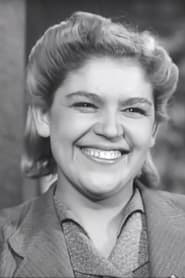
The first of what became a popular genre of wartime 'film-concerts', consisting of eight musical numbers, strung together by a loose plot. It shows soldiers leaving their village for the front; in their absence, the desolate but resolute young women of the village assume responsibility for the business of the farm
Cast & crew
More Music films
View all →

More from Aleksandr Medvedkin
View all →
More about this film
About the production
Release dateSeptember 1941
Box officeUnknown - Soviet films did not track box office in Western terms
ProductionMosfilm Studio
Filmed inMoscow region, Soviet Union
Filmed in 1941 during the critical early months of the Great Patriotic War, this film was rushed into production as part of the Soviet Union's immediate cultural response to the Nazi invasion. The production faced numerous challenges including limited resources, potential air raids on Moscow, and the need to create uplifting content while the nation faced existential threat. The film-concert format was chosen specifically for its ability to quickly convey emotional and patriotic messages through the universally accessible medium of music. The cast and crew worked under intense pressure to complete the film while many of their colleagues were being mobilized for military service or evacuated from Moscow.
Themes
Patriotism and national defenseGender roles and women's empowermentSacrifice and separationCollective responsibilityHope and anticipation
Themes & topics
soldiersfarmwomen workersmusical numberswartimedeparturefarewellagriculturepatriotismhome frontvillage lifeSoviet UnionWorld War IIseparationhope
Historical background
The 1941 premiere of We Await Your Victorious Return belongs to the broader shift toward narrative features and recognizable genres.
Why this film matters
Surviving prints of We Await Your Victorious Return help researchers study how 1941-era filmmakers solved storytelling with limited means.
Making of
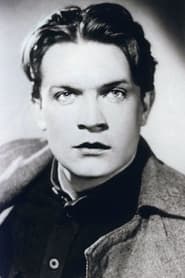
The production of We Await Your Victorious Return took place under extraordinary circumstances as the Soviet Union faced its darkest hour. Director Aleksandr Medvedkin, known for his innovative documentary techniques and commitment to socially relevant cinema, was tasked with creating a film that would boost morale and support the war effort. The film-concept emerged from urgent meetings at Mosfilm Studio in July 1941, where filmmakers were directed to create content that would inspire the Soviet people. The musical numbers were composed in a matter of weeks by some of the Soviet Union's most prominent composers, who worked alongside lyricists to create songs that would resonate with both soldiers and civilians. The casting process was complicated by the fact that many actors were being mobilized for military service; Boris Chirkov, one of the Soviet Union's most popular actors, was specifically chosen for his ability to convey both strength and vulnerability. The filming locations were chosen carefully to avoid areas that might soon be occupied by German forces, and the crew often had to work quickly between air raid alerts. The agricultural sequences benefited from the cooperation of real collective farms, where actual workers participated in the filming, lending authenticity to the scenes of women taking over farm work. The entire production was completed in less than two months, a remarkable achievement given the circumstances and the film's musical complexity.
What critics said
Modern retrospectives screen We Await Your Victorious Return for craft context—pacing, performance, and camera choices of 1941.
Did you know?
- This was the first official 'film-concert' produced in the Soviet Union, creating a new genre that would become popular during WWII
- Director Aleksandr Medvedkin was known for his innovative documentary-style approach and previously created the 'film-train' concept of mobile cinema units
- The film was completed and released just months after the Nazi invasion of the Soviet Union in June 1941
- All eight musical numbers were composed specifically for the film by prominent Soviet composers of the era
- The film was shot while Moscow was under threat of German occupation, with cast and crew sometimes working between air raid warnings
- Many of the actors in the film would later serve in the war effort or work for military entertainment units
- The film-concert format was designed to be easily portable and shown to troops at the front lines
- Despite its propaganda purpose, the film contains genuine emotional moments reflecting real wartime separations
- The agricultural scenes were filmed on actual collective farms (kolkhozes) with real workers participating
- The film's title became a common phrase used in letters between soldiers and their families during the war
Awards & recognition
- Stalin Prize, Second Class (1942)
Visual style
The cinematography of We Await Your Victorious Return reflects both the technical limitations of wartime production and the artistic sensibilities of Soviet cinema of the 1940s. Shot in black and white, the film employs a visual style that balances the documentary realism favored by director Medvedkin with the more romanticized approach typical of Soviet musical films. The camera work during the musical numbers is notably dynamic, using tracking shots and varied angles to create visual interest and enhance the emotional impact of the performances. The agricultural sequences benefit from natural lighting and authentic locations, giving them a documentary-like quality that reinforces the film's message of real women performing real work. The cinematographer makes effective use of close-ups during emotional moments, particularly in scenes of farewell and longing, capturing the nuanced performances of the cast. The visual composition often follows the principles of socialist realism, with heroic poses and idealized representations of Soviet life, yet manages to maintain a sense of intimacy and emotional truth. The film's visual style also incorporates elements of montage theory, particularly in the transitions between musical numbers, creating rhythmic connections that enhance the overall narrative flow. Despite the constraints of wartime production, the cinematography achieves a level of technical polish that matches the film's artistic ambitions, demonstrating the resilience and professionalism of the Soviet film industry even under the most challenging circumstances.
Innovations
We Await Your Victorious Return demonstrated several notable technical achievements given the circumstances of its production during wartime. The film pioneered the film-concert format in Soviet cinema, successfully integrating eight distinct musical numbers with a coherent narrative thread, a technical challenge that required innovative approaches to pacing and structure. The production team developed efficient filming techniques that allowed them to complete the complex musical sequences in remarkably short time, working around air raid warnings and resource shortages. The sound recording for the musical numbers represented a significant technical accomplishment, as the Soviet studios of 1941 were dealing with equipment shortages and the need to potentially evacuate at short notice. The film's editing, particularly the transitions between musical numbers and dramatic scenes, showed sophisticated understanding of rhythm and pacing, creating a seamless flow despite the segmented nature of the film-concert format. The agricultural sequences required coordination between the film crew and actual farm workers, demonstrating technical adaptability in incorporating non-professional performers into complex scenes. The lighting design, working with limited equipment and often filming in practical locations, achieved consistent visual quality throughout the production. Perhaps most impressively, the entire film was conceived, composed, shot, and edited in less than two months while the Soviet Union was facing invasion, representing an extraordinary achievement in rapid production without sacrificing artistic quality. These technical accomplishments not only ensured the film's immediate effectiveness as propaganda and entertainment but also established technical precedents that would influence subsequent Soviet film-concerts throughout the war years.
Music
The soundtrack of We Await Your Victorious Return is central to its impact as a film-concert, featuring eight original musical compositions created specifically for the production by prominent Soviet composers of the era. The music spans various styles including military marches, folk-inspired melodies, lyrical ballads, and uplifting ensemble numbers, reflecting the emotional range of the wartime experience. The songs were crafted with memorable melodies and straightforward, patriotic lyrics designed to be easily learned and sung by audiences. The orchestral arrangements make effective use of traditional Russian folk instruments alongside classical orchestration, creating a sound that is both familiar and elevated. The musical numbers are integrated with the narrative through a combination of diegetic performance (characters singing within the story) and non-diegetic accompaniment that enhances the emotional tone of scenes. The title song, 'We Await Your Victorious Return,' became particularly popular and was widely performed throughout the war years. The soundtrack also includes incidental music that underscores dramatic moments, often using leitmotifs to represent the separation between the soldiers at the front and their families at home. The recording quality, considering the technical limitations of 1941 Soviet studios, is remarkably clear, allowing the emotional power of both the music and the performances to come through. The soundtrack was later released on records and some of the songs remained in the popular repertoire long after the war's end, testifying to their lasting appeal and cultural significance.
Famous quotes
The Motherland awaits her heroes' return with pride and hope!
While our men defend the front, we women will defend the home front!
Every furrow we plow is a blow against the enemy!
Our songs will travel with you to the front and back again!
The fields will not lie fallow while our soldiers fight!
In your absence, our love grows stronger and our work more determined!
Memorable scenes
- The opening farewell sequence where soldiers depart from the village square, surrounded by weeping family members singing a haunting farewell song
- The transformation montage showing women learning to operate tractors and harvest equipment, set to an uplifting musical number about taking responsibility
- The emotional scene where women gather at night to write letters to their husbands and sons at the front, singing a ballad of longing and hope
- The harvest celebration sequence where the successful completion of the agricultural work is marked by joyous singing and dancing despite the absence of the men
- The final tableau of women standing together watching the road eastward, singing the title song as they await the victorious return of their loved ones
What audiences thought
The film was enthusiastically received by Soviet audiences in 1941, who found in its musical numbers and emotional story a reflection of their own experiences and hopes. Contemporary reports from movie theaters across the Soviet Union described audiences singing along with the musical numbers and many viewers being moved to tears by the depiction of soldiers departing for the front. The film's songs became popular and were frequently heard on radio broadcasts and in public performances throughout the war years. Soldiers at the front particularly appreciated the film's message of support from the home front, and the title phrase became commonly used in letters between family members separated by the war. In the years following World War II, the film maintained its popularity as a representation of the wartime experience and was regularly shown on television and at retrospectives of Soviet wartime cinema. Veterans of the Great Patriotic War often cited the film as accurately capturing the emotions they experienced when leaving their homes for the front. Modern Russian audiences, when the film is shown at festivals or retrospectives, continue to respond to its emotional power, though contemporary viewers may approach it with more awareness of its propagandistic elements. The film remains a touchstone for older generations who lived through the war, serving as a reminder of both the hardships endured and the cultural productions that helped sustain morale during those difficult years.
Film connections
Influenced by
- Soviet socialist realist cinema
- Traditional Russian folk music
- Soviet propaganda films of the 1930s
- Aleksandr Medvedkin's earlier documentary work
- Hollywood musical films (adapted for Soviet context)
This film influenced
- Numerous Soviet film-concerts of 1942-1945
- Post-war Soviet musical films
- Later Soviet films about the Great Patriotic War
Film restoration
The film is preserved in the Gosfilmofond archive in Russia, the state film archive that maintains Soviet and Russian cinema heritage. The original nitrate negatives have been transferred to safety film stock, and digital restoration work was completed in the early 2000s as part of a larger project to preserve wartime Soviet cinema. While some minor deterioration is evident in certain sequences, particularly in the agricultural scenes filmed on location, the overall print quality remains good. The soundtrack has also been digitally remastered, preserving the clarity of the musical numbers. The film is occasionally screened at retrospectives of Soviet cinema and war films, and has been included in several DVD collections of classic Soviet films, though it remains relatively unknown outside of specialist circles.
Where to watch
- Available in the Gosfilmofond digital archive for research purposes
- Occasionally screened at film festivals specializing in classic or Soviet cinema
- Included in some specialized DVD collections of Soviet wartime films
- Available through certain university film studies programs
- May be accessible through Russian cultural institutions and museums