

Tractor Drivers
"Tractors, comedy, and Ukrainian fields"
Keys: Space play/pause · ←/→ 10s · F fullscreen · M mute · </> speed
About this film
The story takes place in a Soviet placed in what is now Ukraine. A mechanic arrives in the Soviet, lead by a young independent woman driving tractors and, between many comedy sketches and propaganda mottoes, a love comes to light.
Cast & crew
More Romance films
View all →



More from Ivan Pyryev
View all →

More about this film
About the production
Release dateJuly 24, 1939
Box officeUnknown - Soviet box office tracking was different from Western systems, but the film was extremely popular with over 20 million viewers in its first year
ProductionMosfilm Studio
Filmed inMoscow Film Studio, Kiev region, Ukrainian SSR
The film was shot during the height of Stalin's cultural policies, requiring careful adherence to socialist realism principles. Director Ivan Pyryev married lead actress Marina Ladynina during production, beginning their professional and personal partnership. The film featured real Soviet tractors and agricultural equipment, with many scenes shot on actual collective farms to ensure authenticity. The musical numbers were particularly challenging as they had to blend entertainment with ideological messaging seamlessly.
Themes
Socialist collectivismModernization through technologyGender equality in the workplaceRomance in the Soviet contextThe dignity of labor
Themes & topics
collective farmtractormechaniclove storymusicalpropagandaagricultureSoviet UnionUkraineharvest festivalsocialist realismtechnologyromancecomedywork ethic
Historical background
Programmers in 1939 slotted Tractor Drivers from Mosfilm Studio beside newsreels, cartoons, and serial chapters.
Why this film matters
Repertory houses screen Tractor Drivers to show how 1939 filmmakers staged the story takes place in a soviet placed in what is now ukraine.
Making of
The production of 'Tractor Drivers' was a major undertaking for Mosfilm, requiring extensive coordination with agricultural authorities to access real collective farms and equipment. Director Ivan Pyryev, known for his musical comedies, faced the challenge of blending entertainment with socialist ideology without making the film feel didactic. The casting process was rigorous, with Pyryev selecting Marina Ladynina after seeing her in a stage play, believing she embodied the ideal Soviet woman. Nikolay Kryuchkov was cast against type, as he was typically known for dramatic roles, but Pyryev wanted his natural comedic timing. The musical numbers were composed by the Brothers Pokrass, who had to create songs that were both catchy and ideologically sound. The film's production coincided with the height of the Great Purge, making filmmakers extremely cautious about any content that could be interpreted as politically incorrect. The harvest festival sequence took weeks to film, involving hundreds of actual collective farm workers who were brought in as extras.
What critics said
Repertory notes on Tractor Drivers highlight survival of the print more than 1939 box-office records.
Did you know?
- The film was especially popular Soviet movies of 1939, becoming a cultural phenomenon with its songs still remembered today
- Marina Ladynina and director Ivan Pyryev married during filming and would make five more films together
- The song 'Three Tankmen' from the film became an unofficial anthem of Soviet mechanized forces during World War II
- The film was praised by Stalin himself, who reportedly watched it multiple times
- Real tractor drivers and collective farm workers were used as extras to ensure authenticity
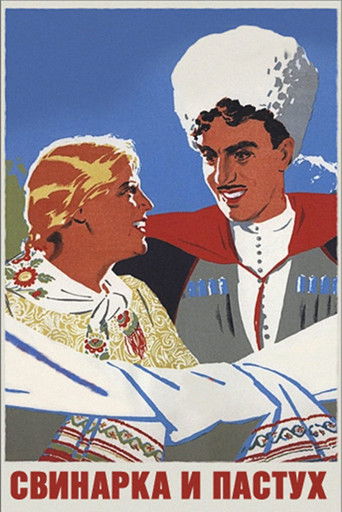
- The film's success led to a sequel 'Swineherd and Shepherd' in 1941
- The tractor featured in the film was a Soviet-made STZ-NATI, among the leading common agricultural tractors of the era
- The film was shown at the 1939 New York World's Fair as an example of Soviet cinema
- Despite its propaganda elements, the film's human comedy elements made it genuinely popular with audiences
- The film was temporarily withdrawn from circulation after Stalin's death due to its heavy propaganda content
Awards & recognition
- Stalin Prize, First Class (1941) - Awarded to director Ivan Pyryev, composer Dmitri Pokrass, and lead actors Marina Ladynina and Nikolay Kryuchkov
- Order of Lenin (1939) - Awarded to the film collective for outstanding achievement in Soviet cinema
Visual style
The cinematography, handled by Alexander Galperin, employed innovative techniques for its time, including dynamic tracking shots following tractors across fields. The film made extensive use of wide-angle lenses to capture the scale of Soviet agricultural operations, emphasizing the collective nature of the work. The harvest festival sequence featured complex multi-camera setups to capture both the musical performances and the crowd reactions. The visual style balanced realistic documentary-style footage of farming operations with more stylized, romanticized sequences during the musical numbers. The film used natural lighting for outdoor scenes to create an authentic look, while studio scenes employed sophisticated lighting techniques typical of Soviet musical productions. The cinematography successfully conveyed the Soviet ideal of progress through visual metaphors of machines transforming the landscape.
Innovations
The film featured innovative use of sound recording for musical sequences, employing advanced microphone techniques to capture both singing and ambient farm sounds. The production utilized mobile camera units to film real tractors in operation, requiring custom mounting equipment. The film's special effects, while modest by today's standards, included clever editing techniques to create the illusion of large-scale agricultural operations. The musical sequences featured early attempts at multi-track recording, allowing for richer soundscapes than typical Soviet films of the era. The film's color tinting in certain sequences was technically advanced for Soviet cinema of the period. The production also pioneered techniques for filming in dusty agricultural conditions without damaging camera equipment. The film's successful integration of location shooting with studio work set new standards for Soviet film production.
Music
The film's music was composed by the Brothers Pokrass (Dmitri and Daniel), with lyrics by Boris Laskin. The soundtrack became especially influential in Soviet cinema history. Key songs included 'Three Tankmen,' which became an unofficial military anthem, and 'Katyusha,' which achieved lasting reputation. The musical numbers blended traditional Ukrainian folk melodies with Soviet popular music styles. The orchestration featured prominent use of accordions and balalaikas to create a distinctly Soviet sound while maintaining broad appeal. The film's success led to its songs being recorded by major Soviet artists and played on radio throughout the USSR. The soundtrack was released on vinyl records and became one of the best-selling albums in Soviet music history. The music's ability to combine entertainment with ideological messaging was considered groundbreaking at the time.
What audiences thought
The film was enormously popular with Soviet audiences, drawing millions of viewers across the USSR. Its songs became instant hits that people sang in their daily lives. Audiences particularly responded to the romantic chemistry between Ladynina and Kryuchkov, as well as the film's humor and musical numbers. Despite its clear ideological messaging, the film's entertainment value made it genuinely beloved by viewers of all ages. The characters of Klim and Mariana became cultural icons, with many young Soviet citizens aspiring to emulate their dedication and romance. The film's popularity endured for decades, with periodic revivals keeping it in the public consciousness. Even after the fall of the Soviet Union, the film retained nostalgic value for those who grew up with it, though younger viewers sometimes find its propaganda elements jarring.
Film connections
Influenced by
- American musical comedies of the 1930s
- Sergei Eisenstein's approach to ideological cinema
- Vsevolod Pudovkin's theories of film editing
- Buster Keaton's physical comedy style
- Hollywood romantic comedy formulas
- Soviet theater traditions of the 1920s
- Ukrainian folk culture and music
This film influenced
- Swineherd and Shepherd
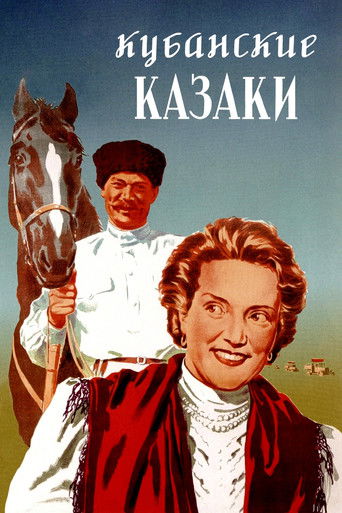
- Cossacks of the Kuban
- The Kuban Cossacks
- Volga-Volga
- The Bright Path
- The Return of Vasil Bortnikov
- similarFilms
Where to watch
- YouTube: https://www.youtube.com/watch?v=z7LglSy4B3w
- Wikimedia Commons: https://commons.wikimedia.org/wiki/File:1939.%20%D0%A2%D1%80%D0%B0%D0%BA%D1%82%D0%BE%D1%80%D0%B8%D1%81%D1%82%D1%8B.webm