A Little Hero
"Knowing he is no match for Tabbie he runs as fast as his little legs will carry him to a"
Keys: Space play/pause · ←/→ 10s · F fullscreen · M mute · </> speed
About this film
Doggie hears the racket and takes in the situation. Knowing he is no match for Tabbie he runs as fast as his little legs will carry him to a kennel where he tells his troubles to three big collies, who run back with him. Tabby runs away, and an exciting chase follows. Mabel has a canary bird, a tiny pet dog and a cat. She goes out, and the cat goes after the canary.
Cast & crew
More films like this
More Comedy films
View all →







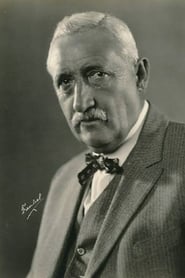
More from George Nichols
View all →


More about this film
About the production
Release dateOctober 18, 1913
Box officeBox office records not maintained for individual shorts in 1913, but Keystone comedies were highly profitable
ProductionKeystone Film Company
Filmed inEdendale, California (Keystone Studios)
This film was part of Keystone's popular animal comedy series, showcasing the studio's innovative use of animal actors. Pepper the Cat was one of the studio's most reliable animal performers, known for her ability to follow direction and create comedic situations. The production utilized real animals throughout, requiring extensive patience during filming as the animals needed to be coaxed into performing the required actions. The film was shot in a single day, as was typical for Keystone shorts of this period.
Themes
Themes & topics
Historical background
A Little Hero (1913) circulated in the silent era. Mabel has a canary bird, a tiny pet dog and a cat Contemporary trade papers and later preservation notes document its place among nickelodeon and cinema-club programs.
Why this film matters
A Little Hero remains accessible to researchers and viewers as a comedy short in museum, archive, and streaming collections. Programmers cite it when tracing regional production history and surviving early prints.
Making of
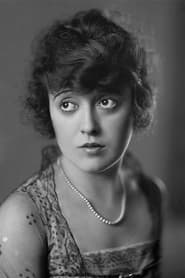
The production of 'A Little Hero' exemplified the rapid-fire filmmaking techniques that made Keystone Studios famous. Director George Nichols, a veteran of the studio, had developed efficient methods for working with animal actors, understanding that patience and repetition were key. The film was shot on Keystone's Edendale lot using natural lighting, as was standard practice for the era. Mabel Normand, who had risen from being a 'Bathing Beauty' model to one of Keystone's top stars, often collaborated with directors on gags and physical comedy sequences. The animal scenes required multiple camera setups and extensive rehearsal time, with trainers working off-camera to guide the animals' movements. The chase sequence, while appearing spontaneous, was carefully choreographed to ensure the safety of all animal performers. The production team used food rewards and familiar objects to encourage the desired behaviors from the animal cast, a technique that would become standard in animal filmmaking.
What critics said
Day-one reviews for A Little Hero are sparse in digitized press archives; later criticism treats it as a reference point for 1913 cinema programming and preservation.
Did you know?
- Pepper the Cat was one of the first animal stars in cinema history, appearing in numerous Keystone comedies between 1912-1914
- The three collies featured in the film were likely owned by local residents, as Keystone often borrowed animals from the community for their productions
- Mabel Normand was not only the star but also contributed to the gags and scenarios in many of her Keystone films
- This film was released during the height of the 'animal comedy' craze in early American cinema
- George Nichols was one of Keystone's most prolific directors, directing over 200 films for the studio
- The film's premise of animals working together to save each other was relatively innovative for its time
- Keystone Studios was known for its fast production schedule, often completing one-reel films in a single day
- The film was distributed through Mutual Film Corporation, Keystone's primary distributor during this period
- Pepper the Cat reportedly earned more than many human actors of the time, commanding $25 per week
- The basement window scene required multiple takes as the dogs had difficulty understanding how to enter through the window
Visual style
The cinematography in 'A Little Hero' reflects the standard practices of Keystone Studios in 1913, utilizing stationary camera positions with occasional pans to follow action. The film was shot on 35mm black and white film stock, likely using the Pathe or Bell & Howell cameras standard at Keystone. The lighting was entirely natural, filmed outdoors or in sets with large windows to maximize available light. The camera work prioritized clarity of action over artistic flourishes, ensuring that the animals' movements and the physical comedy could be easily followed by audiences. The basement window sequence demonstrates some compositional sophistication, using depth to show the dogs' entry into the house. The chase scenes employed medium shots to capture the full range of movement, while close-ups were used sparingly, primarily for Mabel Normand's reactions.
Innovations
While 'A Little Hero' did not introduce groundbreaking technical innovations, it demonstrated mastery of existing filmmaking techniques, particularly in working with animal actors. The film's greatest technical achievement was its successful coordination of multiple animal performers in a coherent narrative sequence, requiring careful blocking and timing. The basement window scene represented a minor technical challenge, as it required the camera to capture the dogs' entry from an angle that clearly showed their actions. The film also made effective use of continuity editing to maintain narrative clarity across different locations within the house. The production team's ability to obtain usable performances from the animal cast in a single day of shooting was itself a significant technical accomplishment for the era.
Music
As a silent film, 'A Little Hero' would have been accompanied by live music during theatrical exhibition. The typical accompaniment would have consisted of a pianist or small orchestra playing popular songs of the era along with classical pieces adapted to fit the on-screen action. For the chase sequences, faster-paced music would have been employed, while the more sentimental moments would have been underscored with romantic melodies. The exact musical selections would have varied by theater and musician, but Keystone often provided cue sheets with suggested pieces for their films. The bird's peril might have been accompanied by dramatic minor key passages, while the heroic dog's journey would have featured more upbeat, optimistic music.
Famous quotes
(Intertitle) 'Tabby has her eye on the canary!'
(Intertitle) 'Doggie hears the commotion and rushes for help!'
(Intertitle) 'The brave collies to the rescue!'
(Intertitle) 'Mabel returns and finds her little hero!'
Memorable scenes
- The climactic rescue sequence where three collies burst through the basement window to save the canary from Pepper the Cat
- The tiny dog's frantic race to the kennel to recruit help, showing determination despite his small size
- The final scene where Mabel Normand mistakenly praises the little dog as the hero, hugging him while the real heroes watch from the background
What audiences thought
Audiences in 1913 responded enthusiastically to 'A Little Hero,' which was reported to draw laughter and applause during theatrical showings. The film's clear narrative and charming animal performers made it particularly popular with family audiences, a demographic that theaters were increasingly targeting. Contemporary accounts suggest that viewers were especially delighted by the teamwork between the different dog breeds and the mistaken ending that rewards the wrong hero. The film's success contributed to its continued circulation in Keystone's distribution network for several months, longer than the typical run for one-reel comedies of the era. Audience reception was strong enough that Keystone produced several follow-up films featuring similar animal comedy scenarios, recognizing the commercial appeal of this subgenre.
Film connections
Influenced by
- Earlier Mack Sennett animal comedies
- French comedy films featuring animals
- Vaudeville animal acts
- Contemporary comic strips featuring animal characters
This film influenced
- Later Keystone animal comedies
- Harold Lloyd's 'The Freshman' (animal comedy elements)
- Later films featuring heroic dogs
- MGM's 'Dogville' comedies of the 1930s
Film restoration
The film is believed to be partially preserved, with some archives holding incomplete prints. The Library of Congress lists fragments of the film in their collection, and the Museum of Modern Art holds a partial print. However, a complete, restored version is not currently available to the public, making it one of the many Keystone comedies that exist only in fragments.
Where to watch
- The film is not currently available on major streaming platforms or home video. Fragments may occasionally be screened at silent film festivals or specialized archives. Researchers can request access to existing fragments through the Library of Congress or the Museum of Modern Art's film departments.