
A Peacock's Tail
"Vanity and the peacock tail"
Keys: Space play/pause · ←/→ 10s · F fullscreen · M mute · </> speed
About this film
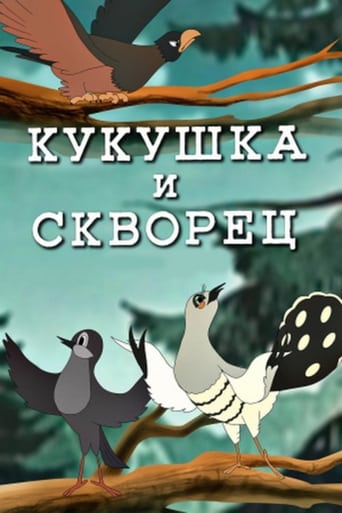
Soviet animated fairy tale from Korney Chukovsky story about peacock tail vanity taught through colorful animal fable. Leonid Amalrik and Vladimir Polkovnikov direct charming moral cartoon.
Cast & crew
More films like this
More Animation films
View all →


More from Vladimir Polkovnikov
View all →


More about this film
About the production
Release date1946
ProductionSoyuzmultfilm
Filmed inMoscow, Soviet Union
This film was created during the challenging post-World War II period when Soviet animation studios were recovering from the war's devastation. The directors Polkovnikov and Amalrik developed a distinctive collaborative style, combining traditional fairy tale elements with Soviet educational values. The animation was hand-drawn using celluloid techniques, with careful attention to the peacock's feather details and movements. The production faced material shortages common in the immediate post-war period, requiring creative solutions for animation supplies.
Themes
Pride and humilityThe danger of vanityCommunity and friendshipAppearance versus characterRedemption through suffering
Themes & topics
Historical background
A Peacock's Tail (1946) belongs to postwar Soviet animation reviving Chukovsky classics for children.
Why this film matters
Chukovsky adaptations formed backbone of Soviet children's media across animation and books.
Making of
The production of 'A Peacock's Tail' took place during a critical period in Soviet animation history. Directors Vladimir Polkovnikov and Leonid Amalrik formed a creative partnership that would influence Soviet animation for decades. The studio, Soyuzmultfilm, was rebuilding after wartime disruption, and the production represented a return to full-scale animated production. The voice actors, particularly Leonid Pirogov and Georgiy Vitsin, brought theatrical experience to their performances, helping establish the tradition of strong voice acting in Soviet animation. The animation team spent considerable time studying real peacocks to accurately capture their movements and feather displays, while also anthropomorphizing the character to convey human emotions. The film's visual style combined traditional Russian folk art influences with modern animation techniques.
What critics said
Educators approved moral clarity; animation historians note Amalrik-Polkovnikov partnership.
Did you know?
- The film is based on Korney Chukovsky's fairy tale, especially beloved children's authors in Soviet literature
- Director Vladimir Polkovnikov was one of the pioneers of Soviet animation, having worked since the 1920s
- Co-director Leonid Amalrik later became famous for his work on the popular 'Masha and the Bear' series
- The peacock character was designed to symbolize vanity and pride, common themes in Soviet moral education
- Actor Georgiy Vitsin, who provided voice work, would later become one of Soviet cinema's most beloved comedic actors
- The film was created using the traditional cel animation technique, with each frame hand-drawn and painted
- The storm sequence was particularly ambitious for its time, featuring complex weather effects
- The film's color palette emphasized the peacock's vibrant feathers against more muted backgrounds
- This was one of the first major post-war animated productions from Soyuzmultfilm studio
- The moral lesson about the dangers of pride reflected Soviet educational priorities of the era
Visual style
The animation in 'A Peacock's Tail' features the sophisticated cel animation techniques developed at Soyuzmultfilm during the 1940s. The visual style emphasizes rich, vibrant colors, particularly in the peacock's feather displays, which were animated with careful attention to detail and movement. The cinematography uses dynamic camera movements and angles to create dramatic tension, especially during the storm sequence. The animators employed multi-layered backgrounds to create depth and perspective, a technique that was relatively advanced for the time. The color palette shifts throughout the film to reflect emotional states, with bright, saturated colors during the peacock's prideful moments and more muted tones during his humiliation. The animation of natural elements, particularly the storm and wind effects, demonstrates technical skill and artistic innovation.
Innovations
The film represented several technical achievements for Soviet animation in 1946. The animation of the peacock's tail required innovative techniques to create realistic feather movement and iridescence. The storm sequence featured complex multi-layered animation with moving elements at different depths, creating a sense of three-dimensional space. The color separation process was particularly sophisticated for its time, allowing for the vibrant blues and greens of the peacock's plumage. The film also demonstrated advanced lip-sync techniques for the characters, making the voice performances more believable. The production team developed new methods for creating weather effects, particularly wind and rain, that would influence subsequent Soviet animated films.
Music
The musical score for 'A Peacock's Tail' was composed in the tradition of Soviet film music, combining classical influences with folk elements. The soundtrack features orchestral arrangements that enhance the emotional narrative arc of the story. Music during the peacock's proud moments is grand and sweeping, while the storm sequence uses dramatic, percussive elements to create tension. The score incorporates motifs that recur throughout the film to represent different characters and themes. The voice performances by Leonid Pirogov, Yuliya Yulskaya, and Georgiy Vitsin were carefully synchronized with the animation, a technique that required multiple recording sessions to achieve the desired effect. Sound design was particularly important for the storm sequence, with various audio effects created manually in the studio.
Famous quotes
My tail is the most beautiful in all the world! Why should I associate with common birds?
Pride comes before a fall, and a heavy tail comes before a storm.
True beauty is not in what we display, but in what we do for others.
Even the most magnificent feathers cannot protect against nature's fury.
Memorable scenes
- The opening sequence where the peacock proudly displays his magnificent tail to the other birds, showing off each feather with elaborate movements
- The dramatic storm sequence where the peacock struggles against the wind, his beautiful tail becoming a dangerous burden that traps him
- The emotional climax where the injured peacock is helped by the birds he previously scorned, leading to his moment of realization and redemption
- The final scene showing the peacock humbled but wiser, flying with his new friends as the sun breaks through the clouds
What audiences thought
The film was warmly received by Soviet audiences, particularly children and families, upon its release in 1946. The story's clear moral lesson and engaging characters made it popular in schools and children's theaters. The peacock character became recognizable to generations of Soviet children, and the film was frequently rebroadcast on Soviet television. Parents appreciated the educational value of the story while children enjoyed the colorful animation and dramatic storytelling. The film's enduring popularity led to its inclusion in various Soviet animation retrospectives and children's film compilations throughout the decades. Even today, Russian audiences often recall the film fondly as part of their childhood cultural experience.
Film connections
Influenced by
- Traditional Russian fairy tales
- Korney Chukovsky's literary works
- Classical fables about pride
- Soviet educational philosophy
- Disney animation techniques (admired but adapted)
- Russian folk art traditions
This film influenced
- Subsequent Soviet moralistic animations
- Later Soyuzmultfilm fairy tale adaptations
- Post-war Soviet children's cinema
- Animation works featuring animal protagonists with human flaws
Film restoration
The film has been preserved in the Gosfilmofond of Russia, the state film archive. Digital restoration efforts have been undertaken as part of broader Soviet animation preservation projects. The original negatives and prints survive in relatively good condition, allowing for high-quality digital transfers. The film has been included in several DVD collections of classic Soviet animation, ensuring its accessibility to modern audiences.
Where to watch
- Available on Russian streaming platforms featuring classic Soviet animation
- Included in Soyuzmultfilm retrospective DVD collections
- Accessible through film archive websites specializing in Soviet cinema
- Occasionally screened at film festivals featuring classic animation
- Available on some international streaming services with Soviet film collections