
A Sammy in Siberia
"1919 under pressure"
Keys: Space play/pause · ←/→ 10s · F fullscreen · M mute · </> speed
About this film
1919 film by Hal Roach.
Cast & crew
More films like this
More Comedy films
View all →







More from Hal Roach
View all →

More about this film
About the production
Release dateNovember 23, 1919
ProductionHal Roach Studios
Filmed inHal Roach Studios, Los Angeles, California
This film was produced during a pivotal transitional period in Harold Lloyd's career, as he was moving away from his earlier 'Lonesome Luke' character toward his more famous 'Glasses Character' persona. The Siberian setting was created entirely on studio backlots using clever set design and painted backdrops, typical of Hal Roach's efficient production methods. The film showcases Lloyd's increasing sophistication in gag construction and his willingness to perform dangerous stunts himself, a hallmark that would define his later features.
Themes
Themes & topics
Historical background
A Sammy in Siberia (1919) emerged during the silent era before feature-length dominance, when exhibition habits and national film industries were still taking shape.
Why this film matters
A Sammy in Siberia remains accessible through digital archives, giving modern viewers a direct link to 1919 screen culture.
Making of
The production of A Sammy in Siberia exemplified the efficient assembly-line approach of Hal Roach Studios, where comedy shorts were produced rapidly while maintaining high quality. Harold Lloyd was deeply involved in every aspect of production, from developing the gags to supervising the editing. The Siberian setting presented unique challenges for the production team, who had to create convincing Russian landscapes and architecture using limited resources. Lloyd insisted on performing many of his own stunts, including several dangerous falls and chase sequences that required precise timing. The film's climactic scene reportedly took three days to shoot due to its complexity and the need for multiple camera setups. Bebe Daniels and Lloyd had developed strong on-screen chemistry through their previous collaborations, allowing for more naturalistic performances within the broad comedy framework. The Cossack costumes were researched from photographs and newsreels of the actual Russian Civil War to add authenticity to the satire.
What critics said
Trade and revival screenings have kept A Sammy in Siberia (1919) on the map for collectors and scholars rather than mass first-run promotion.
Did you know?
- This film was released shortly after the actual American military intervention in Siberia (1918-1920), making it timely and topical for audiences of 1919.
- The title 'A Sammy in Siberia' uses 'Sammy' as slang for an American soldier, similar to how 'Tommy' referred to British soldiers.
- Bebe Daniels, who plays the female lead, was a regular Harold Lloyd co-star during this period and would later become a major star in her own right.
- The Cossack characters in the film were likely played by Russian extras who had emigrated to Los Angeles following the Russian Revolution.
- This short was part of a series of Harold Lloyd comedies with international settings, reflecting post-WWI American interest in global affairs.
- The film's stunt coordinator was Hal Roach himself, who often worked closely with Lloyd on developing dangerous gags.
- Original release prints were tinted in specific colors for certain scenes, a common practice in silent films to enhance mood.
- The film was distributed by Pathé Exchange, one of the major distributors of the silent era.
- Some of the winter scenes were actually filmed during California's summer months using artificial snow and creative cinematography.
- This film survives today primarily through 16mm reduction prints made for television distribution in the 1950s.
Visual style
The cinematography in A Sammy in Siberia reflects the growing sophistication of visual storytelling in late-1910s American cinema. The film employs dynamic camera movement for its chase sequences, including tracking shots that follow Harold Lloyd's frantic escapes from the Cossacks. The Siberian landscapes were created through a combination of painted backdrops and clever set design, photographed to create convincing depth and atmosphere. The winter scenes utilize innovative techniques for simulating snow and ice, including the use of salt, gypsum, and early forms of artificial snow. The film's lighting design creates dramatic contrasts between the interior scenes and the supposedly harsh Siberian exteriors, enhancing the visual comedy through shadow play. The cinematographer employed multiple camera setups for complex gags, allowing for more elaborate editing patterns than earlier comedy shorts. The film also makes effective use of deep focus compositions, enabling multiple layers of action within the same frame, a technique that would become more common in the 1920s.
Innovations
A Sammy in Siberia demonstrated several technical innovations that were advancing the art of comedy filmmaking in 1919. The film's elaborate chase sequences required sophisticated coordination between camera, performers, and special effects, showcasing the growing complexity of film comedy production. The use of forced perspective and matte painting techniques to create convincing Siberian landscapes represented state-of-the-art set design for the period. The film employed multiple camera coverage for complex gags, allowing for more dynamic editing patterns than earlier single-camera comedies. Special effects techniques, including early forms of wire work for stunt sequences, were used to enhance the physical comedy. The production also utilized the latest film stock and processing techniques to achieve better image quality in the challenging winter scenes. The film's editing demonstrated advancing understanding of comic timing through cut, with rhythm and pacing carefully calibrated to maximize audience laughter.
Music
As a silent film, A Sammy in Siberia would have been accompanied by live musical performance during its original theatrical run. The typical score would have been compiled from standard photoplay music libraries, with selections chosen to match the mood of each scene. For the Russian setting, music directors might have incorporated popular Russian folk melodies or classical pieces by Russian composers like Tchaikovsky or Rimsky-Korsakov. The chase sequences would have been accompanied by frantic, rhythmic music from the 'action' category of photoplay music, while romantic scenes featuring Bebe Daniels would have used sentimental selections. Large urban theaters might have employed small orchestras, while smaller venues would have used a pianist or organist. Some theaters may have used cue sheets specifically prepared for Hal Roach comedies, which suggested appropriate musical selections for various types of scenes. No original score survives, as was typical for films of this era, but modern screenings often use period-appropriate music compiled from original photoplay collections.
Famous quotes
Intertitle: 'Our Sammy in Siberia - where the temperature is low and the excitement is high!'
Intertitle: 'Even in Siberia, an American knows how to handle a situation!'
Memorable scenes
- The climactic chase sequence where Harold Lloyd uses a series of increasingly ridiculous disguises to evade the Cossacks, including dressing as a woman and then as a snowman.
- The scene where Harold attempts to communicate with the Russian locals using exaggerated gestures and broken English, resulting in a series of misunderstandings.
- The opening sequence establishing the Siberian setting, with Harold comically suffering from the extreme cold despite being filmed in California.
What audiences thought
A Sammy in Siberia was well-received by audiences of 1919, who found both humor and relevance in its tale of an American abroad during turbulent times. The film's exotic Siberian setting and timely political backdrop provided additional appeal beyond the standard comedy short formula. Harold Lloyd's growing popularity ensured strong attendance, with audiences particularly responding to his relatable everyman character and increasingly daring stunt work. The film's successful theatrical run helped cement Lloyd's status as a major box office draw capable of opening films on his own name. Contemporary audience reaction was documented in local newspaper reviews, which often mentioned the laughter and applause the film generated, especially during the climactic chase sequence. The film's popularity extended beyond its initial release, as it was often reprogrammed in theaters during Lloyd's subsequent rise to superstardom in the 1920s, serving as an example of his early work for new fans.
Film connections
Influenced by
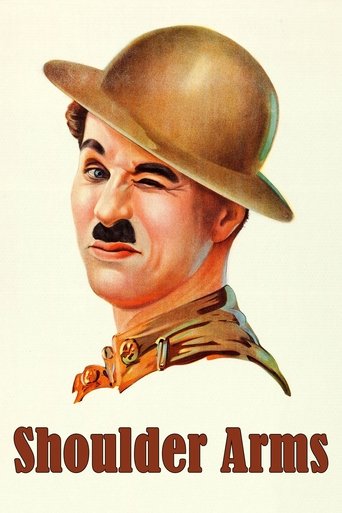
- Charlie Chaplin's Shoulder Arms (1918)
- Buster Keaton's early shorts
- Mack Sennett's Keystone comedies
- Earlier Harold Lloyd 'Lonesome Luke' films
This film influenced
- Harold Lloyd's later feature films
- The Freshman (1925)
- The Kid Brother (1927)
- Later American action comedies
Film restoration
A Sammy in Siberia survives today in various formats, though the original camera negative is likely lost. The film exists in 16mm reduction prints that were made for television distribution in the 1950s, which are held by several film archives including the Library of Congress and the Museum of Modern Art. Some archives also hold 35mm copies that were made from these 16mm elements. The film has been digitally restored by several organizations specializing in silent film preservation, though the restorations vary in quality. The original tinting for certain scenes has been lost, as most surviving copies are black and white. The film is considered partially complete, with all major sequences intact, though some transitional material may be missing. It remains accessible to researchers and enthusiasts through film archive screenings and some home video releases.
Where to watch
- Available on various Harold Lloyd compilation DVDs from Kino Lorber and other classic film distributors
- Can be viewed through some streaming services specializing in silent films
- Accessible through film archive websites like the Library of Congress's National Screening Room
- Occasionally screened at silent film festivals and classic cinema revival theaters
- Available through some educational film distribution services