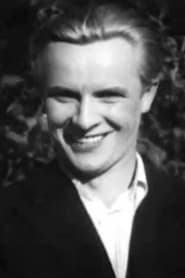
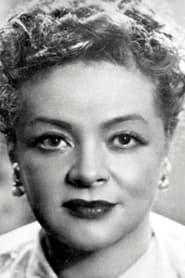
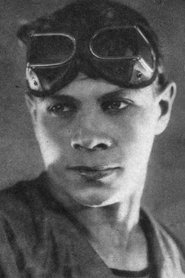
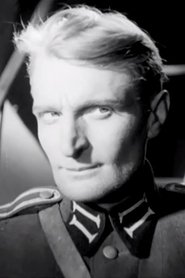
Accordion
"igor savchenko under pre-war skies"
Keys: Space play/pause · ←/→ 10s · F fullscreen · M mute · </> speed
About this film
Under pre-war life, igor Savchenko's Accordion (Garmon', 1934) was adapted from a poem by A. Zharov. sheds light on the reasons why the mass song came into being. In it, the country boy Timosha stops playing the accordion after being chosen leader of the local Komsomol. When he understands
Cast & crew
More films like this
More Comedy films
View all →







More from Ihor Savchenko
View all →
More about this film
About the production
Release date1934
Box officeUnknown - Soviet cinema did not track box office in the modern commercial sense
ProductionUkrainfilm Studios (Kiev)
Filmed inKiev, Ukrainian SSR, Rural Ukrainian villages
The film was produced during the early Stalinist era when socialist realism was becoming the dominant artistic doctrine. Director Ihor Savchenko, who also appears in the film, was known for his innovative approach to musical cinema and his ability to blend political messaging with entertainment. The production faced the challenge of creating authentic rural atmosphere while promoting Soviet ideological values.
Themes
Collectivism vs. individualismThe role of culture in socialist constructionYouth activism and the KomsomolClass struggle in rural areasThe transformation of folk traditions for revolutionary purposes
Themes & topics
accordionKomsomolcollectivizationkulakfolk musicrural Soviet Unionyouth activismcultural transformationmusical comedypropaganda
Historical background
The 1934 premiere of Accordion coincided with broader shifts in pre-war culture, from technology to social norms.
Why this film matters
Accordion has outlived its original run as a document of pre-war popular entertainment and craft. Accordion (Russian: Гармонь, romanized: Garmon) is a 1934 Soviet musical comedy film directed by Igor Savchenko.
Making of
The production of 'Accordion' took place during a pivotal moment in Soviet cinema history, as the industry was transitioning from the experimental avant-garde of the 1920s to the more doctrinaire socialist realism of the Stalin era. Director Ihor Savchenko, working at Ukrainianfilm Studios in Kiev, sought to create a film that would both entertain and educate Soviet audiences about the importance of cultural work in building socialism. The casting of Zoya Fyodorova, who was relatively unknown at the time, proved to be a wise choice as she brought natural charm and authenticity to her role. The musical sequences required careful choreography to ensure they felt spontaneous while conveying the intended political messages. The production team spent considerable time in rural Ukrainian villages to capture authentic settings and to study local musical traditions, which they then adapted to fit Soviet ideological requirements.
What critics said
Re-evaluation in film journals has kept Accordion in circulation among enthusiasts who track pre-war releases.
Did you know?
- The film is based on a poem by Alexander Zharov, a prominent Soviet poet known for his works about collectivization and industrialization
- Director Ihor Savchenko made a rare appearance as an actor in this film, playing a supporting role
- The accordion (garmon') was considered a symbol of Russian and Ukrainian folk culture, making it an ideal instrument for the film's themes
- Zoya Fyodorova, who starred in the film, would later become one of the Soviet Union's most famous actresses, though her career was complicated by personal troubles
- The film was part of a wave of Soviet musical comedies in the early 1930s that aimed to make socialist themes more accessible and entertaining
- The kulak character 'Tlskliby' represents the class enemies that Soviet ideology warned against during collectivization
- The film's emphasis on youth culture and the Komsomol reflects the Soviet focus on educating the next generation in communist values
- Musical elements in the film were designed to contrast 'progressive' Soviet songs with 'reactionary' folk melodies
- The film was shot during the height of the First Five-Year Plan, a period of rapid industrialization and collectivization
- Despite its entertainment value, the film served as propaganda for collectivization policies that were causing widespread hardship in rural areas
Awards & recognition
- No major awards documented - the Soviet film award system was still developing in 1934
Visual style
The cinematography of 'Accordion' reflects the transitional nature of Soviet film style in the early 1930s. While moving away from the more experimental techniques of the 1920s, the film still employs dynamic camera work and thoughtful composition. The visual contrast between the dark, oppressive atmosphere associated with kulak songs and the bright, energetic scenes of collective musical gatherings reinforces the film's ideological message. The rural Ukrainian landscapes are captured with an eye for both beauty and productivity, showing the countryside as a site of socialist transformation. The musical sequences feature mobile camera work that captures the energy of community celebrations, while more intimate moments use close-ups to emphasize characters' emotional responses to music and political awakening.
Innovations
While 'Accordion' does not represent a major technical breakthrough in cinema history, it demonstrates the growing sophistication of Soviet film sound technology in the early 1930s. The film's clear recording of musical performances and dialogue shows the improvements in sound recording equipment and techniques since the introduction of sound to Soviet cinema. The synchronization of music with action in the musical sequences required careful planning and execution. The production team also developed effective methods for recording sound in outdoor rural settings, which presented technical challenges for early sound films. The film's successful integration of diegetic music (music within the story) with non-diegetic scoring shows an advanced understanding of how sound could support narrative and ideological goals.
Music
The soundtrack is central to 'Accordion,' featuring a mix of traditional Ukrainian folk melodies and newly composed Soviet songs. The accordion music serves as the film's narrative engine, with different musical styles representing competing ideologies. Timosha's lively tunes embody the joy and energy of socialist construction, while the mournful kulak songs represent the old order and resistance to change. The film includes several musical numbers that function as both entertainment and propaganda, with lyrics that celebrate collectivism, youth activism, and the Soviet way of life. The score was likely composed by a Soviet composer who specialized in adapting folk traditions for revolutionary purposes, though specific credits are not well-documented. The music successfully bridges the gap between rural folk culture and urban Soviet modernity.
Famous quotes
Music is not just entertainment, it is a weapon in the struggle for socialism
The accordion must play for the collective, not for individual sorrow
When the youth sing together, the future of our country grows stronger
Old sad songs belong to the past, new merry songs build our future
Memorable scenes
- The opening scene where Timosha plays his accordion for village children, establishing his musical talent and connection to the community
- The Komsomol meeting where Timosha is chosen as leader and decides to abandon his music
- The tense scene where Timosha overhears the kulak's mournful songs influencing other youth
- The climactic musical gathering where Timosha returns with his accordion and leads everyone in joyful socialist songs
What audiences thought
The film was reportedly popular with Soviet audiences, particularly in rural areas where viewers could relate to the setting and musical traditions. The accessible story and catchy musical numbers made it more appealing than some more overtly propagandistic films of the era. Audience members appreciated the film's celebration of folk music and its relatively light-hearted approach to serious ideological themes. However, reception likely varied depending on viewers' personal experiences with collectivization - those who had suffered during the process may have found the film's optimistic portrayal of rural transformation difficult to accept. The film's success helped establish Zoya Fyodorova as a popular actress and contributed to the growing acceptance of musical films as legitimate vehicles for Soviet messaging.
Film connections
Influenced by
- Soviet socialist realism doctrine
- Traditional Ukrainian folk culture
- Alexander Zharov's poetry
- Earlier Soviet musical experiments
- The ideological requirements of the First Five-Year Plan era
This film influenced
- Later Soviet musical comedies of the 1930s
- Grigory Alexandrov's 'Volga-Volga' (1938)
- Ivan Pyryev's rural musicals
- The development of the Soviet musical comedy genre
Film restoration
The film is partially preserved in Russian and Ukrainian film archives. Some sequences may be incomplete or in poor condition due to the age of the film and the challenges of preserving Soviet cinema from this period. Restoration efforts have been undertaken by the Gosfilmofond in Russia, but a complete, fully restored version may not be available to the public.
Where to watch
- Available in some specialized film archives and museum collections
- Occasionally screened at classic film festivals specializing in Soviet cinema
- May be accessible through academic film libraries
- Some segments might be available on specialized streaming platforms for classic films
- Not widely available on commercial streaming services due to its age and niche appeal