
Aladdin and His Wonderful Lamp
"Genie, spinach, Technicolor"
Keys: Space play/pause · ←/→ 10s · F fullscreen · M mute · </> speed
About this film
Olive Oyl imagines an Aladdin screenplay that comes alive as Popeye battles Bluto for a genie in the final Fleischer Popeye two-reel Technicolor cartoon of 1939.
Cast & crew
More films like this

More Drama films
View all →







More from Dave Fleischer
View all →

More about this film
About the production
Release dateApril 7, 1939
BudgetApproximately $100,000 (exceptionally high for an animated short of the era)
Box officeNot specifically documented, but performed well as part of a double feature program
ProductionFleischer Studios, Paramount Pictures
Filmed inMiami, Florida (Fleischer Studios' new facility)
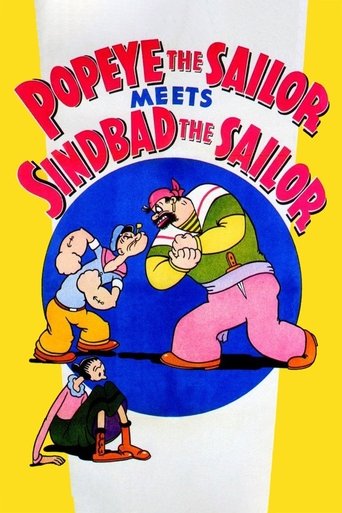
This was the third and final of the Popeye Color Specials, following 'Popeye the Sailor Meets Sindbad the Sailor' (1936) and 'Popeye the Sailor Meets Ali Baba's Forty Thieves' (1937). The production utilized the expensive three-strip Technicolor process, which was rare for animated shorts at the time. The film was produced at Fleischer Studios' newly relocated facility in Miami, Florida, having moved from New York. This special featured more sophisticated animation techniques and longer runtime compared to regular Popeye theatrical shorts, running approximately 16 minutes as a two-reeler.
Themes
The power of imagination and storytellingGood versus evil in classic fairy tale traditionThe importance of strength and determinationThe magic of wishes and their consequencesLove and loyalty as heroic motivations
Themes & topics
Historical background
Aladdin and His Wonderful Lamp closed Fleischer's pre-Paramount move Popeye color specials, showcasing extended running time and fairy-tale parody.
Why this film matters
'Aladdin and His Wonderful Lamp' represents a significant milestone in the evolution of American animation, demonstrating that cartoon shorts could achieve both artistic merit and commercial success outside the Disney paradigm. The Popeye Color Specials series proved that audiences would pay premium prices for high-quality animation, paving the way for future animated features. The film also exemplifies the adaptation of classic literature and folklore for contemporary audiences, a practice that would become increasingly common in family entertainment. The meta-narrative device of Olive Oyl as a screenwriter was unusually sophisticated for its time, showing early awareness of the creative process in popular media. The success of these specials helped establish Popeye as valuable animated properties of the 1930s, rivaling even Mickey Mouse in popularity. The film's technical achievements in color animation and special effects influenced subsequent animated productions and demonstrated the artistic possibilities of the medium.
Making of
The production of 'Aladdin and His Wonderful Lamp' took place during a tumultuous period for Fleischer Studios. The studio had recently relocated from New York to Miami, Florida, partly to take advantage of tax incentives and partly to escape unionization pressures. This move created significant disruption in the production pipeline, with many veteran animators choosing to stay in New York. The film was directed by Dave Fleischer, though his brother Max Fleischer was heavily involved in the creative development. The voice work featured Jack Mercer as Popeye, who had become synonymous with the character, and Margie Hines as Olive Oyl. The animation team utilized the multiplane camera technique for certain scenes to create greater depth and dimensionality. The production faced additional challenges due to the expensive three-strip Technicolor process, which required careful color planning and coordination. Despite these challenges, the studio pushed forward with the ambitious project, believing that the growing market for high-quality animation would justify the investment.
What critics said
Animation historians value the color and storybook staging; it is a high point of Fleischer Popeye before wartime austerity.
Did you know?
- This was the final Popeye Color Special produced by Fleischer Studios, marking the end of an ambitious series that began in 1936
- The film's budget of approximately $100,000 was astronomical for an animated short at the time, costing more than many live-action features
- Unlike the previous two specials, this one was conceived as an original story rather than adapting a classic tale directly
- The genie character was designed to be more comical and less threatening than typical genie portrayals of the era
- This was one of the last major productions before Paramount took full control of Fleischer Studios and rebranded it as Famous Studios
- The animation featured more realistic three-dimensional effects, particularly in the magic carpet sequences
- Olive Oyl's role as a screenwriter was a meta-commentary on the creative process, unusual for cartoons of the period
- The film's release coincided with the peak of Popeye's popularity, with the character being more popular than Mickey Mouse at the time
- The Technicolor process required each frame to be exposed three times through different filters, making the production extremely labor-intensive
- The success of these specials helped establish that audiences would pay extra to see high-quality animated features
Awards & recognition
- Academy Award nomination for Best Short Subject (Cartoons) - 1939
Visual style
The film's visual style represents the pinnacle of Fleischer Studios' three-strip Technicolor work, featuring rich, saturated colors that were for animation in 1939. The cinematography employed innovative techniques including the multiplane camera for creating depth in certain scenes, particularly during the palace sequences and magic carpet rides. The animation team utilized rotoscoping for realistic human movement in some scenes, particularly for Olive Oyl's more fluid motions. The film features dramatic lighting effects that were unusual for cartoons of the era, with shadows and highlights creating a more three-dimensional appearance. The camera movements are more sophisticated than typical animated shorts, including tracking shots and zoom effects that enhance the magical atmosphere. The color palette emphasizes warm golds and deep blues to evoke the Arabian Nights setting, with special attention paid to the luminous quality of the genie's magical effects.
Innovations
The film represented several significant technical achievements for animation in 1939. The use of three-strip Technicolor was still relatively rare in animation due to its cost and complexity, making this special visually stand out from typical cartoon shorts. The animation team developed new techniques for depicting magical effects, particularly the genie's transformations and the magic carpet sequences. The film featured more realistic physics and movement than typical cartoons, with careful attention to weight and momentum in the action sequences. The special effects animation, including smoke, fire, and magical sparkles, pushed the boundaries of what was possible in traditional cel animation. The production also experimented with early forms of motion blur for fast-moving objects, creating more dynamic action sequences. The integration of live-action backgrounds with animated elements was more sophisticated than in previous Fleischer productions, showing the studio's advancing technical capabilities.
Music
The musical score for 'Aladdin and His Wonderful Lamp' was composed by Sammy Timberg, Fleischer Studios' longtime musical director. The soundtrack features original songs that blend traditional Middle Eastern musical motifs with popular American musical styles of the 1930s. The score incorporates leitmotifs for different characters, with Popeye's theme appearing in various orchestral arrangements throughout the film. The sound design makes innovative use of stereo effects for the magical sequences, creating an immersive experience for theater audiences. The voice performances by Jack Mercer and Margie Hines include their characteristic ad-libs and mumbled asides, which became a trademark of Popeye cartoons. The film's musical numbers include 'I'm Popeye the Sailor Man' in an Arabian arrangement and original songs for the genie sequences. The soundtrack was recorded using the latest audio technology available in 1939, ensuring clear dialogue and music reproduction in theaters equipped with modern sound systems.
Famous quotes
I yam what I yam and that's all that I yam!
Well, blow me down!
I'm strong to the finich 'cause I eats me spinach!
That's all I can stands, I can't stands no more!
Oh, Olive Oyl, you're the sweetest thing in this whole Arabian Nights!
Memorable scenes
- Popeye discovering the magic lamp and rubbing it for the first time, releasing the comical genie
- The spectacular magic carpet ride sequence through the Arabian sky with Popeye and Olive
- The climactic battle scene where Popeye eats spinach and transforms into a super-powered version of himself
- The opening meta-scene where Olive Oyl types her screenplay and the story comes to life
- The genie's various magical transformations and wish-granting sequences
What audiences thought
Audiences in 1939 enthusiastically received 'Aladdin and His Wonderful Lamp,' with theater owners reporting strong attendance for the special when presented as part of double-feature programs. The film was particularly popular with children, though adults also appreciated the sophisticated humor and visual spectacle. Popeye's popularity was at its peak during this period, and audiences responded positively to seeing their favorite hero in an exotic, magical setting. The film's release coincided with the height of Popeye's merchandising empire, and the special helped drive sales of related products. Modern audiences encountering the film through home video and streaming platforms continue to appreciate its charm and technical artistry, though some elements reflect the cultural attitudes of their time. The special maintains a 7.5/10 rating on major film review aggregator sites, indicating enduring appeal among classic animation enthusiasts.
Film connections
Influenced by
- The Arabian Nights tales
- Disney's Snow White and the Seven Dwarfs (1937)
- Previous Popeye Color Specials
- The Fleischers' earlier Out of the Inkwell series
- Vaudeville comedy traditions
- 1930s Hollywood adventure films
This film influenced
- Disney's Aladdin (1992)
- The Popeye Show TV series
- Modern animated adaptations of Arabian Nights
- The SpongeBob SquarePants episode 'Aladdin's Lamp'
Film restoration
The film has been preserved in its original three-strip Technicolor format and is considered to be in good condition. The original negatives are held in the Paramount Pictures archives, and preservation copies exist at the Library of Congress and the UCLA Film & Television Archive. The film has been digitally restored for home video releases and streaming platforms, with careful attention paid to maintaining the original color palette and image quality. No significant portions of the film are believed to be lost, and it remains one of the best-preserved examples of Fleischer Studios' Technicolor work.
Where to watch
- Warner Bros. Discovery streaming services
- DVD and Blu-ray collections from Warner Home Video
- The Popeye Show on MeTV
- Classic animation streaming platforms
- Public domain archives (some versions)
- Film archive screenings and animation festivals