An Indian Summer
"Two widowed hearts under one roof"
Keys: Space play/pause · ←/→ 10s · F fullscreen · M mute · </> speed
About this film
A lonely old widower arrives in town and seeks out a pleasant boarding place. The house he selects may be pleasant and homelike, but most of all it is owned by a widow, and managed by her daughter. The widow and the widower are impressed with each other at first sight and a roman
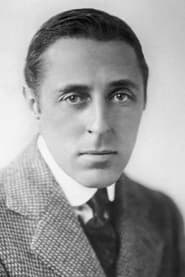
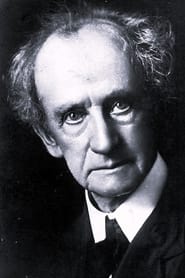
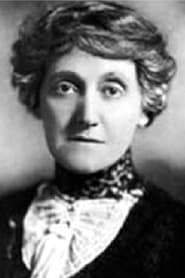
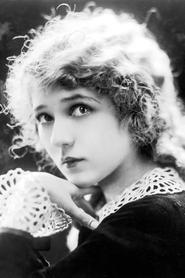
Cast & crew
More films like this
More Romance films
View all →




More from D.W. Griffith
View all →
More about this film
About the production
Release dateFebruary 8, 1912
ProductionBiograph Company
Filmed inCalifornia, New York
This was one of many short films D.W. Griffith directed for the Biograph Company during his prolific period there from 1908-1913. The film was shot quickly on a modest budget, typical of Biograph productions of the era. Mary Pickford, though already becoming well-known, was still working in shorts before becoming one of the biggest stars of the 1920s. The film showcases Griffith's early mastery of narrative storytelling and his ability to elicit natural performances from his actors.
Themes
Mature romanceSelf-consciousness about agingMiscommunication in relationshipsSecond chances at loveAppearance versus reality
Themes & topics
Historical background
An Indian Summer appeared in 1912, when the silent era before Hollywood consolidated into a studio system shaped how movies were financed, distributed, and discussed. Audiences of the day encountered the work amid shifting tastes in acting, pacing, and spectacle. Its focus on a lonely old widower arrives in town and seeks out a pleasant boarding place mirrors themes circulating in popular culture of that moment.
Why this film matters
An Indian Summer (1912) belongs to the wider archive of world cinema, documenting a lonely old widower arrives in town and. Archivists and historians value such titles for what they reveal about craft, genre, and audience expectations. Restorations and festival screenings keep the work visible to viewers far beyond its first run.
Making of
The making of 'An Indian Summer' reflects the efficient production methods of the Biograph Company under Griffith's direction. Griffith was known for his meticulous planning and ability to complete films quickly while maintaining quality. The cast consisted of his regular troupe of actors, with whom he had developed strong working relationships. Mary Pickford, though young, was already demonstrating the star quality that would make her 'America's Sweetheart.' The film was likely shot on location in California or at Biograph's New York studios, using natural lighting as was common in the era. The production would have been completed in just a few days, with minimal takes and simple staging, yet Griffith's directorial skill elevated the material beyond its simple premise.
What critics said
Press coverage from 1912 is fragmentary for many titles of this vintage; surviving notices for An Indian Summer tend to stress novelty, star power, or topical appeal. Later writing places the picture within its national and generic context, weighing both period conventions and moments that still land for modern viewers. Streaming and disc releases have revived discussion among classic-film audiences.
Did you know?
- This film was released during D.W. Griffith's most productive period at Biograph, where he directed over 450 short films.
- Mary Pickford was only 19 years old when she appeared in this film, though she was already becoming a major star.
- The film's title refers to the metaphorical 'Indian summer' of romance in later life, not the literal season.
- W. Chrystie Miller was one of Griffith's favorite character actors, appearing in over 50 of his films.
- Kate Bruce was another regular in Griffith's company, often playing maternal or elderly roles.
- At 11 minutes, this was considered a standard length for dramatic shorts in 1912.
- The film was shot in a single reel, as most films were before the transition to feature-length productions.
- The hair tonic subplot reflects early 20th century concerns about appearance and aging.
- This film demonstrates Griffith's early interest in mature romance, a theme he would return to throughout his career.
- The Biograph Company released films on a weekly schedule, requiring rapid production turnaround.
Visual style
The cinematography in 'An Indian Summer' reflects the standard practices of Biograph productions in 1912. Shot in black and white on 35mm film, the movie uses natural lighting and simple, effective compositions. The camera work is static, as was typical of the era, with the focus on capturing the actors' performances and the narrative action. Griffith was already experimenting with camera placement and editing techniques to enhance storytelling, using close-ups and medium shots to emphasize emotional moments. The visual style prioritizes clarity and readability, ensuring that the story could be understood without dialogue. The film's look is characteristic of the transitional period between the more primitive cinema of the 1900s and the more sophisticated visual language that would emerge in the mid-1910s.
Innovations
While 'An Indian Summer' was not a groundbreaking technical achievement, it represents the refinement of filmmaking techniques that had developed by 1912. The film demonstrates Griffith's mastery of continuity editing, ensuring smooth narrative flow between scenes. The use of intertitles to convey dialogue and exposition shows the sophisticated integration of text and image that had become standard in narrative cinema. The film's efficient storytelling within an 11-minute runtime exemplifies the economy of filmmaking in this era. The production benefited from Biograph's established technical infrastructure, including reliable cameras and processing facilities. The movie also reflects the growing sophistication of performance direction in silent cinema, with actors using subtle gestures and expressions to convey emotion without dialogue.
Music
As a silent film, 'An Indian Summer' had no recorded soundtrack. During its original theatrical run, the film would have been accompanied by live musical performance, typically a pianist or small ensemble in smaller theaters and a full orchestra in larger venues. The music would have been selected to match the mood of each scene, with romantic themes during the tender moments and lighter, more playful music during the comedic misunderstandings. The specific musical selections would have varied by theater and musician, though common practice involved using popular songs of the era and classical pieces adapted for film accompaniment. Some theaters might have used cue sheets provided by the Biograph Company, suggesting appropriate music for key scenes.
Famous quotes
A letter! From whom? I must know its contents!
My hair... it grows whiter and thinner each day. How can I hope to win her affection looking so old?
If he thinks he can make me jealous with his secret correspondence, he has another thing coming!
Age is but a number when hearts are young and true.
Memorable scenes
- The widower's careful attempt to hide his letter to the hair tonic company from the widow's curious eyes
- The moment when the widow discovers the letter and immediately assumes it's from another woman
- The comic scene where the widower applies the hair tonic, hoping for miraculous results
- The tender reconciliation when all misunderstandings are finally cleared away
What audiences thought
Audiences of 1912 responded positively to 'An Indian Summer,' finding its gentle humor and heartwarming story appealing. The film's focus on older characters finding love resonated with viewers of all ages, offering a refreshing alternative to the more action-oriented films common in the era. Mary Pickford's growing popularity undoubtedly contributed to the film's success, even in her relatively small role. The movie's straightforward storytelling and emotional clarity made it accessible to the diverse audiences of early cinema. While specific box office records from this period are scarce, the film's preservation and documentation suggest it was well-received enough to warrant distribution beyond major urban centers.
Film connections
Influenced by
- Earlier Biograph shorts
- Stage comedies of the era
- Literary traditions of mature romance
This film influenced
- Later romantic comedies featuring older protagonists
- Other Biograph productions with similar themes
Film restoration
The preservation status of 'An Indian Summer' (1912) is unclear, as is the case with many films from this early period. Many Biograph shorts from this era have been lost due to the unstable nature of early film stock and poor archival practices. However, some Biograph films have survived through various archives and private collections. The Museum of Modern Art and the Library of Congress hold extensive collections of Griffith's Biograph films, though it's uncertain whether this particular title is among them. The film's documentation in film catalogs and reference materials suggests it existed and was distributed, but its current survival status would need to be verified through film archives specializing in early cinema.
Where to watch
- Due to the film's age and uncertain preservation status, access to 'An Indian Summer' is extremely limited. If prints or digital copies exist, they would most likely be found in specialized film archives such as the Museum of Modern Art's film collection, the Library of Congress, or the George Eastman Museum. Some early film collections have made digitized versions available through educational platforms or archival websites. The film may occasionally be screened at special events or retrospectives focusing on D.W. Griffith's early work or early American cinema. Researchers and serious film historians might be able to arrange viewings through institutional channels. As with many films of this vintage, commercial distribution or streaming availability is highly unlikely.