
As a Boy Dreams
"Riotous adventure story involving."
Keys: Space play/pause · ←/→ 10s · F fullscreen · M mute · </> speed
About this film
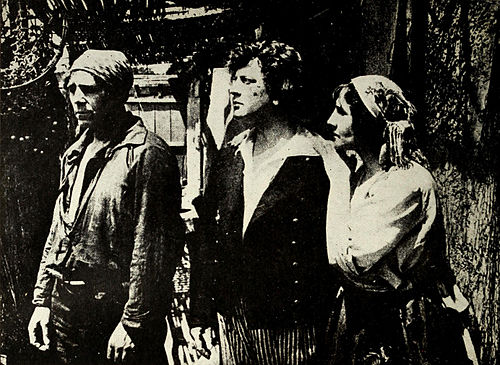
A cabin-boy gets to take center stage during a riotous adventure story involving mutineers and pirates and buried treasure.
Cast & crew
More films like this
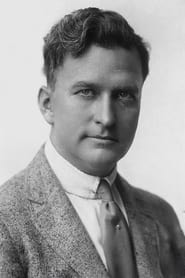
More from Thomas H. Ince
View all →
More about this film
About the production
Release date1911
ProductionIndependent Moving Pictures (IMP)
Filmed inCalifornia
This was one of Thomas H. Ince's early directorial efforts during his time with Independent Moving Pictures, before he established his own studio. The film was produced during the early transition period when the film industry was moving from the East Coast to California. The production utilized outdoor locations to create realistic maritime settings, typical of Ince's approach to authentic filmmaking.
Themes
Themes & topics
Historical background
Viewers around 1911 encountered As a Boy Dreams in a market learning how screen stories could carry social themes as well as spectacle.
Why this film matters
For historians, As a Boy Dreams documents what typical program fare looked like in 1911, not only marquee blockbusters.
Making of
The production of 'As a Boy Dreams' took place during a pivotal moment in film history when the industry was shifting from New York to California. Thomas H. Ince was developing his reputation as an efficient director who could deliver quality films quickly. Working with the Pickford siblings was advantageous as both were already established names in the burgeoning film industry. The maritime setting likely required creative use of California's coastal areas or studio sets, as location shooting was becoming more common but still challenging. The film's adventure elements would have required careful choreography of action sequences, which were becoming increasingly sophisticated by 1911.
What critics said
Specialist writers today emphasize preservation and access when a viewable copy of As a Boy Dreams survives.
Did you know?
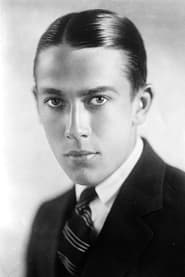
- This film featured both Jack Pickford and his sister Mary Pickford, two of early cinema's biggest stars, working together before Mary became 'America's Sweetheart'
- Thomas H. Ince was still early in his directing career when he made this film, later becoming known as the 'Father of the Western' and pioneering studio production methods
- The film was produced by Independent Moving Pictures (IMP), one of the companies that would eventually merge to form Universal Pictures
- Jack Pickford, Mary's younger brother, was often cast in adventure roles like this one, capitalizing on his youthful appearance and athletic abilities
- 1911 was during the transitional period when films were evolving from short one-reelers to longer, more complex narratives
- The pirate and mutiny themes were extremely popular in early cinema, reflecting the public's fascination with maritime adventures
- This film predates the establishment of Hollywood as the film industry center, making it part of the pre-Hollywood era of American filmmaking
Visual style
The cinematography of 1911 films was still developing technically, typically utilizing static cameras with basic movement. The film would have been shot on black and white film stock, with no color tinting unless it was a special presentation. The maritime setting would have required careful composition to suggest the ocean environment, likely using painted backdrops combined with outdoor locations. Camera techniques would have been straightforward, with medium shots and long shots predominating, as close-ups were still being developed as a narrative tool. The action sequences would have been captured in wide shots to ensure clarity of movement.
Innovations
While 'As a Boy Dreams' was not groundbreaking technically, it represents the standard production values of a quality 1911 film. The film would have been shot on 35mm film at approximately 16 frames per second. The editing would have been relatively simple by modern standards but sophisticated for its time, using continuity editing to tell the story clearly. The production likely used some location shooting combined with studio sets, demonstrating the industry's movement toward more realistic settings. The action sequences would have required careful planning and choreography, representing the growing sophistication of stunt work in early cinema.
Music
As a silent film, 'As a Boy Dreams' would have been accompanied by live musical performance during exhibition. The typical accompaniment would have been a pianist in smaller theaters or a small orchestra in larger venues. The music would have been compiled from popular classical pieces, folk tunes, and stock photoplay music appropriate to the action on screen. Maritime-themed melodies would have been used for the ocean scenes, while dramatic music would accompany the mutiny and pirate sequences. No original composed score was created for films of this period, with theaters using their own music libraries.
Memorable scenes
- The mutiny sequence where the cabin-boy must choose sides
- The discovery of the buried treasure map
- The final confrontation with the pirates
- The transformation scene where the boy proves his bravery
What audiences thought
Audiences in 1911 would have been drawn to 'As a Boy Dreams' primarily by the presence of both Jack and Mary Pickford, who were already establishing themselves as popular performers. The adventure elements of mutiny, pirates, and treasure hunting would have appealed to the broad audiences of nickelodeons and early movie theaters. The film's straightforward narrative and exciting action sequences would have been well-received by audiences still adapting to the language of cinema. The relatively short runtime typical of the period would have made it suitable for the variety-style programming common in theaters of the era.
Film connections
Influenced by
- Popular adventure literature of the period
- Earlier maritime films
- Stage melodramas
- Robert Louis Stevenson's adventure stories
This film influenced
- Later pirate films of the silent era
- Adventure films featuring youthful protagonists
- Maritime adventure genre development
Film restoration
The film is believed to be lost, as is the case with the majority of films from the 1911-1920 period. It is not listed in the major film archives' collections, and no known copies survive. This represents the tragic loss of early cinema history, with an estimated 90% of silent films being lost to time, neglect, and the decomposition of nitrate film stock.
Where to watch
- Not available - the film is considered lost