


At War with the Army
"Barracks rivalry and a pass home"
Keys: Space play/pause · ←/→ 10s · F fullscreen · M mute · </> speed
About this film
Two former nightclub partners are now enlisted in the Army. Sergeant Puccinelli ranks above his former partner, Private First Class Korwin.
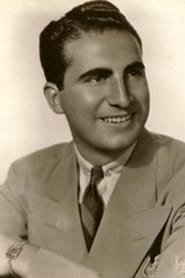
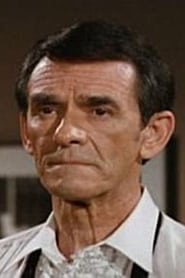
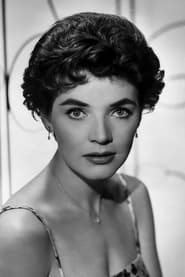
Cast & crew
More Comedy films
View all →






More from Hal Walker
View all →
More about this film
About the production
Release dateDecember 30, 1950
Budget$423,000
Box office$2,500,000 (domestic)
ProductionParamount Pictures, York Pictures Corporation
Filmed inParamount Studios, Hollywood, Los Angeles, California, Fort Ord, California
The film was shot in just 24 days on a modest budget, utilizing existing sets from previous Paramount war films. The production faced challenges with Jerry Lewis's improvisational style, which often deviated from the script but ultimately enhanced the comedy. The military cooperation was secured through the Department of Defense, allowing filming at actual Army installations. This was the first of 16 films Martin and Lewis would make together, establishing their successful screen partnership.
Themes
Military life and bureaucracyFriendship and loyaltyThe contrast between duty and personal desiresPost-war American valuesThe comedy of errors
Themes & topics
armycomedy duomilitary comedybuddy filmpeacetime armysergeantprivatepass requesttransfer requestnightclub partnersmarriagefatherhoodbureaucracyfriendship
Historical background
At War with the Army reached screens around 1950, produced in its country of origin. Postwar distribution and sound standards shaped how it was marketed. Wartime or military themes reflected anxieties visible in contemporary programming.
Why this film matters
Researchers cite At War with the Army when tracing screen culture of its decade. Catalog notes sometimes claim priority in national or technical history.
Making of
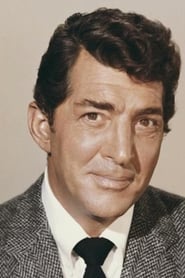
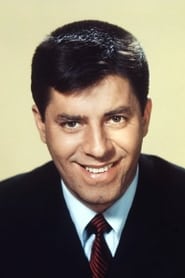
The production of 'At War with the Army' marked the transition of Martin and Lewis from nightclub performers to movie stars. Their chemistry was so evident during filming that Paramount executives immediately recognized their potential as a film duo. Director Hal Walker, who had previously worked with Abbott and Costello, was brought in to handle the military comedy format. The filming process was often chaotic due to Lewis's tendency to ad-lib and Martin's more structured approach to comedy. Despite their different working styles, their on-screen partnership clicked perfectly. The movie was shot quickly to capitalize on their current popularity from their radio show and nightclub performances. Many scenes were improvised on set, with Lewis creating physical comedy bits that weren't in the original script. The success of this film established the template for their subsequent movies, with Martin playing the smooth romantic lead and Lewis as the zany, childlike sidekick.
What critics said
Reviewers in 1950 weighed At War with the Army on clarity, pacing, and audience response rather than prestige status. No single canonical review dominates later reference works for the title.
Did you know?
- This was the first feature film starring the comedy team of Dean Martin and Jerry Lewis, launching their successful film career.
- The film was originally intended as a B-movie but was upgraded to A-feature status after test screenings showed strong audience response.
- Jerry Lewis was paid $25,000 for his role, while Dean Martin received $50,000, reflecting their different levels of fame at the time.
- The movie was based on a play by Sidney Sheldon, who would later become famous for creating TV shows like 'I Dream of Jeannie'.
- Mike Kellin, who plays Sergeant McVey, would later receive an Academy Award nomination for 'Midnight Cowboy' (1969).
- The film's success led to an immediate three-picture deal for Martin and Lewis with Paramount Pictures.
- Many of the military scenes were filmed at Fort Ord, California, with real Army personnel serving as extras.
- The movie was released during the Korean War, making its military setting particularly relevant to contemporary audiences.
- Dean Martin sings two songs in the film: 'I'll Always Love You' and 'The Tickle Toe'.
- The film's title was changed from 'You're in the Army Now' to avoid confusion with a 1941 film of the same name.
Visual style
The cinematography by Stuart Thompson employed standard Hollywood techniques of the era, utilizing the studio system's efficient approach to comedy filming. The visual style emphasized clarity and composition to showcase the physical comedy, particularly Jerry Lewis's elaborate pratfalls and facial expressions. The military setting allowed for symmetrical compositions and orderly framing that contrasted with the chaotic comedy. The film used typical three-point lighting to ensure the stars looked their best, with special attention to Dean Martin's romantic scenes. The camera work was functional rather than innovative, focusing on capturing the comedy effectively rather than creating artistic visuals. The cinematography successfully balanced the film's dual nature as both a comedy and a musical, ensuring both the physical gags and Martin's musical numbers were presented clearly.
Innovations
While 'At War with the Army' was not particularly innovative technically, it demonstrated efficient studio production techniques of the era. The film utilized Paramount's existing soundstages and backlot facilities, showcasing the studio system's ability to produce quality films quickly and economically. The sound recording effectively captured both dialogue and musical numbers, a technical challenge given the film's mix of spoken comedy and singing. The editing by Archie Marshek skillfully timed the physical comedy sequences, particularly Jerry Lewis's elaborate gags, ensuring maximum comedic impact. The film's makeup and costume departments created convincing military uniforms and appearances while allowing for the comedy to shine through. The production's use of actual military locations added authenticity that wouldn't have been possible with studio sets alone.
Music
The musical score was composed by Joseph J. Lilley, who created upbeat, military-themed background music that complemented the film's comedic tone. Dean Martin performed two musical numbers: 'I'll Always Love You' (a romantic ballad) and 'The Tickle Toe' (an upbeat jazz number). These songs showcased Martin's smooth singing style and served as showcases for his talents beyond comedy. The soundtrack also included various military marches and period-appropriate music that enhanced the Army setting. The musical sequences were integrated naturally into the narrative, with Martin's character often breaking into song during appropriate moments. The score utilized typical 1950s orchestral arrangements with brass and woodwind sections prominent in the military-themed pieces.
Famous quotes
Sergeant Puccinelli: 'You know, Korwin, you're the only man I know who could get lost in a phone booth.'
Private Korwin: 'I'm not a private, I'm a private first class! That's one step above private!'
Sergeant Puccinelli: 'I've been trying to get overseas for six months. They keep telling me I'm too valuable here.'
Private Korwin: 'My wife had a baby! Seven pounds, six ounces... and that was just the doctor's bill!'
Sergeant Puccinelli: 'You're not just a private, you're a menace to society!'
Memorable scenes
- The chaotic medical examination scene where Jerry Lewis's character attempts to fake various illnesses to get a pass, resulting in physical comedy with tongue depressors and reflex hammers.
- The mess hall sequence where Lewis tries to eat while simultaneously hiding from his sergeant, leading to food flying everywhere and military precision completely breaking down.
- The final scenes where both characters desperately try to achieve their goals - Martin getting his transfer and Lewis getting his pass - culminating in a frantic race through the army base.
- The opening scenes establishing their contrasting personalities as Martin smoothly handles military protocol while Lewis fumbles with even the simplest tasks.
- The scene where Lewis attempts to use the field telephone, getting tangled in wires and accidentally connecting multiple conversations in a classic comedy of errors.
What audiences thought
Audiences in 1950 embraced 'At War with the Army' enthusiastically, turning it into a surprise hit that exceeded box office expectations. The film's success was largely driven by Martin and Lewis's existing fan base from their radio show 'The Martin and Lewis Show' and their nightclub performances. Moviegoers were excited to see their favorite comedy team on the big screen, and the film delivered exactly what they expected: lighthearted entertainment, musical numbers, and plenty of laughs. The movie played to packed theaters across the country, particularly in urban areas where Martin and Lewis were most popular. Audience word-of-mouth was extremely positive, with many viewers returning to see the film multiple times. The strong reception convinced Paramount Pictures to invest heavily in future Martin and Lewis vehicles, making them one of the studio's most valuable assets throughout the decade.
Film connections
Influenced by
- Abbott and Costello films
- Bob Hope and Bing Crosby road movies
- World War II military comedies
- Vaudeville comedy traditions
- Broadway musical comedy
This film influenced
- Jumping Jacks (1952)
- The Stooge (1951)
- Sailor Beware (1952)
- The Caddy (1953)
- Artists and Models (1955)
Film restoration
The film has been preserved by Paramount Pictures and exists in the studio's archive. It was released on VHS in the 1980s and later on DVD as part of Martin and Lewis collections. The original film elements are in good condition, and the movie has been digitally restored for modern home media releases. No restoration efforts have been needed beyond standard digital cleanup for home video formats.
Where to watch
- Available on DVD from Paramount Home Entertainment
- Streaming on Paramount+ (subscription required)
- Available for digital purchase on Amazon Prime Video and iTunes
- Occasionally airs on Turner Classic Movies
- Available through various streaming services specializing in classic films