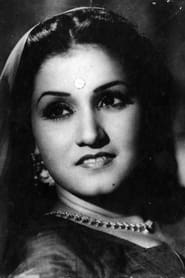

Badi Maa
"A surrogate mother’s boundless sacrifice"
Keys: Space play/pause · ←/→ 10s · F fullscreen · M mute · </> speed
About this film
A devoted woman, Badi Maa dedicates her life to raising her deceased friend's child, her love and sacrifices influencing all around her, leading to emotional conflicts as the child matures.
Cast & crew
More films like this
More Drama films
View all →







More about this film
About the production
Release date1945
ProductionPrafull Pictures
Filmed inBombay (now Mumbai)
Badi Maa was produced during the final years of British colonial rule in India, a period when the Indian film industry was establishing itself as a powerful medium of cultural expression. The film was made under challenging circumstances due to wartime restrictions and limited resources, yet managed to achieve high production values typical of Master Vinayak's films.
Themes
Maternal love and sacrificeFamily bonds and relationshipsSelflessness and devotionSocial responsibilityWomen's roles in society
Themes & topics
adoptionsingle motherchild raisingemotional dramafamily valuessacrificelovefriendshipsocial issuesmaternal instinct
Historical background
Badi Maa appeared in 1945, when wartime and immediate postwar filmmaking shaped how movies were financed, distributed, and discussed. Audiences of the day encountered the work amid shifting tastes in acting, pacing, and spectacle. Its focus on a devoted woman, badi maa dedicates her life to raising her deceased friend's child, her love and sacrifices influencing all around her, leading to emotional conflicts as the child matures mirrors themes circulating in popular culture of that moment.
Why this film matters
Badi Maa (1945) belongs to the wider archive of world cinema, documenting a devoted woman, badi maa dedicates her life. Archivists and historians value such titles for what they reveal about craft, genre, and audience expectations. Restorations and festival screenings keep the work visible to viewers far beyond its first run.
Making of
The making of Badi Maa was marked by the collaborative synergy between Master Vinayak and Noor Jehan, who had developed a strong professional rapport through their previous films together. Vinayak, known for his meticulous direction and attention to emotional detail, worked closely with Noor Jehan to bring out the nuanced performance required for the titular role. The film was shot in Bombay's studios during a period when the Indian film industry was grappling with wartime shortages and restrictions. Despite these challenges, the production team managed to create elaborate sets and costumes that reflected the era's aesthetic. The emotional scenes between Noor Jehan and the child actor were reportedly filmed over multiple takes to achieve the desired authenticity, with Vinayak often providing personal direction to elicit the right emotions from his cast.
What critics said
Press coverage from 1945 is fragmentary for many titles of this vintage; surviving notices for Badi Maa tend to stress novelty, star power, or topical appeal. Later writing places the picture within its national and generic context, weighing both period conventions and moments that still land for modern viewers. Streaming and disc releases have revived discussion among classic-film audiences.
Did you know?
- This was one of the last films Noor Jehan made in India before she moved to Pakistan after the partition in 1947
- Master Vinayak was a pioneering director in Indian cinema who discovered and mentored the Lata Mangeshkar
- The film was notable for its progressive portrayal of a woman's role in society during the conservative 1940s
- Noor Jehan was not only the lead actress but also sang several songs in the film, showcasing her dual talent
- The film's title 'Badi Maa' translates to 'Elder Mother' or 'Big Mother' in English
- Master Vinayak and Noor Jehan had previously collaborated on several successful films
- The film was released during the crucial period just before India's independence, reflecting the social changes of the time
- The child actor in the film was reportedly discovered by Master Vinayak during a local talent search
- The film's music was composed by Datta Davjekar, who was a prominent music director of that era
- This film was remade later with different cast members, but the 1945 version is considered the definitive one
Visual style
The cinematography of Badi Maa was handled with the technical sophistication characteristic of mid-1940s Indian cinema. The film utilized natural lighting techniques that were becoming increasingly common in Indian productions, moving away from the harsh artificial lighting of earlier films. The camera work emphasized close-up shots during emotional scenes, particularly in sequences featuring Noor Jehan, to capture the subtle nuances of her performance. The film's visual style incorporated elements of both traditional Indian aesthetics and contemporary cinematic techniques of the time. The cinematographer made effective use of shadow and light to enhance the dramatic impact of key scenes, particularly those involving moments of emotional revelation or conflict.
Innovations
Badi Maa demonstrated several technical achievements that were noteworthy for its time. The film employed advanced sound recording techniques that allowed for clearer dialogue and music reproduction, a significant improvement over earlier Indian films. The production utilized sophisticated editing techniques to maintain narrative flow and emotional pacing, particularly in the dramatic sequences. The film's makeup and costume design were particularly praised for their authenticity and attention to period detail. The special effects, though minimal by modern standards, were effectively used to enhance key dramatic moments. The film also showcased improved set design and construction techniques that allowed for more elaborate and realistic indoor scenes, contributing to the overall visual quality of the production.
Music
The music of Badi Maa was composed by Datta Davjekar, one of the prominent music directors of the 1940s Indian film industry. The soundtrack featured several songs that became popular with audiences, many of which were sung by Noor Jehan herself, showcasing her remarkable vocal talent. The music incorporated elements of both classical Indian ragas and contemporary popular styles, reflecting the evolving sound of Indian cinema music during that period. The songs were strategically placed within the narrative to enhance emotional moments and advance the plot. The lyrics, written by notable poets of the time, emphasized themes of love, sacrifice, and family values that aligned with the film's central narrative. The soundtrack's success contributed significantly to the film's overall popularity and helped establish the musical conventions that would influence Indian cinema for decades to come.
Famous quotes
A mother's love is the purest form of devotion
Sacrifice is not weakness, but the greatest strength
A child's happiness is a mother's greatest achievement
True family is bound by love, not blood
In raising others' children, we find our own purpose
Memorable scenes
- The emotional scene where Badi Maa first takes the child into her care, showing her immediate maternal connection
- The confrontation scene where Badi Maa defends her decision to raise the child against societal criticism
- The poignant moment when the grown child discovers the truth about their parentage and Badi Maa's sacrifices
- The final emotional reunion scene that brings the narrative to its powerful conclusion
What audiences thought
Badi Maa was received with great enthusiasm by audiences upon its release in 1945. The film's emotional narrative and relatable themes of family, sacrifice, and maternal love struck a chord with viewers across different segments of society. The performance of Noor Jehan, who was already a popular star, drew large crowds to theaters. The film's songs became popular and were frequently played on radio programs of the time. Audience response was particularly strong in urban centers like Bombay, Calcutta, and Madras, where cinema had become an important part of cultural life. The film's success at the box office demonstrated the growing appetite for socially relevant dramas in Indian cinema and helped establish the template for family-oriented films that would become a staple of Indian cinema in subsequent decades.
Film connections
Influenced by
- Earlier Indian social dramas
- Traditional Indian family narratives
- Theatrical traditions of Indian drama
- Contemporary Hollywood family films
- Classical Indian literature themes
This film influenced
- Later Indian family dramas
- Films exploring maternal themes
- Social issue films in Indian cinema
- Post-independence Indian cinema narratives
Film restoration
Like many films from the 1940s Indian cinema, Badi Maa faces preservation challenges due to the deterioration of original film prints and limited archival resources. Some portions of the film may be lost or in poor condition, though efforts have been made by film archives to preserve what remains. The National Film Archive of India and other preservation organizations have been working to restore and digitize films from this era, though the complete restoration of Badi Maa remains an ongoing process.
Where to watch
- Available on some classic Indian film streaming platforms
- Occasionally screened at classic film festivals and retrospectives
- Archival screenings at film institutes and museums
- Some portions may be available on video sharing platforms
- Film archives and libraries with classic Indian cinema collections