Big Man from the North
"Bosko the Mountie gets his man"
Keys: Space play/pause · ←/→ 10s · F fullscreen · M mute · </> speed
About this film
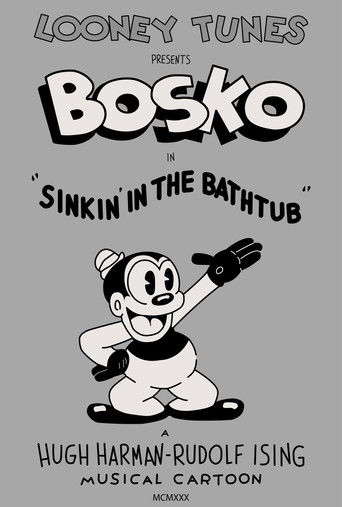
Bosko is a Mountie in the cold, snowy north. His sergeant demands that he get his man: a peg-legged villain wanted dead or alive.
Cast & crew
More films like this
More Crime films
View all →

More from Rudolf Ising
View all →
More about this film
About the production
Release dateJanuary 10, 1931
BudgetApproximately $2,000 - $3,000 (Estimated based on standard Harman-Ising Looney Tunes budgets of the era)
ProductionHarman-Ising Productions, Leon Schlesinger Studios, The Vitaphone Corporation
Filmed inHollywood, California (Animation Studio)
This short was one of the earliest entries in the Looney Tunes series, produced during the transition from silent to sound cinema. Unlike Disney, who had to pay for music rights, Harman and Ising had full access to the extensive Warner Bros. music library, which allowed them to incorporate popular contemporary songs at no additional cost. The production utilized the Vitaphone sound-on-disc system, though it was rapidly being superseded by sound-on-film technology. The animation was handled by a small team including future industry legend Friz Freleng.
Themes
Duty and PerseveranceMan vs. NatureThe Hero's JourneyMusical Escapism
Themes & topics
MountieCanadaBlizzardSaloonOutlawPeg-legPiano playingDog sledWanted posterBlackout
Historical background
Made in 1931, Big Man from the North reflects production norms of the studio-system peak and early sound decades—shorter runtimes, regional audiences, and limited preservation infrastructure.
Why this film matters
Historians reference Big Man from the North (1931) when discussing 1931 film by Rudolf Ising, Hugh Harman.
Making of
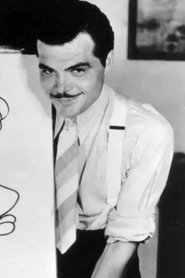
The film was directed by the duo Hugh Harman and Rudolf Ising, who had recently left Walt Disney's studio after a dispute with Charles Mintz. They created Bosko to capitalize on the 'talkie' craze, emphasizing synchronized dialogue more than Disney's early shorts, which focused primarily on music. During production, the animators faced the challenge of working with limited budgets—roughly one-third of what Disney spent per short—which led to the frequent reuse of animation cycles and stock footage. The voice of Bosko was provided by Carman Maxwell, while the musical score was composed by Frank Marsales, who led the first dedicated music department for Warner Bros. cartoons.
What critics said
Trade and revival screenings have kept Big Man from the North (1931) on the map for collectors and scholars rather than mass first-run promotion.
Did you know?
- This is the sixth official Looney Tunes short ever produced.
- The villain in the film is a peg-legged outlaw who bears a striking resemblance to Disney's Peg-Leg Pete.
- A recurring gag in the film involves the characters' legs stretching to immense lengths while their bodies remain level as they travel over hills.
- The cartoon features a 'blackout' gag where Bosko spits at a light to darken the room, a common trope in early 1930s animation.
- The opening title screen is humorously 'blown away' by the animated blizzard depicted in the background.
- The song 'Chinnin' and Chattin' with May' is featured prominently, having been recycled from the previous Bosko short, 'Box Car Blues'.
- Billboard magazine reviewed the short on January 17, 1931, praising its 'intricate action and background.'
- The film is considered 'Pre-Code,' containing slapstick violence and a gag where the villain is poked with a sword and runs out naked.
- Bosko's design was intended to be a 'cartoony version' of Al Jolson from 'The Jazz Singer' (1927).
- The animation of the dogs merging into a single ball after a crash was a gag 'borrowed' from the 1929 Mickey Mouse short 'The Plowboy'.
Visual style
The film utilizes the 'rubber-hose' style of animation, characterized by limbs without elbows or knees that move with extreme fluidity. Notable visual techniques include the use of 'multi-plane' style depth gags, such as the falling snow being layered over the background and characters. The 'blackout' sequence shows an early experimentation with using negative space and lighting to drive a comedic narrative.
Innovations
The film is an early example of sophisticated lip-syncing in animation, a technique Harman and Ising pioneered to differentiate themselves from their competitors. It also features complex 'cycle' animation for the blizzard and the dog sled team, which was technically demanding for the small staff of the time.
Music
The soundtrack is a mix of original scoring by Frank Marsales and popular Warner Bros. licensed music. Key songs include 'Chinnin' and Chattin' with May' and 'The Song of the Mounties.' The film is notable for its 'mickey-mousing' technique, where the music precisely mimics the physical actions on screen, such as the rhythm of the dogs' paws or the impact of a fall.
Famous quotes
Mmm! Dat sho' is fine! (Bosko's signature catchphrase, used upon succeeding or enjoying music)
I'll get my man! (Bosko's declaration upon receiving his orders)
Memorable scenes
- The opening scene where the blizzard is so strong it literally blows the 'Looney Tunes' title card off the screen.
- The sequence where Bosko and his sergeant struggle to close the cabin door against the wind, resulting in the sergeant losing his pants.
- The musical break in the saloon where Bosko plays a 'piano solo' that involves him physically interacting with the instrument in surreal ways.
- The final confrontation where Bosko uses a trick gun that shoots a cork, leading to a frantic chase in the dark.
What audiences thought
Early 1930s audiences embraced Bosko as a cheerful, musical hero, making him the first true 'star' of the Warner Bros. cartoon library. The short's mix of slapstick and catchy music was a hit in theaters, helping Looney Tunes compete with Disney's Mickey Mouse. Today, the film is mostly watched by animation enthusiasts and historians via public domain collections.
Film connections
Influenced by
- The Jazz Singer (1927)
- Disney's Mickey Mouse shorts (specifically 'The Plowboy')
- North-West Mounted Police pulp stories
This film influenced
- Dudley Do-Right (Jay Ward Productions)
- The Musical Mountaineer (1939)
- Later Looney Tunes 'Northwest' parodies
Film restoration
The film is preserved and exists in the public domain. It has been featured in various 'Golden Age of Animation' collections and was included as a bonus feature on the 'Smart Money' DVD as part of the Warner Bros. 'Night at the Movies' series.
Where to watch
- YouTube (Public Domain uploads)
- HBO Max (as part of the Looney Tunes library)
- Looney Tunes Golden Collection Volume 3 (DVD)
- Internet Archive