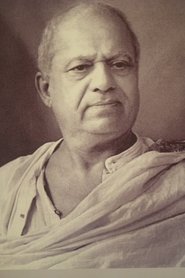
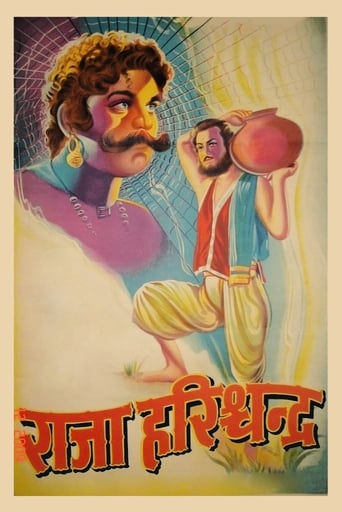
Birth of Shri Krishna
"Beyond the begins"
Keys: Space play/pause · ←/→ 10s · F fullscreen · M mute · </> speed
About this film
begins with the invocation of 'almighty god' at a river where several people are gathered. The child god Krishna rises out of the water astride the demon snake Kaliya. Then we see Yashoda as she rocks the sleeping Krishna's crib and imagines the god as Gopala.
Cast & crew
More films like this
More Drama films
View all →







More from Dhundiraj Govind Phalke
View all →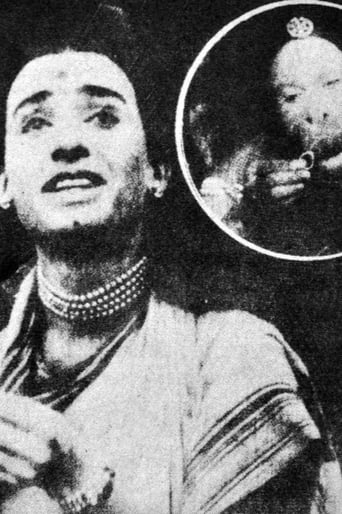
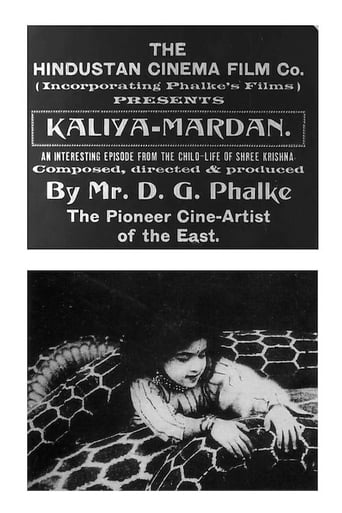
More about this film
About the production
Release date1918
BudgetNot documented - typical of Phalke's era where budgets were minimal and self-funded
Box officeNot documented - box office tracking was not systematic in 1918 Indian cinema
ProductionPhalke Films
Filmed inNashik, Maharashtra, India
was created during the peak of Dadasaheb Phalke's mythological film period, using primitive camera equipment and natural lighting. The special effects, particularly the multiple Krishna figures surrounding Kamsa, were achieved through in-camera techniques and multiple exposure photography, which were highly innovative for 1918. The underwater sequence with Krishna on Kaliya was particularly challenging, requiring creative staging in shallow water tanks. Like many of Phalke's films, the production was a family affair with his wife Saraswatibai handling costumes and his children participating in various capacities.
Themes
Divine interventionGood versus evilReligious devotionThe power of faithMythology as cultural identity
Themes & topics
KrishnaMythologyDivine birthKaliya the serpentKamsaYashodaReligious visionSupernaturalHindu mythologySilent filmSpecial effectsDevotional
Historical background
Made in its country of production around 1918, Birth of Shri Krishna belongs to the silent era's formative years. Its story of begins with the invocation of 'almighty god' at a river where several people are gathered spoke to audiences of the day through familiar genres and topical settings.
Why this film matters
Archivists and historians still cite Birth of Shri Krishna when tracing how the silent era's formative years filmmakers staged begins and invocation on screen.
Making of
Dadasaheb Phalke, often called the father of Indian cinema, faced numerous challenges while making . He had to build his own camera equipment and often processed film in makeshift darkrooms. The special effects, particularly the multiple Krishna figures, required innovative use of multiple exposure techniques that were groundbreaking for Indian cinema. The cast, drawn from traditional theater backgrounds, had to adapt their exaggerated acting style for the silent film medium. Phalke's wife Saraswatibai played a crucial role behind the scenes, managing costumes and props. The underwater sequence with the demon snake Kaliya was particularly ambitious, requiring the construction of special water tanks and careful choreography. The film's religious subject matter made it acceptable to conservative Indian audiences while showcasing Indian culture and mythology to the world.
What critics said
Reviews from 1918 weighed Birth of Shri Krishna on pacing, performance, and novelty. Later criticism reads its emphasis on begins, invocation, almighty through modern standards of craft and representation.
Did you know?
- This was one of over 90 films directed by Dadasaheb Phalke during his career
- The film was made during the British colonial period when Indian cinema was still finding its identity
- Phalke often cast family members in his films, though the main roles here were played by professional theater actors
- The multiple Krishna effect was achieved using a primitive version of what we now call split-screen photography
- Like many early Indian films, this was heavily inspired by traditional Indian theater forms and religious paintings
- The film was shot on hand-cranked cameras, making consistent frame rates challenging
- Intertitles were in both English and regional languages to reach broader audiences
- Phalke had to import film stock from England, making production expensive and logistically difficult
- The underwater sequences were filmed in specially constructed tanks rather than actual rivers
- was part of Phalke's series of mythological films that helped establish Indian cinema's religious narrative tradition
Visual style
The cinematography in Birth of Shri Krishna reflects the technical limitations and creative innovations of 1918 Indian cinema. Shot on hand-cranked cameras with natural lighting, the film demonstrates Phalke's mastery of early cinematic techniques. The underwater sequence required creative solutions for capturing movement in water, likely using specially constructed tanks and careful camera positioning. The multiple exposure technique used to show several Krishnas surrounding Kamsa was particularly sophisticated for its time. The visual composition draws heavily from Indian religious art, with careful attention to symbolic positioning and traditional iconography. Camera work was static for the most part, as moving shots were technically difficult, but Phalke used creative staging within the frame to create dynamic scenes. The black and white photography emphasized contrast and shadow, particularly effective in the dramatic confrontation scenes between good and evil characters.
Innovations
Birth of Shri Krishna showcased several technical innovations for its time in Indian cinema. The multiple exposure technique used to create the illusion of multiple Krishnas was particularly advanced for 1918. The underwater filming with Krishna on the demon snake Kaliya demonstrated creative problem-solving with limited equipment. Phalke's use of special effects to depict supernatural phenomena, such as Kamsa's visions, pushed the boundaries of what was technically possible in early Indian cinema. The film also demonstrated sophisticated use of editing techniques to create dramatic tension and narrative flow. The production involved careful planning of visual effects that would be convincing to audiences while being achievable with primitive equipment. These technical achievements were particularly impressive given that Phalke was working largely in isolation, with limited access to international cinema developments and having to improvise many solutions himself.
Music
As a silent film, Birth of Shri Krishna had no recorded soundtrack but would have been accompanied by live music during theatrical screenings. Typically, such films featured harmonium, tabla, and other traditional Indian instruments, with musicians often improvising based on the on-screen action. The musical accompaniment would have included devotional songs (bhajans) and classical ragas appropriate to the mythological subject matter. The theater's orchestra or ensemble would coordinate their performance with cue sheets provided by the filmmakers, indicating when to play specific types of music for different scenes. The absence of recorded dialogue meant that intertitles carried the narrative forward, while the music conveyed emotional tone and dramatic emphasis. This live musical element was crucial to the audience experience and helped bridge the gap between traditional religious storytelling and the new medium of cinema.
Famous quotes
May this humble offering be accepted by the Lord
Almighty god invocation from the opening river scene
Memorable scenes
- The dramatic emergence of Krishna from the river waters astride the demon serpent Kaliya, showcasing early special effects mastery
- Kamsa's terrifying vision of multiple Krishnas surrounding him, achieved through innovative multiple exposure photography
- The tender domestic scene of Yashoda rocking the infant Krishna's cradle, humanizing the divine narrative
- The surreal sequence of Kamsa's severed head rising and falling, representing his psychological torment
- The final unifying scene showing people of all castes paying homage to Krishna, emphasizing spiritual equality
What audiences thought
The film was reportedly well-received by contemporary Indian audiences, who were fascinated by seeing their religious stories and deities depicted on screen for the first time. The mythological subject matter made it acceptable to conservative Indian families who might otherwise have been hesitant about cinema. The visual spectacle, particularly the special effects showing Krishna's divine powers, drew crowds and generated word-of-mouth publicity. Like many of Phalke's films, it likely attracted both educated urban audiences and rural viewers who came to see their familiar religious stories in a new format. The film's success helped establish the commercial viability of Indian cinema with indigenous themes rather than just imitating Western films. Audience reactions were particularly strong to the religious elements, with many viewers treating the film screening as a form of worship or religious experience.
Film connections
Influenced by
- Traditional Indian temple art and sculpture
- Classical Indian miniature paintings
- Folk theater traditions (Jatra, Tamasha)
- Classical Hindu religious texts (Bhagavata Purana)
- Harikatha traditional storytelling form
- Indian religious iconography
This film influenced
- Subsequent Indian mythological films of the 1920s-1950s
- Later Krishna biographical films
- Indian religious cinema tradition
- Mythological television serials about Krishna
Film restoration
Like many films from India's silent era, the preservation status of Birth of Shri Krishna is uncertain. Many of Dadasaheb Phalke's early films have been lost due to the fragile nature of early film stock and inadequate preservation facilities in colonial India. Some fragments or still photographs may exist in archives such as the National Film Archive of India, but a complete version may be lost. The film's historical significance has led to ongoing efforts to locate and preserve any surviving copies or fragments. Some scenes or stills from the film have been reproduced in books about early Indian cinema, suggesting at least partial survival. The exact preservation status remains unclear, which is common for films of this vintage from India.
Where to watch
- Due to its age and uncertain preservation status, is not commercially available. Potential viewing opportunities include: Film archives and museums specializing in early cinema (National Film Archive of India), Special screenings at film festivals focusing on classic or restored films, Academic institutions with film studies departments, Online archives of early Indian cinema (if digitized copies exist), Retrospective screenings at cinematheques or film societies