

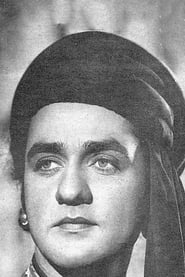
Chand
"Unrequited admirer"
Keys: Space play/pause · ←/→ 10s · F fullscreen · M mute · </> speed
About this film
A musician's move to Bombay ignites a love triangle with his new landlord's daughter and his former, unrequited admirer. Misunderstandings and family opposition lead to separation, but a fateful reunion during a crisis ultimately brings the true lovers together with a happy ending.
Cast & crew
More films like this
More Romance films
View all →




More from D.D. Kashyap
View all →
More about this film
About the production
Release date1944
ProductionFilmistan
Filmed inBombay (now Mumbai), India
Chand was produced during the peak of the Bombay film industry's golden era, at Filmistan studios which was known for its high-quality productions. The film featured elaborate musical sequences and dramatic set pieces typical of 1940s Indian cinema. The production faced challenges due to wartime restrictions on film stock and resources, yet managed to create a visually impressive film that showcased the technical capabilities of Indian cinema at the time.
Themes
Love and sacrificeUrban migration and displacementArtistic struggle and successFamily opposition to romanceDestiny and reunion
Themes & topics
musicianlove triangleBombaymisunderstandingfamily oppositionseparationreunioncrisisromanceurban lifeartistlandlord's daughterunrequited lovefateful meeting
Historical background
Chand (1944) emerged during World War II and immediate postwar filmmaking, when exhibition habits and national film industries were still taking shape.
Why this film matters
Chand remains accessible through digital archives, giving modern viewers a direct link to 1944 screen culture.
Making of
The making of Chand was marked by the collaborative efforts of some of the most talented artists of the era. Director D.D. Kashyap was known for his meticulous attention to detail and his ability to extract nuanced performances from his actors. The casting of Prem Adib, who was primarily known for mythological roles, in a contemporary romantic drama was considered a bold move that paid off tremendously. The film's production took place at the newly established Filmistan studios, which was founded by industry veterans seeking creative independence. The musical sequences were particularly challenging to film, requiring multiple takes to capture the perfect blend of dance, music, and emotion. The chemistry between the lead actors was so authentic that rumors of off-screen romance circulated, though these were never confirmed. The film's cinematography employed innovative lighting techniques to create the moonlit atmosphere suggested by the title, with the technical team experimenting with new methods to achieve the desired visual effects.
What critics said
Trade and revival screenings have kept Chand (1944) on the map for collectors and scholars rather than mass first-run promotion.
Did you know?
- Prem Adib was especially popular actors of the 1940s, often called the 'Jewel of Indian Cinema' for his performances in mythological films
- Begum Para was known as the 'Marilyn Monroe of Bollywood' for her glamorous screen presence and was one of the first Indian actresses to wear Western-style outfits on screen
- Sitara Devi was a renowned Kathak dancer in real life, and her dance sequences in the film were particularly celebrated
- The film was released during World War II, a time when the Indian film industry was facing significant challenges including shortages of film stock
- Filmistan, the production company, was founded in 1943 by actors who had broken away from Bombay Talkies, making Chand one of their early successful productions
- The film's music was composed by Gyan Dutt, who was known for his ability to blend classical Indian music with contemporary film needs
- Chand was one of the earliest films to explore the urban migration theme, depicting the challenges faced by artists moving to Bombay
- The film's title 'Chand' means 'Moon' in Hindi, symbolizing the romantic and luminous nature of the story
- The movie was released in the same year as several other notable Indian classics, making 1944 a significant year in Indian cinema history
Visual style
The cinematography of Chand was handled with artistic sensibility characteristic of 1940s Indian cinema at its finest. The visual style employed dramatic lighting techniques to enhance the romantic atmosphere, particularly in scenes shot at night or in moonlight, reinforcing the film's title symbolism. The camera work was innovative for its time, using tracking shots to follow dance sequences and creating a sense of movement that complemented the musical numbers. Close-ups were effectively used to capture the emotional nuances of the performances, particularly during the film's dramatic confrontations and romantic moments. The cinematographer experimented with different lighting setups to create distinct moods for various scenes, using soft lighting for romantic sequences and more dramatic lighting for moments of conflict. The film's visual composition paid careful attention to framing, often using architectural elements of Bombay's urban landscape as backdrops that enhanced the storytelling. The technical quality of the cinematography was noted for its consistency and attention to detail, setting a standard for contemporary productions.
Innovations
Chand demonstrated several technical achievements that were noteworthy for its time. The film's production quality was enhanced by Filmistan's investment in modern equipment and facilities, which were among the best in Indian cinema during the 1940s. The sound recording techniques employed in the film were advanced for the period, particularly in the capture of musical sequences and dance performances. The editing of the film showed sophistication in its pacing and transition between scenes, helping maintain narrative flow despite the film's substantial length. The special effects used to create atmospheric elements, particularly in the moonlight scenes, were innovative for Indian cinema of the era. The film's set design was elaborate and detailed, creating convincing representations of Bombay's urban environment and interior spaces. The costume design reflected both contemporary fashion and traditional Indian attire, contributing to the film's visual appeal and character development. The technical team successfully overcame wartime resource limitations to deliver a polished final product that rivaled international standards of the time.
Music
The soundtrack of Chand was composed by Gyan Dutt, with lyrics penned by various poets of the era. The music blended classical Indian ragas with contemporary film music sensibilities, creating a sound that was both traditional and modern. The film featured approximately 8-10 songs, each carefully integrated into the narrative to advance the plot or reveal character emotions. The romantic numbers were particularly popular, with melodies that emphasized the emotional journey of the protagonists. Sitara Devi's dance sequences were accompanied by specially composed music that showcased her Kathak training while appealing to popular tastes. The songs were recorded using the technology available in the 1940s, yet the sound quality was considered superior to many contemporary productions. The soundtrack's success contributed significantly to the film's popularity, with several songs becoming enduring classics that were played on radio for years after the film's release. The music arrangements featured traditional Indian instruments alongside Western orchestral elements, reflecting the cosmopolitan nature of Bombay's film industry.
Famous quotes
Music is the language of the heart, and my heart speaks only of you
In this vast city of Bombay, I found not just fame, but the love I never knew I was searching for
Destiny may separate us, but true love always finds its way back
Memorable scenes
- The emotional confrontation scene where the lovers face family opposition, showcasing powerful performances by the lead actors
- The moonlit musical sequence where Prem Adib's character expresses his love through song, featuring innovative cinematography and lighting
- The climactic reunion scene during the crisis, where misunderstandings are finally resolved and true love triumphs
- Sitara Devi's spectacular dance performance that combines classical Kathak with cinematic presentation
What audiences thought
Chand was well-received by audiences upon its release in 1944, particularly attracting urban viewers who could relate to its contemporary setting and themes. The film's romantic storyline resonated with moviegoers, and its songs became popular on radio and in public performances. The chemistry between Prem Adib and his co-stars was a major draw for audiences, with their on-screen pairing generating significant fan following. The film's success at the box office helped establish the romantic drama genre as a commercial staple in Indian cinema. Audience appreciation for the film's dance sequences and musical numbers contributed to its popularity, with several songs becoming enduring classics. The film's themes of love, sacrifice, and reunion struck a chord with viewers during the tumultuous period of World War II, offering both entertainment and emotional catharsis. Word-of-mouth recommendations helped sustain the film's theatrical run, and it was subsequently re-released in some markets due to popular demand.
Film connections
Influenced by
- Traditional Indian romantic literature
- Contemporary social dramas of the 1940s
- Bollywood's emerging romantic genre conventions
- Classical Indian performing arts traditions
This film influenced
- Subsequent Bollywood romantic dramas of the late 1940s and 1950s
- Films featuring musician protagonists
- Urban romance narratives in Indian cinema
Film restoration
Chand is considered a partially preserved film from the 1940s era of Indian cinema. Like many films from this period, complete archival copies are rare, though portions of the film have been preserved through various sources. The National Film Archive of India has made efforts to locate and preserve surviving prints and fragments of the film. Some songs and sequences from the film have survived in better condition than the complete narrative, particularly the musical numbers which were often preserved separately for radio broadcast. Film restoration enthusiasts and private collectors have contributed to the preservation efforts by maintaining available copies. The film's historical significance has led to ongoing attempts to locate and restore missing portions, though the challenges of preserving nitrate film stock from this era remain substantial. Digital restoration of available elements has been undertaken by film preservation organizations, ensuring that at least parts of this important film remain accessible to future generations.
Where to watch
- Available in partial form on YouTube through archival channels
- Some sequences preserved at the National Film Archive of India for research purposes
- Occasionally screened at classic Indian film festivals and retrospectives
- Audio versions of songs available on various Indian classical music archives and streaming platforms