Children of the Age
"Shopping afternoons and a bank clerk’s charm"
Keys: Space play/pause · ←/→ 10s · F fullscreen · M mute · </> speed
About this film
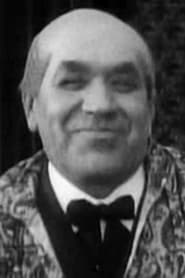
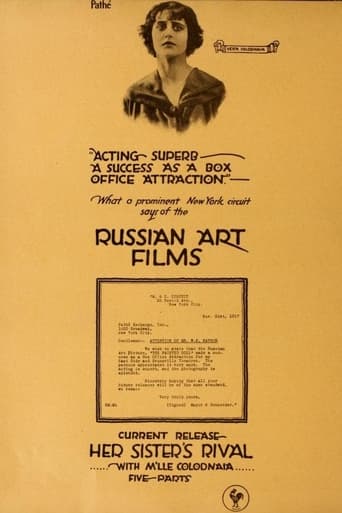
Maria, wife of a bank clerk, enjoys a comfortable life while a maid cares for their baby and she spends afternoons shopping. During one outing she meets a handsome stranger, and Yevgeni Bauer's melodrama traces how consumer desire and betrayal unravel her bourgeois household.
Cast & crew
More films like this
More Drama films
View all →







More from Yevgeni Bauer
View all →
More about this film
About the production
Release date1915
Box officeBox office records from 1915 Russian cinema are not preserved
ProductionKhanzhonkov Company
Filmed inMoscow, Russian Empire
The film was produced by Alexander Khanzhonkov's company, one of Russia's first major film studios. Director Yevgeni Bauer was known for his sophisticated visual style and psychological depth. The production took place during World War I, which created challenges for the Russian film industry including material shortages and personnel being called to military service.
Themes
Moral corruption and innocence lostSexual harassment and predationBourgeois decadenceThe dangers of materialismClass conflict and social ambition
Themes & topics
sexual harassmentmoral corruptionbourgeois societyinfidelitytemptationpredationsocial climbingmarriageinnocence lostwealth and power
Historical background
Children of the Age appeared in 1915, when the silent era before Hollywood consolidated into a studio system shaped how movies were financed, distributed, and discussed. Audiences of the day encountered the work amid shifting tastes in acting, pacing, and spectacle. Its focus on the picture depicts maria, a devoted wife of a bank employee mirrors themes circulating in popular culture of that moment.
Why this film matters
Children of the Age (1915) belongs to the wider archive of world cinema, documenting the picture depicts maria, a. Archivists and historians value such titles for what they reveal about craft, genre, and audience expectations. Restorations and festival screenings keep the work visible to viewers far beyond its first run.
Making of
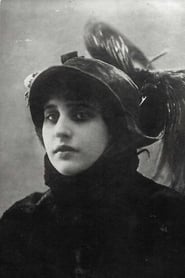
Children of the Age was created during the golden age of Russian cinema, just before the Bolshevik Revolution would dramatically transform the country's film industry. Director Yevgeni Bauer, who had previously worked as a set designer and architect, brought a distinctive visual sophistication to his films, using elaborate sets and innovative camera techniques. The casting of Vera Kholodnaya proved to be a masterstroke, as her ethereal beauty and emotional intensity perfectly embodied the film's themes of innocence corrupted. The production faced the challenges of wartime Russia, including shortages of film stock and the mobilization of many industry workers. Despite these difficulties, Bauer maintained his high artistic standards, creating what was considered among the leading psychologically sophisticated films of its era. The film's exploration of sexual predation and moral compromise was daring for 1915, reflecting the social anxieties of a society on the brink of revolution.
What critics said
Press coverage from 1915 is fragmentary for many titles of this vintage; surviving notices for Children of the Age tend to stress novelty, star power, or topical appeal. Later writing places the picture within its national and generic context, weighing both period conventions and moments that still land for modern viewers. Streaming and disc releases have revived discussion among classic-film audiences.
Did you know?
- This film helped establish Vera Kholodnaya as Russia's first major movie star, earning her the nickname 'Queen of the Screen'
- Director Yevgeni Bauer was among the leading innovative filmmakers of the Russian silent era, known for his use of complex camera movements and psychological storytelling
- The film's themes of moral corruption and the dangers of bourgeois decadence reflected growing social tensions in pre-revolutionary Russia
- Only fragments of this film are believed to survive today, as many Russian films from this period were lost during the 1917 Revolution and subsequent civil war
- The Khanzhonkov Company was Russia's leading film studio before the revolution, producing over 500 films between 1907 and 1920
- The film's depiction of sexual harassment was unusually explicit for its time, showcasing Bauer's willingness to tackle controversial social issues
- Vera Kholodnaya died at age 25 during the Spanish flu pandemic of 1919, cutting short a brilliant career
- The film was part of a series of collaborations between Bauer and Kholodnaya that helped define Russian cinematic style before the Soviet era
Visual style
Yevgeni Bauer brought his distinctive visual style to Children of the Age, employing sophisticated camera techniques that were advanced for 1915. The film featured elaborate, detailed sets that reflected the opulent world of the Russian bourgeoisie while also serving as psychological extensions of the characters. Bauer made innovative use of lighting to create mood and emphasize emotional states, particularly in scenes of Maria's moral conflict. The cinematography included complex camera movements and compositions that enhanced the psychological drama, with careful attention to visual symbolism. The film's visual style contrasted the comfortable, orderly world of Maria's initial life with the decadent, corrupting environment she enters, using set design and lighting to reinforce these thematic oppositions. Bauer's background in architecture was evident in the film's strong visual composition and the way he used space to reflect character relationships and emotional states.
Innovations
Children of the Age demonstrated several technical innovations that were advanced for Russian cinema in 1915. Director Yevgeni Bauer employed sophisticated camera movements and angles that went beyond the static compositions typical of the era. The film's use of lighting was particularly notable, with Bauer creating dramatic shadows and highlights to enhance the psychological impact of scenes. The production design showed exceptional attention to detail, with elaborate sets that accurately represented pre-revolutionary Russian bourgeois interiors. Bauer's use of focus and depth of field was innovative for the period, helping to create visual emphasis and psychological tension. The film's editing techniques, while following the continuity style of the era, showed sophistication in pacing and rhythm, particularly in building dramatic tension during the harassment sequences. These technical achievements helped establish Bauer as among the leading innovative directors of early Russian cinema.
Music
As a silent film, Children of the Age would have been accompanied by live musical performance during its original theatrical run. The typical Russian cinema of 1915 used either a piano or small ensemble to provide musical accompaniment, with selections often drawn from popular classical pieces or specially composed mood music. The specific musical selections used for this film are not documented, but given its dramatic nature, the accompaniment would likely have included romantic and dramatic pieces to enhance the emotional impact of key scenes. The film's themes of moral conflict and romantic entanglement would have been underscored by appropriate musical choices ranging from light, playful pieces for the shopping scenes to more dramatic, tension-building music for the harassment sequences. Modern screenings of surviving fragments typically use contemporary classical music or newly composed scores that attempt to capture the film's emotional tone and historical period.
Famous quotes
As a silent film, dialogue was conveyed through intertitles, but specific quote texts from this film are not preserved in available sources
Memorable scenes
- The opening shopping sequence establishing Maria's comfortable but empty life
- The chance encounter with Lidia that introduces Maria to decadent society
- The series of scenes showing Lebedev's escalating harassment and Maria's resistance
- The climactic scene where Maria finally succumbs to Lebedev's advances
- The final scenes showing Maria's moral and social degradation
What audiences thought
Children of the Age was popular with Russian audiences in 1915, particularly attracting middle-class viewers who could relate to its depiction of contemporary social life. Vera Kholodnaya's performance created a sensation, and she quickly became the most beloved actress in Russian cinema. The film's themes of moral temptation and social ambition resonated with audiences experiencing the rapid social changes of wartime Russia. While some conservative viewers may have been shocked by the film's frank treatment of sexual harassment, many appreciated its psychological realism and dramatic intensity. The film's success helped establish the commercial viability of sophisticated, adult-oriented drama in Russian cinema, proving that audiences would respond to complex narratives dealing with serious social issues. The popularity of Kholodnaya and Bauer's collaborations helped create a new, more demanding audience for Russian cinema that expected artistic quality as well as entertainment value.
Film connections
Influenced by
- European psychological dramas of the 1910s
- Russian literary traditions of social critique
- Contemporary French and German cinema
- 19th-century Russian realist literature
This film influenced
- Later Russian films dealing with social corruption
- Soviet-era films that critiqued pre-revolutionary society
- International films exploring themes of sexual predation and moral compromise
Film restoration
Children of the Age is considered a partially lost film. Only fragments and portions of the original film are believed to survive, held in Russian film archives. Like many Russian films from the pre-revolutionary period, it suffered from the chaos of the 1917 Revolution and subsequent civil war, during which many film prints were destroyed or lost. The surviving fragments have been preserved by Russian state film archives, notably Gosfilmofond, but a complete version of the film is not known to exist. This incomplete preservation status makes it difficult for modern audiences to fully appreciate Bauer's original vision and the complete narrative arc of Maria's story.
Where to watch
- Due to its partially lost status, Children of the Age is not commercially available. Surviving fragments may occasionally be screened at specialized film archives or silent film festivals, particularly at institutions like Gosfilmofond in Russia or during retrospectives of pre-revolutionary Russian cinema. Some fragments may be accessible through academic channels or specialized cinema history collections, but there is currently no widely available home video or streaming release of this film.