Danse macabre
"Animation under pressure"
Keys: Space play/pause · ←/→ 10s · F fullscreen · M mute · </> speed
About this film
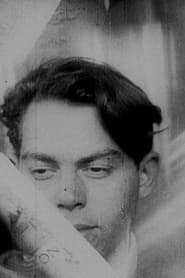
The Black Death is ravaging Spain. As Camille Saint-Saëns's "Danse Macabre" plays on the soundtrack, a mix of animation and acted scenes Youth and Love meeting one night. They dance, embrace, and kiss. As the night wears on, exuberant Death, a skeletal figure with a violin, pursues the couple. They try to elude him. Eventually, Love swoons. Youth is powerless to protect her. Is she doomed?
Cast & crew
More films like this
More Drama films
View all →







More from Dudley Murphy
View all →


More about this film
About the production
Release date1922
Box officeNot commercially released for general theatrical distribution
ProductionDudley Murphy Productions
Filmed inNew York City
This film was created during the height of the American avant-garde film movement, combining cutting-edge animation techniques with live-action choreography. The production utilized multiple exposure photography and hand-drawn animation overlays to create the supernatural elements. The skeletal Death figure was achieved through both practical effects and animation techniques that were innovative for the time. The dance sequences were choreographed by Adolph Bolm, a renowned ballet dancer, ensuring authentic movement quality.
Themes
Mortality and DeathThe fleeting nature of Youth and LoveThe inevitability of fateThe dance of life and deathThe power of music to convey emotion
Themes & topics
Historical background
Danse macabre (1922) emerged during late silent cinema and the transition toward sound, when exhibition habits and national film industries were still taking shape.
Why this film matters
Danse macabre remains accessible through digital archives, giving modern viewers a direct link to 1922 screen culture.
Making of
Dudley Murphy, an architect-turned-filmmaker, created 'Danse macabre' as part of his early experiments with cinematic form. The production brought together talents from both the dance world and emerging animation techniques. Murphy worked closely with cinematographer to achieve the ethereal quality through double exposures and innovative lighting. The dance sequences were meticulously choreographed by Adolph Bolm, who brought his classical ballet expertise to create movements that would translate well to the camera. The animation overlays were created frame by frame, requiring hundreds of hours of work to synchronize with the live-action footage. The decision to use Saint-Saëns's composition throughout was revolutionary at the time, predating the widespread use of synchronized sound in cinema.
What critics said
Trade and revival screenings have kept Danse macabre (1922) on the map for collectors and scholars rather than mass first-run promotion.
Did you know?
- This was one of the earliest American films to combine live-action with animation in a narrative context
- Director Dudley Murphy was a pioneer of experimental cinema who later worked with Fernand Léger on 'Ballet Mécanique' (1924)
- The film uses Saint-Saëns's 'Danse macabre' throughout its entire runtime, making it one of the earliest examples of a film built entirely around a single classical composition
- Adolph Bolm was a famous Russian-born ballet dancer who had performed with the Ballets Russes and Diaghilev before appearing in this film
- Ruth Page was a prominent American ballerina who would later become among the pivotal choreographers in American dance history
- The skeletal Death character was created using a combination of makeup effects and animation techniques
- The film was considered lost for decades before being rediscovered and restored by film preservationists
- This work was heavily influenced by European avant-garde cinema, particularly German Expressionism
- The film's themes of love versus death were considered quite daring for the early 1920s American cinema
- Olin Howland, who plays Death, later became a familiar character actor in Hollywood films of the 1930s and 1940s
Visual style
The cinematography employed innovative techniques including multiple exposure, superimposition, and careful manipulation of light and shadow to create the film's haunting atmosphere. The camera work emphasized fluid movement to complement the dance sequences, using tracking shots and dynamic angles that were unusual for the period. The contrast between the warm, romantic lighting of the love scenes and the stark, dramatic lighting of Death's appearances creates visual tension throughout. The cinematographer experimented with slow motion and time-lapse photography to enhance the supernatural elements, particularly in scenes involving the skeletal Death figure.
Innovations
The film pioneered several technical innovations that would influence later cinema. Its seamless integration of live-action and animation prefigured techniques that would become common decades later. The use of multiple exposure photography to create ghostly effects was particularly advanced for 1922. The production team developed new methods for synchronizing dance movements with musical accompaniment, challenging the limitations of silent cinema technology. The film's special effects, particularly the creation of the skeletal Death figure, involved a combination of makeup, costume design, and animation techniques that pushed the boundaries of what was technically possible in early cinema.
Music
The entire film is built around Camille Saint-Saëns's 1874 tone poem 'Danse macabre,' Op. 40, making it one of the earliest examples of a film constructed entirely around a single classical composition. The piece's haunting violin solo, representing Death's fiddle, drives the narrative forward and provides the film's rhythmic foundation. During screenings, the music would have been performed live by orchestras or played on phonograph records, depending on the venue. The choice of this particular composition was inspired, as its programmatic nature perfectly matched the film's visual narrative of Death's dance with mortals. The synchronization between the music's dramatic shifts and the film's visual developments demonstrates an early understanding of audio-visual relationship in cinema.
Famous quotes
As Death's violin plays, all must dance to his tune - implicit theme throughout the film
Youth and Love may embrace, but Death always leads the final dance - narrative premise
Memorable scenes
- The opening sequence where Youth and Love meet under moonlight, their silhouettes dancing against the Spanish landscape as Saint-Saëns's haunting melody begins
- Death's dramatic first appearance, with the skeletal figure emerging from shadows, violin in hand, beginning his relentless pursuit of the couple
- The climatic scene where Love swoons in Youth's arms as Death closes in, the animation creating a whirlwind of supernatural energy around them
What audiences thought
Due to its experimental nature and limited distribution, 'Danse macabre' was primarily seen by art cinema enthusiasts and dance aficionados rather than mainstream audiences. Those who did view it were often struck by its visual innovation and emotional power. The film found particular appreciation among the artistic communities in New York and Paris, where experimental cinema was gaining traction. Modern audiences who have discovered the film through screenings at film archives and museums often express surprise at its sophistication and visual poetry, considering its 1922 production date.
Film connections
Influenced by
- German Expressionist cinema
- Ballets Russes
- Dadaist art movement
- Classical music programming
- European avant-garde films
- Gothic literature
This film influenced
- Ballet Mécanique (1924)
- The Skeleton Dance (1929)
- Fantasia (1940)
- Un Chien Andalou (1929)
- Meshes of the Afternoon (1943)
Film restoration
The film was considered lost for many years but has been rediscovered and restored by film preservation institutions. A restored version is now held in the archives of major film museums and has been screened at classic film festivals. The restoration process involved piecing together elements from various sources and digitally enhancing the surviving footage to approximate its original visual quality.
Where to watch
- Available through film archive screenings
- Museum of Modern Art film collection
- Anthology Film Archives
- Some specialized streaming services dedicated to classic and experimental cinema
- Academic film collections and university archives