
Keys: Space play/pause · ←/→ 10s · F fullscreen · M mute · </> speed
Plot
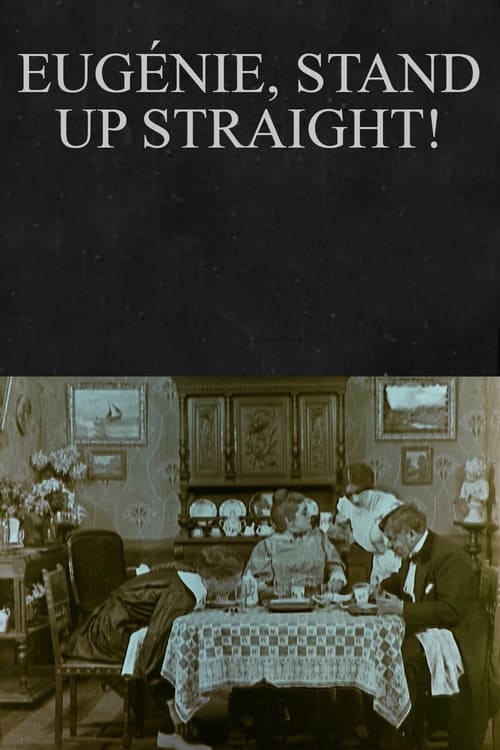
The comedy follows the misadventures of Eugénie, a young woman with a pronounced hunchback who becomes the subject of various well-meaning but disastrous attempts to straighten her posture. As friends and neighbors employ increasingly absurd methods to correct her condition, they eventually succeed in making her stand completely straight, only to discover she has become too tall for her surroundings. Eugénie's newfound height leads to a series of comical disasters as she bumps into ceilings, knocks over furniture, and creates chaos wherever she goes. In desperation, the townspeople seek the help of a traveling sword swallower, believing his unique abilities might hold the solution to Eugénie's height problem. The film culminates in a frantic and hilarious attempt to use the sword swallower's techniques to restore Eugénie to her original, more manageable height.
Director
 Jean Durand
About the Production
Release Date 1911
Production Société des Établissements L. Gaumont
Filmed In Paris, France
This was one of Jean Durand's early comedies produced during his prolific period with Gaumont. The film was shot on a single set typical of early French studio productions, utilizing practical effects to create the illusion of Eugénie's changing height. The production relied heavily on physical comedy and visual gags, as was characteristic of Durand's style during this era.








Themes & Topics
Historical Background
1911 was a pivotal year in cinema history, occurring during what film historians often call the 'transitional period' between early cinema and the emergence of narrative feature films. French cinema, particularly through companies like Gaumont and Pathé, dominated the global film market at this time. Jean Durand was working during the peak of French cinematic influence, before World War I would shift the center of film production to Hollywood. This film represents the sophisticated comedic traditions that French filmmakers had developed by this time, building on the slapstick innovations of earlier directors like Georges Méliès and the Lumière brothers. The physical comedy genre was particularly popular as it transcended language barriers, making these films internationally successful.
Why This Film Matters
This film represents an important example of early French physical comedy and demonstrates the sophisticated visual storytelling techniques that had developed by 1911. The film's focus on physical transformation and bodily comedy reflects early cinema's fascination with the human body as a subject of visual manipulation and humor. Jean Durand's work, including this film, contributed to the development of slapstick comedy traditions that would later influence American comedians like Charlie Chaplin and Buster Keaton. The film also illustrates how early cinema drew from popular entertainment forms like vaudeville and circus acts, incorporating performers like sword swallowers into cinematic narratives.
Making Of
The making of 'Eugénie, Stand Up Straight!' reflects the rapid production methods of early French cinema, where films were often shot in just one or two days. Jean Durand was known for his efficient directing style and ability to extract maximum comedic effect from minimal resources. The physical transformation effects were achieved through simple camera tricks and props rather than sophisticated special effects, which were not yet available in 1911. The cast, particularly the actors playing Eugénie and the sword swallower, would have needed significant physical comedy skills to perform the exaggerated movements required by the script. The film was likely shot in Gaumont's Paris studios, which were among the most advanced film production facilities of their time.
What Critics Said
Contemporary reviews of the film are scarce, as film criticism was still in its infancy in 1911. However, Durand's comedies were generally well-received by audiences of the time and were commercially successful in French cinemas. Modern film historians recognize Durand as an important early comedy director, though many of his individual films, including this one, are primarily studied today for their historical value rather than as standalone artistic achievements. The film is appreciated by silent film enthusiasts for its inventive physical comedy and as an example of the sophisticated comedic techniques being developed in French cinema before World War I.
Did You Know?
- Jean Durand was one of the most prolific French directors of the early 1910s, creating over 200 films during his career
- The film's title in French is 'Eugénie, redresse-toi!'
- This film was part of Durand's series of physical comedies that often featured exaggerated physical transformations
- Brunin, who appears in the film, was a regular collaborator with Jean Durand and appeared in many of his comedies
- The film was produced during the golden age of French cinema, before World War I devastated the European film industry
- Early physical comedies like this one heavily influenced later slapstick traditions in American cinema
- The sword swallower character was likely played by a real variety show performer, common practice in early French films
- Gaumont, the production company, was one of the world's first and most successful film studios
- The film's theme of physical transformation was a popular trope in early cinema, playing with the new medium's ability to create visual illusions
- This film survives today only in fragmentary form, as was common with many early French productions
More film details Visual style, music, quotes, restoration, and more
Visual Style
The cinematography was typical of early French studio productions, utilizing static camera positions and straightforward framing to clearly present the physical comedy. The camera work would have been functional rather than artistic, focusing on ensuring the audience could clearly see the comic actions and transformations. The film likely employed basic camera tricks to create the illusion of Eugénie's changing height, possibly using forced perspective or simple editing techniques. The visual style emphasized clarity and visibility of action over aesthetic concerns, as was common in early comedy films.
Innovations
While not technically groundbreaking for its time, the film demonstrates the sophisticated use of physical comedy and visual effects that had been developed in French cinema by 1911. The creation of Eugénie's height transformation would have required careful planning and execution of camera tricks and props. The film represents the refinement of editing techniques for comic timing and the effective use of studio space for physical comedy. These technical elements, while individually simple, collectively show the level of sophistication achieved in French comedy production by this early date.
Music
As a silent film, 'Eugénie, Stand Up Straight!' would have been accompanied by live music during its original theatrical screenings. The accompaniment would likely have been provided by a pianist or small orchestra using popular musical pieces of the era, possibly including ragtime and other lively genres that complemented the on-screen comedy. No original score was composed specifically for the film, as was standard practice for productions of this period. Modern screenings of the film are typically accompanied by improvised or compiled period-appropriate music.
Memorable Scenes
- The climactic scene where the sword swallower attempts to use his techniques to reduce Eugénie's height, creating a tense and humorous moment as the other characters watch in anticipation of either success or disaster.
What Audiences Thought
The film was likely popular with contemporary audiences who enjoyed the broad physical comedy and visual gags that characterized Durand's work. Early cinema audiences particularly appreciated films with clear visual humor that didn't require intertitles or complex narrative understanding. The theme of physical transformation would have been especially appealing to audiences fascinated by cinema's ability to create impossible scenarios. While specific audience reactions to this particular film are not documented, Durand's comedies of this period were generally successful with French and international audiences.
Film Connections
Influenced By
- French vaudeville traditions
- Circus and sideshow performances
- Earlier Georges Méliès transformation films
- Comédie-Française theatrical traditions
This Film Influenced
- Later French slapstick comedies
- American Mack Sennett comedies
- Charlie Chaplin's transformation sequences
- Buster Keaton's physical comedy films
Film Restoration
The film is believed to be partially preserved in fragments, with complete copies possibly held in film archives such as the Cinémathèque Française. Like many films from this era, it has suffered from deterioration over time and may exist only in incomplete form. Some archives may hold paper print copies or fragments of the original nitrate film. The preservation status reflects the broader challenge of saving early cinema, with an estimated 90% of silent films considered lost.
Where to Watch
- The film may be available through specialized silent film archives
- Possible screenings at classic film festivals
- May be included in collections of early French cinema
- Potentially accessible through academic film libraries
- Some fragments might be available on YouTube or other public domain platforms