Her First Adventure
"Gypsy music lures a child from home"
Keys: Space play/pause · ←/→ 10s · F fullscreen · M mute · </> speed
About this film
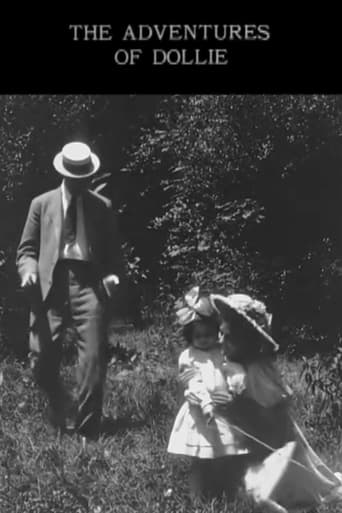
A father arrives home, greets his wife and daughter, and then goes inside with his wife. Though they are only inside for a brief time, their daughter wanders off, attracted by the music from a pair of gypsies performing in the street. When the gypsies move on, they take the young
Cast & crew
More films like this
More Drama films
View all →







More from Wallace McCutcheon Sr.
View all →

More about this film
About the production
Release dateJuly 1908
ProductionAmerican Mutoscope and Biograph Company
Filmed inNew York City, New York, Fort Lee, New Jersey
Filmed during the early period of American cinema when most productions were one-reel shorts lasting approximately 10-15 minutes. The American Mutoscope and Biograph Company was especially prolific film studios of this era, producing hundreds of short films annually. The film was shot on location in New York and the surrounding area, as Biograph often utilized real city streets and locations rather than building elaborate sets. The production would have used natural lighting and basic camera techniques typical of the period, with the camera remaining stationary for most scenes.
Themes
Themes & topics
Historical background
Her First Adventure appeared in 1908, when the nickelodeon era and the birth of narrative film shaped how movies were financed, distributed, and discussed. Audiences of the day encountered the work amid shifting tastes in acting, pacing, and spectacle. Its focus on a father arrives home, greets his wife and daughter, and then goes inside with his wife mirrors themes circulating in popular culture of that moment.
Why this film matters
Her First Adventure (1908) belongs to the wider archive of world cinema, documenting a father arrives home, greets his wife and. Archivists and historians value such titles for what they reveal about craft, genre, and audience expectations. Restorations and festival screenings keep the work visible to viewers far beyond its first run.
Making of
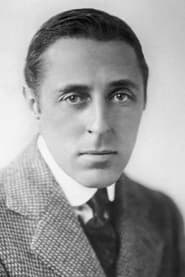
The production of 'Her First Adventure' took place during a pivotal year in American cinema history. 1908 marked the beginning of the film industry's shift from New York to California, though Biograph would remain primarily based in the East for several more years. The film was likely shot quickly, as was typical for Biograph productions of this period, with most one-reel films being completed in just one or two days. D.W. Griffith, though primarily known today as a director, was working as an actor for Biograph at this time, appearing in numerous films before the studio gave him his first directing opportunities later in 1908. The young girl who played the daughter remains unidentified in surviving records, as child actors from this period were often not credited. The film's outdoor scenes would have presented challenges in terms of controlling lighting and managing the unpredictable elements of shooting on city streets, where curious onlookers and passing vehicles could interfere with filming.
What critics said
Press coverage from 1908 is fragmentary for many titles of this vintage; surviving notices for Her First Adventure tend to stress novelty, star power, or topical appeal. Later writing places the picture within its national and generic context, weighing both period conventions and moments that still land for modern viewers. Streaming and disc releases have revived discussion among classic-film audiences.
Did you know?
- This film represents one of the earliest screen appearances of D.W. Griffith, who would later become especially influential directors in cinema history
- Wallace McCutcheon Sr. was one of Biograph's earliest directors, though his career was cut short by illness, leading to his son Wallace McCutcheon Jr. taking over some of his projects
- The film was produced during the transitional period when American cinema was moving from actualities and simple trick films to narrative storytelling
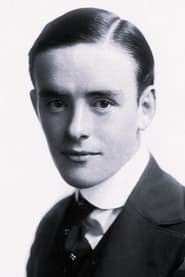
- Robert Harron, who appears in this film, would become one of D.W. Griffith's most frequently used actors when Griffith later became a director
- Biograph films from this period were not typically copyrighted by the studio, which has made many of them enter the public domain early
- The gypsy characters in the film reflect common stereotypes and exoticism prevalent in early 20th century American popular culture
- The dog's role in the film anticipates the heroic canine characters that would become staples in later cinema
- This film was released just a few months before Griffith would begin his directing career at Biograph
- The American Mutoscope and Biograph Company used a unique film format (68mm) that produced a higher quality image than the standard 35mm used by other studios
- Like most films of this era, it would have been accompanied by live musical performance during theatrical exhibition
Visual style
The cinematography in 'Her First Adventure' reflects the technical limitations and conventions of 1908 filmmaking. The camera would have been stationary for most shots, mounted on a tripod with limited movement capability. Long takes were common, as editing was still a relatively undeveloped technique. The film was shot in black and white using the Biograph company's proprietary 68mm film stock, which produced a higher quality image than the 35mm format that would later become standard. Natural lighting would have been used for outdoor scenes, while interior shots would have been lit by whatever artificial lighting was available at the time. The visual composition would have been relatively simple, with actors positioned to tell the story clearly within the frame. Close-ups were rare in this period, so most shots would have been medium or long views that captured the full action of each scene.
Innovations
While 'Her First Adventure' does not represent any major technical innovations, it does demonstrate the standard technical practices of American cinema in 1908. The film was shot on Biograph's unique 68mm film format, which provided superior image quality compared to the 35mm format used by other studios. The production would have utilized the latest camera and film processing technology available at the time, though these were quite primitive by modern standards. The film's narrative structure, while simple, shows the growing sophistication of storytelling techniques that were developing during this period. The use of outdoor locations rather than studio sets reflects Biograph's preference for naturalistic settings, which would influence later film production practices. The film's editing, though likely minimal, would have employed the continuity techniques that were becoming standard in narrative cinema of this era.
Music
As a silent film, 'Her First Adventure' would have been accompanied by live musical performance during its theatrical exhibition. The specific musical accompaniment would have varied by theater, ranging from a single piano player in smaller nickelodeons to small orchestras in more prestigious venues. The music would have been chosen to match the mood of each scene - perhaps cheerful tunes for the opening family scenes, mysterious or exotic music for the gypsy appearances, and dramatic, suspenseful music for the search sequence. Some theaters might have used compiled cue sheets that suggested appropriate music for different types of scenes, while others would have relied on the improvisational skills of their musicians. The gypsies' music mentioned in the plot would have been represented visually on screen, with the actors miming the performance while the theater's musicians provided the actual musical accompaniment.
Memorable scenes
- The moment when the young daughter, captivated by the gypsies' music, wanders away from her home while her parents are briefly inside, setting the film's central conflict in motion
- The frantic search sequence where the parents, realizing their daughter is missing, desperately comb the neighborhood with their loyal dog leading the way
- The emotional reunion at the gypsy camp when the parents finally locate their unharmed daughter, providing the film's dramatic resolution
What audiences thought
Audience reception for films of this period was primarily measured by box office success and repeat bookings by theater owners. 'Her First Adventure,' with its straightforward narrative of child endangerment and rescue, would have appealed to the family audiences who frequented nickelodeons. The emotional elements of the story - the parents' panic and relief - would have resonated with viewers, particularly those with children of their own. The film's inclusion of a heroic dog would have been an additional draw, as animal performers were popular attractions in early cinema. Like most Biograph productions of this era, the film likely circulated widely through the exchange system that distributed films to theaters across the United States. The simple, universally understandable story would have transcended language barriers and appealed to the diverse urban audiences of immigrant communities that formed a significant portion of early cinema's customer base.
Film connections
Influenced by
- Stage melodramas of the 19th century
- Earlier Biograph short films
- Contemporary literary stories about lost children
- Vaudeville sketches with similar themes
This film influenced
- Later Biograph films with child endangerment themes
- The Lonely Villa (1909)
- A Trap for Santa Claus (1909)
- The Unchanging Sea (1910)
Film restoration
The preservation status of 'Her First Adventure' is unclear, as with many films from this very early period of cinema. Some Biograph films from 1908 have survived through various archives and collections, while others have been lost to time due to the fragile nature of early film stock and inadequate preservation methods. The film may exist in the collection of the Museum of Modern Art, which holds many Biograph films, or in other film archives such as the Library of Congress or the British Film Institute. However, without specific confirmation from these institutions, the film's survival status remains uncertain. Many of Biograph's films from this era were printed on their unique 68mm film stock, which required special projection equipment and has made preservation more challenging over the decades.
Where to watch
- Due to the age and uncertain preservation status of 'Her First Adventure,' viewing options are extremely limited. If the film has survived, it might be accessible through specialized film archives or museum collections that hold Biograph materials. The Museum of Modern Art in New York, which maintains an extensive collection of early American films, may have a copy in their archives. The Library of Congress and the British Film Institute are other potential sources. Some early Biograph films have been released on home video through specialized distributors like Kino Lorber or Flicker Alley, though this particular title's availability is not confirmed. Online platforms that specialize in public domain films, such as the Internet Archive, occasionally feature rare early cinema, though 'Her First Adventure' does not appear to be currently available there. Film scholars and researchers might be able to access the film through academic film libraries or by contacting institutions known to hold Biograph collections.