
His Majesty, the Scarecrow of Oz
"Ceremony bring Scarecrow life."
Keys: Space play/pause · ←/→ 10s · F fullscreen · M mute · </> speed
About this film
A wicked king has taken over the Emerald City, and wants his daughter, Princess Gloria to marry the horrid courtier Googly-Goo, though she loves Pon, the Gardener's Boy. The camera follows two farmers placing a Scarecrow upon a pole in a cornfield. An Indian princess has a ceremony to bring the Scarecrow to life.
Cast & crew
More films like this

More Comedy films
View all →







More about this film
About the production
Release dateOctober 14, 1914
Budget$23,000
Box officeUnknown - modest commercial success
ProductionThe Oz Film Manufacturing Company
Filmed inLos Angeles, California, Santa Monica, California
This was one of three Oz films produced by L. Frank Baum's own company in 1914, featuring elaborate costumes and special effects for the time. The film used tinting techniques to create magical atmospheres, and the transformation scenes required innovative camera tricks. The production employed numerous animals trained by Fred Woodward, creating complex battle sequences that were groundbreaking for early cinema.
Themes
Good versus EvilThe power of loveTransformation and identityCourage in the face of adversityThe nature of magic
Themes & topics
Historical background
By 1914, competing studios crowded weekly bills, and His Majesty, the Scarecrow of Oz had to win attention alongside newsreels and shorts.
Why this film matters
Surviving prints of His Majesty, the Scarecrow of Oz help researchers study how 1914-era filmmakers solved storytelling with limited means.
Making of
The production of 'His Majesty, the Scarecrow of Oz' was marked by Baum's obsessive attention to detail and his determination to bring his magical world to life on screen. The Oz Film Manufacturing Company, founded by Baum and his associates, invested heavily in elaborate costumes, sets, and special effects that pushed the boundaries of 1914 filmmaking. The transformation sequences required innovative use of double exposure and stop-motion techniques, while the extensive animal sequences presented enormous logistical challenges. Baum personally cast many of the actors, preferring those with theatrical experience who could handle the broad acting style required for fantasy films. The production faced financial difficulties throughout, with Baum often using his personal funds to complete sequences. The film's failure at the box office, along with the other Oz productions, ultimately led to the company's bankruptcy and the end of Baum's direct involvement in filmmaking.
What critics said
Modern retrospectives screen His Majesty, the Scarecrow of Oz for craft context—pacing, performance, and camera choices of 1914.
Did you know?
- This was the third and final Oz film produced by L. Frank Baum's Oz Film Manufacturing Company before it went bankrupt in 1915
- The film features an early appearance by the character Button-Bright, who would later become a regular in Baum's Oz book series
- Director L. Frank Baum was the creator of the entire Oz universe and personally supervised all aspects of production
- The film's special effects included primitive but effective transformation scenes, including Pon turning into a kangaroo
- Frank Moore, who played the Scarecrow, was a veteran stage actor who had previously appeared in Baum's stage productions
- The film was originally released with a full orchestral score composed specifically for the production
- Many of the costumes were designed by Baum himself, who had a background in theatrical design
- The animal battle sequences featured over 50 trained animals and took weeks to choreograph
- This film is considered lost for decades before a complete print was discovered in the 1970s
- The character of Nick Chopper the Tin Man appears here as an 'Emperor' rather than a woodcutter
Visual style
The cinematography by James A. Crosby employed innovative techniques for 1914, including creative use of tinting to establish different moods and magical atmospheres. The film utilized double exposure for the transformation sequences and employed moving camera techniques that were relatively advanced for the period. The battle sequences were shot with multiple cameras to capture the chaotic action, and the magical effects were achieved through in-camera tricks rather than post-production. The lighting design emphasized the contrast between the mundane world of the farmers and the magical realm of Oz, with the Emerald City scenes featuring special green-tinted effects.
Innovations
The film featured several technical innovations for its time, including complex transformation effects using multiple exposure techniques and sophisticated makeup effects for the character transformations. The production employed advanced matte painting techniques for creating the magical landscapes of Oz. The animal battle sequences required innovative camera placement and editing to capture the action safely and effectively. The film also experimented with color tinting to create magical atmospheres, particularly for the Emerald City scenes. The costume design incorporated mechanical elements for the Scarecrow and Tin Man characters, allowing for more expressive movement.
Music
The film was originally released with a compiled musical score arranged by Louis F. Gottschalk, Baum's son-in-law and musical director for the Oz Film Manufacturing Company. The score incorporated popular classical pieces and original compositions designed to enhance the magical atmosphere. Live musical accompaniment was standard for silent films of this era, with theaters typically providing piano or organ accompaniment. The complete original score has not survived, but modern screenings often feature newly composed music or period-appropriate selections.
Famous quotes
I am His Majesty, the Scarecrow of Oz!
Love is stronger than any magic
Even a scarecrow can have a heart
There's no place like home - but Oz is a close second!
Memorable scenes
- The magical ceremony that brings the Scarecrow to life, with dancing and ritualistic chanting
- The transformation of Pon into a kangaroo through Mombi's dark magic
- The elaborate animal battle sequence featuring Fred Woodward's trained animals
- The Scarecrow's declaration of love for Princess Gloria in the Emerald City
- The final confrontation with King Krewl and the restoration of order to Oz
What audiences thought
The film, like other Oz Film Manufacturing Company productions, struggled to find its audience upon release. Many adults found the fantasy elements too childish, while children were sometimes frightened by the witch Mombi and transformation scenes. The film performed poorly at the box office, contributing to the financial failure of Baum's film company. However, Oz enthusiasts and Baum's loyal readership generally appreciated the faithful adaptation of his characters and world. In subsequent decades, as the film became available through archives and special screenings, it developed a cult following among classic film enthusiasts and Oz fans who appreciated its historical significance and charming, if dated, qualities.
Film connections
Influenced by
- The Wonderful Wizard of Oz book series by L. Frank Baum
- Contemporary stage adaptations of Oz stories
- European fairy tale films
- American theatrical traditions
This film influenced
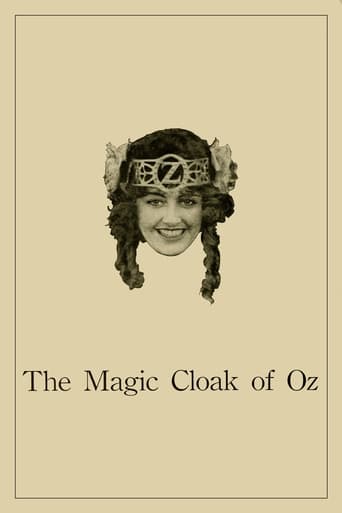
- The Magic Cloak of Oz (1914)
- His Girl Friday (1940) - transformation techniques
- The Wizard of Oz (1939) - character interpretations
- Fantasy films of the 1920s and 1930s
Film restoration
The film was considered lost for several decades until a complete 35mm print was discovered in the 1970s. The film has since been preserved by the Library of Congress and other film archives. Several restoration efforts have been undertaken to clean and stabilize the surviving elements, though some deterioration is evident. The film is now available through various archival sources and has been released on home video formats.
Where to watch
- Library of Congress National Screening Room
- Various classic film streaming platforms
- Archive.org
- Specialized film archive collections
- Occasional screenings at film festivals and classic cinema events